

Amish Autism Rates: What Research Actually Shows
Curious about Amish autism rates? Explore what published studies and expert sources reveal, why the numbers vary, and what it means for your own child.

You're scrolling through your phone after your child's appointment when a headline catches your eye: autism is supposedly “virtually nonexistent” in Amish communities. The claim sounds simple, but it leaves a harder question behind. Are Amish autism rates lower, or are fewer children being identified and formally documented?
The most reliable answer is careful rather than sensational. Autism does occur in Amish communities, and the available evidence can't establish a single, settled community-wide rate. The Amish example is useful because it shows how culture, healthcare access, schooling, screening practices, and reporting patterns can shape the numbers researchers see.
Table of Contents
- A Question Worth Asking Out Loud
- What Autism Prevalence Actually Means
- What the Studies Found in Amish Communities
- Cultural factors
- Structural factors
- Access factors
A Question Worth Asking Out Loud
The Amish are often pulled into online conversations about autism because people use the community as an argument in debates about vaccines, environmental exposures, genetics, and modern healthcare. A low reported diagnosis rate can look like proof of a cause or protection, but that conclusion skips the most important question: How were the children counted?
A community with fewer routine medical visits, different schooling arrangements, and distinct ways of discussing developmental differences may produce fewer formal records without having fewer autistic children. Families may recognize that a child communicates, plays, or responds differently, yet never use the word autism or pursue a diagnostic evaluation.
That distinction matters to parents everywhere. A number on a chart usually describes identified cases in a specific population, during a specific period, using particular screening and diagnostic methods. It doesn't provide a perfect count of every person who may meet the modern understanding of autism.
The best-known direct screening project involving Amish children took place in 2010. Researchers screened 1,899 Amish children in Holmes County, Ohio, and Elkhart-Lagrange County, Indiana, and found a preliminary ASD rate of approximately 1 in 271 children, or about 0.37%, as reported in the 2010 International Meeting for Autism Research study summary. The researchers also noted that cultural norms could affect caregiver reporting.
That finding rejects the claim that autism is absent. It also doesn't prove that 1 in 271 is the true rate for every Amish community, every age group, or every generation. A thoughtful reading holds both points together: cases are present, and the measurement has limits.
The practical lesson: A lower diagnosis count can reflect different pathways to recognition, not necessarily a different underlying reality.
What Autism Prevalence Actually Means
Autism prevalence means the number of people identified as autistic within a defined population at a particular time. Researchers may express it as a ratio, such as “1 in 36 children,” but that ratio only makes sense when you know who was included, how they were screened, and which diagnostic standards were used.
Think of a school auditorium filled with children. If researchers examine every child with consistent tools and follow up when a screening raises a concern, they'll have more opportunities to identify autism. If they review only existing medical records, they'll count children who already reached a diagnostic pathway. Those two approaches can produce very different results in the same community.
Several conditions shape a prevalence estimate:
- Who gets screened: Children who rarely visit healthcare providers may not enter the screening process.
- Who gets referred: A teacher, pediatrician, relative, or community member may notice developmental differences and suggest an evaluation.
- How families describe behavior: Caregivers may interpret communication, play, or sensory responses through their own cultural experiences.
- Which criteria apply: Diagnostic definitions and professional practices change over time.
- When the count occurs: A study reflects the population and systems available during that period.
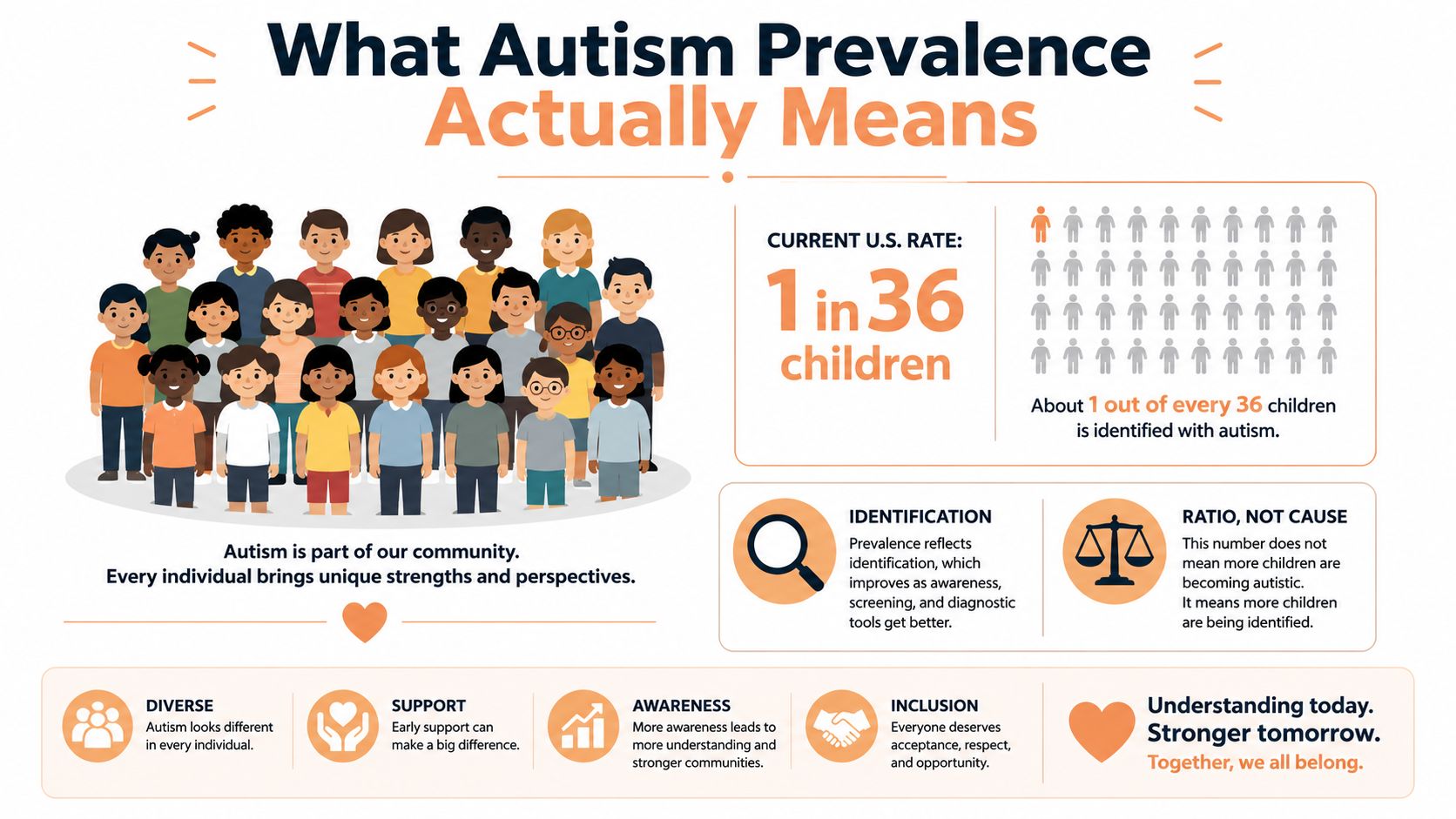
Prevalence isn't the same as incidence. Prevalence describes how many people in a population are identified as having a condition. Incidence generally refers to new cases identified during a defined period. For autism, the distinction gets complicated because identification can happen well after early developmental differences first appear.
A rising prevalence estimate doesn't automatically mean autism itself has become more common. It may reflect broader awareness, expanded diagnostic criteria, improved screening, better access to evaluation, or more families receiving documentation that helps them obtain support. That's why parents should be cautious when a social media post compares two rates without explaining the methods behind them.
What the Studies Found in Amish Communities
A parent may hear that Amish autism rates are either exceptionally low or close to those in the wider population. Both impressions can arise from real reports, because the studies used different ways to find children and record diagnoses.
In 2005, a report about Amish children near Middlefield, Ohio, described 1 in 15,000. That figure reflected local clinical awareness, not a systematic prevalence study, as reported by UPI's coverage of the earlier estimate. Counting known clinical cases is like counting people who entered a particular doorway. Children who were never evaluated or documented may remain outside the count.
A more direct screening project appeared in 2010. Researchers examined 1,899 Amish children from two counties, using standard autism screening and diagnostic tools. They reported a preliminary ASD rate of approximately 1 in 271, or about 0.37%. This approach looked within the community rather than relying only on existing diagnoses. The researchers also cautioned that cultural norms could affect how caregivers reported developmental characteristics. The study record from the International Meeting for Autism Research provides the project details.
A later comparison summarized by Full Fact placed that Amish result beside an estimate of about 1 in 91 children in the general U.S. population at that time. The comparison showed a lower reported rate in that dataset, while also showing that autism was identified among Amish children. Full Fact's review of the claim explains why the finding cannot support the claim that Amish children do not become autistic.
| Study / Lead Author | Year | Sample | Method | Reported Rate | Key Limitation |
|---|---|---|---|---|---|
| Local clinical reporting around Middlefield, Ohio | 2005 | Not a systematic population sample | Local clinical awareness | 1 in 15,000 | Likely reflected documented cases rather than direct community screening |
| International Meeting for Autism Research project | 2010 | 1,899 Amish children | Standard autism screening and diagnostic tools | Approximately 1 in 271, or about 0.37% | Limited geographic scope and possible effects from cultural differences in caregiver reporting |
The main lesson is straightforward. The evidence doesn't support near-zero Amish autism rates. It shows that autism is present, while leaving uncertainty about how consistently children are recognized, assessed, and documented. Those limits matter beyond Amish communities, because every prevalence estimate depends partly on who gets seen and how concerns are recorded.
Why the Numbers Can Look Lower Than Reality
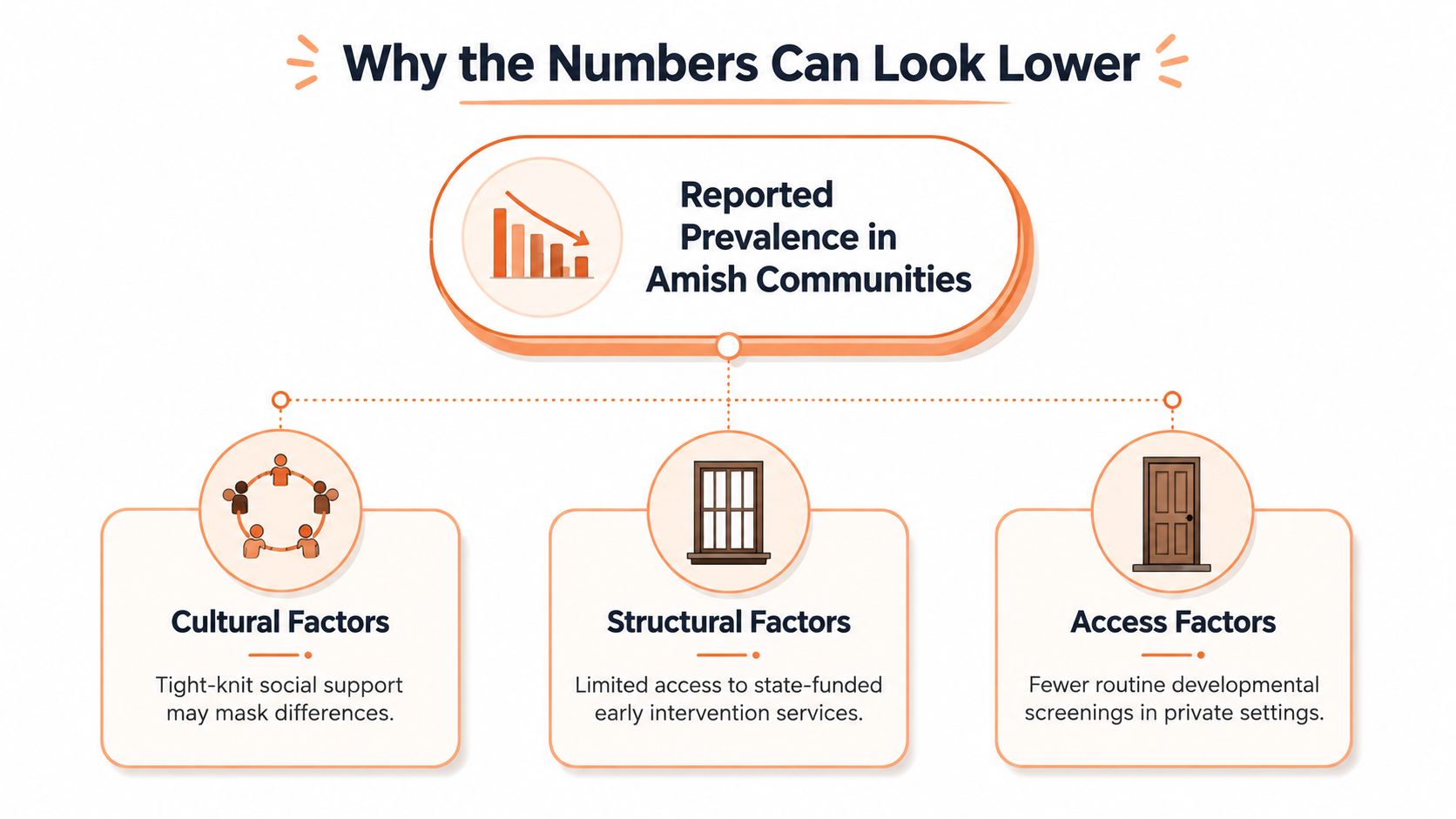
A lower reported rate can emerge when fewer children travel through the systems that usually generate diagnoses. This isn't unique to Amish families. Rural distance, cost, language, trust, transportation, and family beliefs can all affect whether a developmental concern becomes a formal evaluation.
For Amish families, schooling and healthcare pathways may differ from those used by many U.S. families. Homeschooling can reduce referrals that might otherwise come through public school staff. Limited contact with pediatricians can mean fewer routine developmental conversations. Families may first turn to relatives, neighbors, or church communities for practical help, which can be valuable support but may not create a medical record or referral.
Cultural factors
Families don't describe children's behavior in identical ways. A caregiver may report that a child prefers familiar routines, avoids certain textures, or rarely joins group play, while a standardized questionnaire may ask about those experiences using concepts that don't fit the family's daily language.
The 2010 researchers specifically noted that cultural norms could affect caregiver reporting. That doesn't mean Amish caregivers are inaccurate. It means researchers need to understand how questions are interpreted and how families recognize developmental differences.
Structural factors
Early intervention programs, public schools, and specialist networks create referral routes. When a family has limited contact with those systems, a child may not be flagged even when support could help with communication, daily routines, play, or learning.
A child who receives informal help with chores or family routines may be developing useful skills, but that support doesn't necessarily identify an underlying communication or sensory need. School arrangements can also affect whether educators observe a child across different settings or recommend an evaluation.
Access factors
Geographic distance and limited availability of clinicians can delay assessment. Standard tools may also be less informative when they were developed for populations with different languages, routines, and experiences.
A lower reported rate is a measurement signal, not a verdict about how many autistic children live in a community.
These same issues appear in school settings across many communities. Parents who want to understand classroom accommodations and collaboration can review this guide to ABA in schools, then discuss options with their child's educational and clinical teams.
Common Myths Parents Hear and What the Research Shows
Online posts often turn a complicated finding into a confident slogan. The safest way to evaluate those claims is to ask whether the source describes a direct screening project, a clinical record review, a small local observation, or an anecdote.
Myth: Amish children don't have autism because they aren't vaccinated. The evidence doesn't support that claim. The AP reported that autism has been documented in Amish children and that lower diagnosed rates may reflect how autism is recognized and reported rather than vaccination status. You can read the Associated Press fact-check on Amish health claims.
Myth: A low number proves autism is rare in the community. The 2005 figure of 1 in 15,000 came from local clinical awareness, while the 2010 direct screening project found approximately 1 in 271, or about 0.37%, among 1,899 children. Those findings cannot be treated as interchangeable. The methods differed, and the later screening identified children who may not have appeared in ordinary clinical records.
Myth: Amish genetics protect children from autism. The available evidence doesn't justify a broad protection claim. Genetic patterns in an isolated population can influence health in complex ways, but a community's genetic history doesn't make autism impossible. It also can't replace direct screening and culturally appropriate evaluation.
Myth: Organic farming or a less industrial lifestyle explains the difference. A lower diagnosis count doesn't establish a cause. The data discussed here point to uncertainty involving recognition, reporting, screening, and access. They don't show that organic living prevents autism.
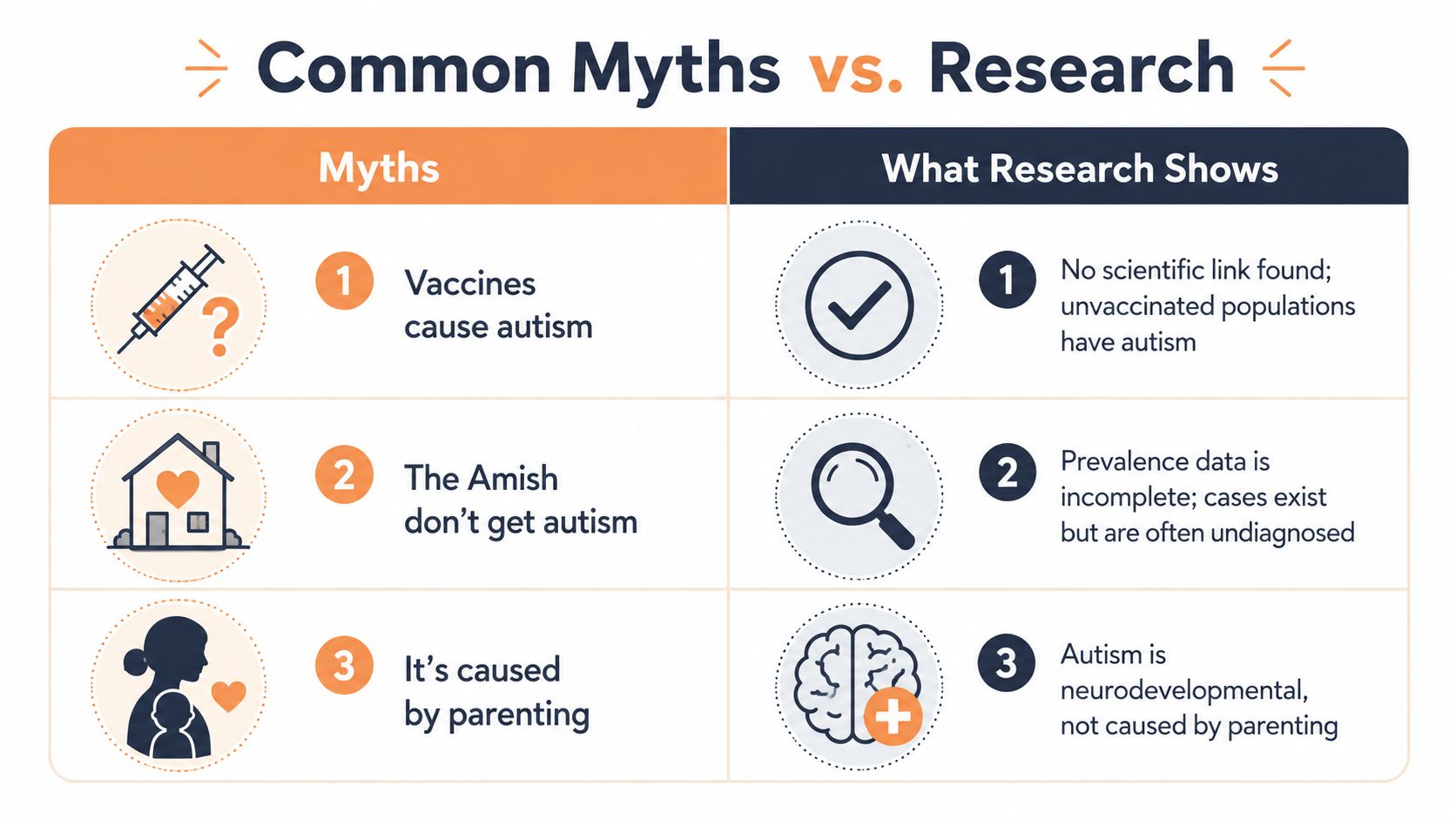
When you see a post about Amish autism rates, look for three details:
- The population: Does it say which community or counties were included?
- The method: Did researchers screen children directly, or count existing diagnoses?
- The limits: Does the post discuss access, caregiver reporting, and cultural context?
The distinction between “fewer diagnoses on file” and “fewer autistic people” is the heart of the issue. This video can add context to the broader discussion:
What This Means for Your Own Child and Family
The Amish example offers a practical message for every parent: don't wait for a formal label before taking a developmental concern seriously. A child may communicate differently, repeat certain words or movements, become distressed by changes, or react strongly to sounds, clothing, textures, or lights. None of those observations alone establishes an autism diagnosis, but they're reasonable topics to bring to a care team.
Look for patterns across ordinary moments rather than judging one isolated behavior. During play, does your child share interests or prefer the same action repeatedly? At mealtime, do textures or sounds make participation difficult? During a routine change, does your child need unusually strong support to move from one activity to another?
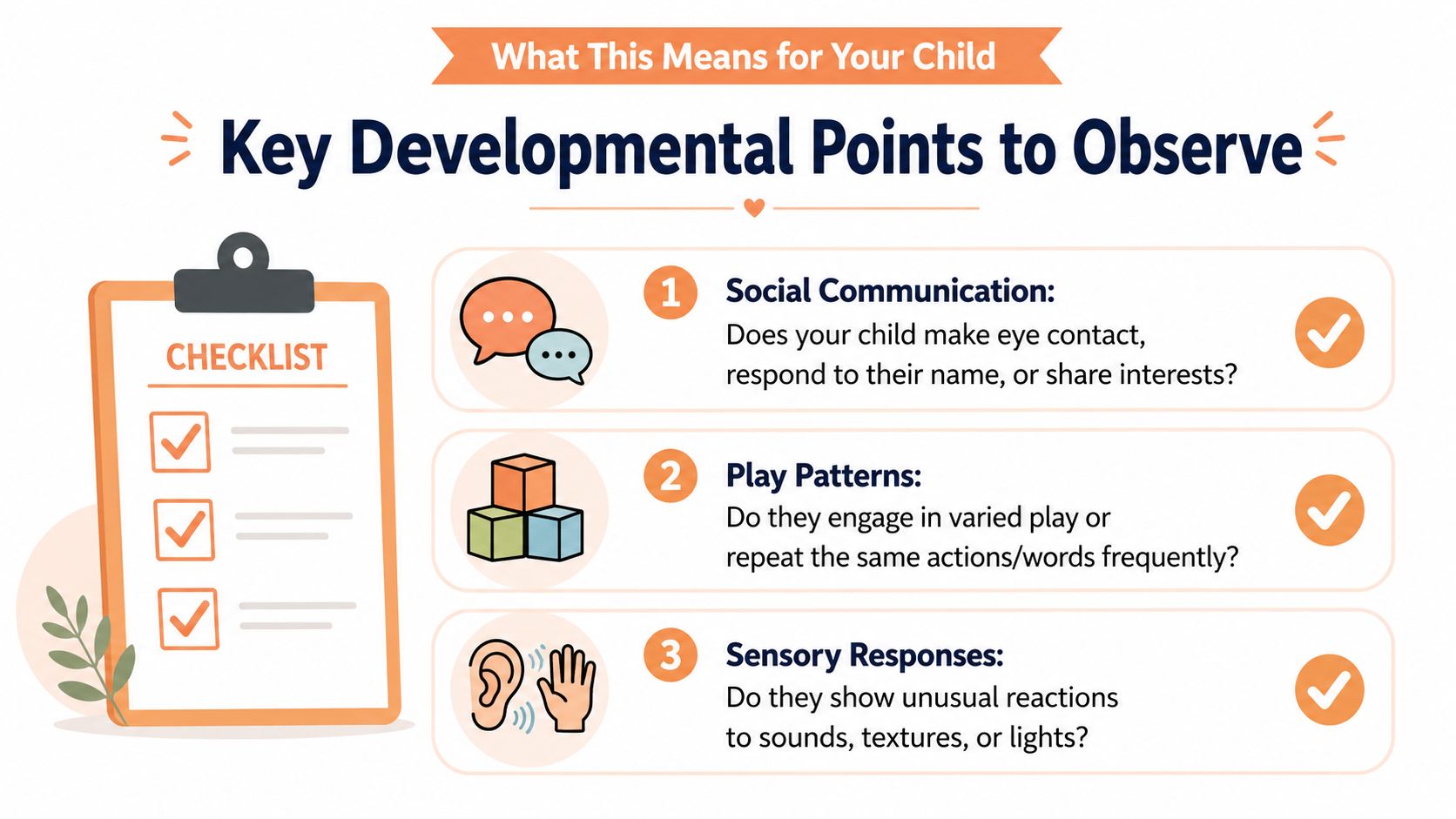
A gentle starting plan can include:
- Write down examples: Note what happened, what came before it, and what helped. Specific examples are more useful than a general feeling that something seems different.
- Ask for developmental screening: Bring your observations to the next well-child visit, or contact your local early intervention program.
- Request a referral: A pediatrician can help determine whether a developmental pediatrician, psychologist, speech-language pathologist, or occupational therapist is appropriate.
- Include your family's priorities: Explain your child's strengths, routines, communication style, and the goals that matter most at home and school.
A diagnosis, if a qualified professional provides one, can open doors to support. It doesn't define your child's personality, potential, or place in the family. Parents can also learn practical ways to participate in care through parent training for autism.
Finding Support That Fits Your Family
Parents can start with free developmental information from the CDC's Learn the Signs. Act Early. program. The American Academy of Pediatrics recommends developmental screening for all children at 18 and 24 months, and families can ask a pediatrician about screening or request an evaluation through the local school district when concerns continue.
Support may include Applied Behavior Analysis, speech therapy, occupational therapy, or play-based developmental programs. Each approach should connect to the child's communication, daily living, social, sensory, and learning needs, while respecting the family's language, culture, routines, and values.
Organizations such as Autism Speaks, the Autism Society, and Parent Training and Information centers can help families understand evaluations, school processes, and local services. If you're comparing providers, this guide to autism ABA therapy near you may help you prepare questions about individualized care, parent involvement, communication, and coordination.
Getting informed is already a strong first step. You don't have to interpret prevalence data or choose services alone.
Friendly ABA Premier provides individualized ABA therapy, home-based support, social skills development, school support, and parent coaching across Connecticut, Georgia, Maryland, Massachusetts, North Carolina, South Carolina, Virginia, and Washington. Visit Friendly ABA Premier to connect with a team that pairs clinical care with a dedicated care coordinator, proactive communication, and ongoing partnership with your family.
Our Latest Insights




Experience ABA Therapy with a More Personalized Level of Support
Discover how FriendlyABA Premier combines evidence-based ABA therapy with dedicated coordination, proactive communication, and individualized family support.