

7 Example of Generalization in Everyday Life
Explore 7 example of generalization across home, school, play, and community settings, plus practical ways families can support skill transfer.

A child may use a new skill comfortably with a familiar therapist, then need help using it during dinner, at school, during play, or on a community outing. That difference doesn't mean the skill is missing. It often means the skill is still learning how to travel.
An example of generalization is a child using a skill learned in one setting with different people, in different places, with varied materials, and over time. Generalization usually develops gradually. Individualized practice, consistent communication, and partnership with the care team can make the process clearer and more supportive.
The examples below show how skills can move from therapy into ordinary family routines. Each child's progress will look different, so consider these ideas alongside your child's strengths, needs, communication style, and daily life.
Table of Contents
1. Mealtime Skills From Therapy Sessions to Family Dinners
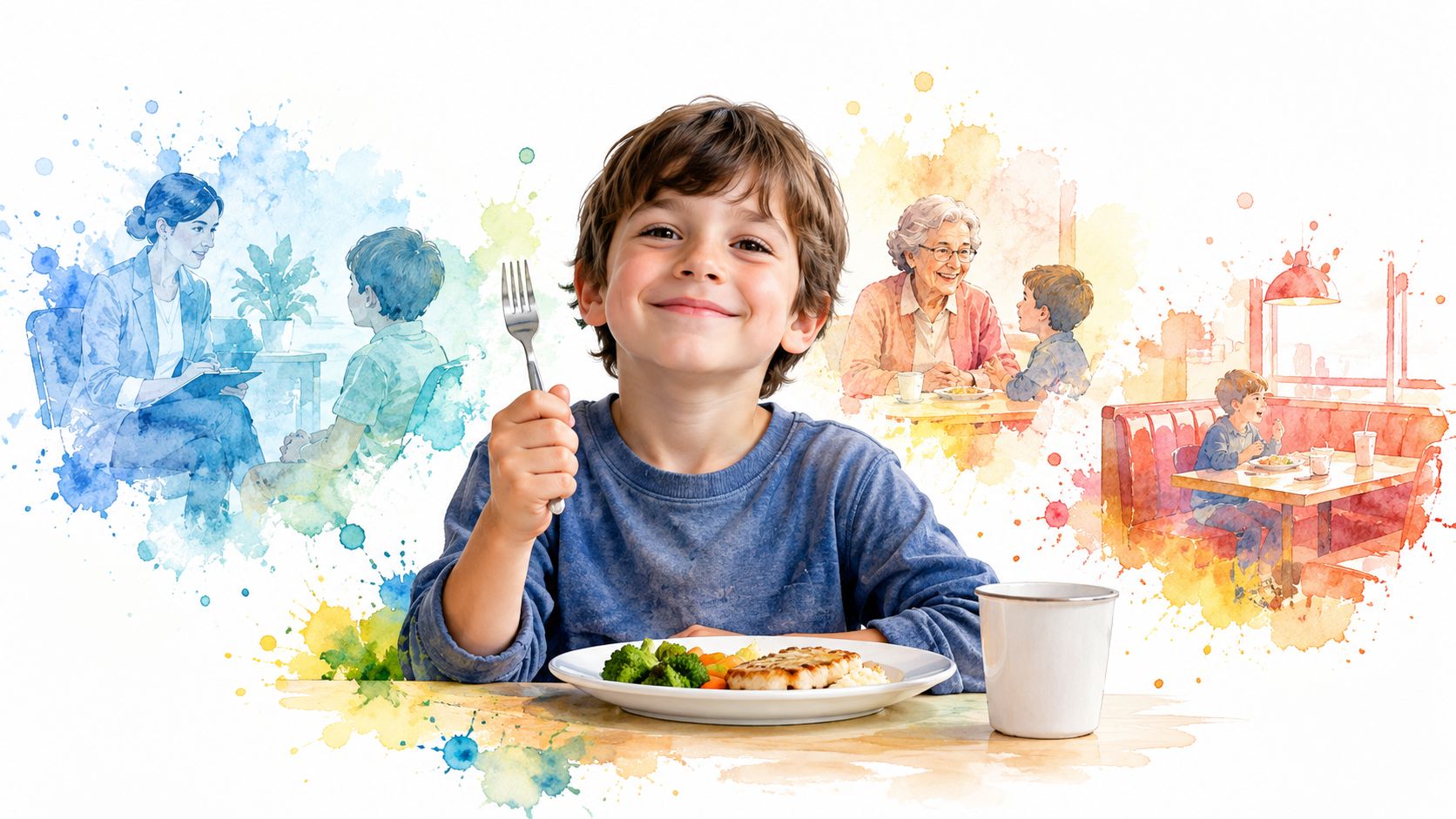
Mealtimes provide frequent opportunities to practice communication, utensil use, following routines, and social participation. A child might learn to hold a fork with a therapist, then use that same skill at home, at a grandparent's house, during school lunch, or at a restaurant.
A child who practices requesting “more please” in therapy may begin using the request at home without a prompt. Later, the child might use it with a grandparent. Another child may practice spooning food from a bowl with a therapist and eventually spoon cereal at breakfast independently.
The materials and people can change while the core skill stays recognizable. A visual schedule used during therapy might help a child understand the steps of mealtime, then lead the child to request the same schedule at home and at school.
Making mealtime practice feel familiar
Ask your therapist or care coordinator which mealtime skills are currently being addressed. Your family can then reinforce the same communication and prompting strategies during meals without turning dinner into a formal therapy session.
- Keep routines recognizable: Use similar plates, seating arrangements, and prompting language across familiar home settings when that helps your child understand what comes next.
- Notice small progress: Trying a new food, remaining at the table a little longer, or making a request independently can all be meaningful steps.
- Share weekly observations: Tell the therapist what worked, what felt difficult, and which people or settings made the skill easier or harder.
- Give relatives a simple guide: A one-page summary of key phrases and strategies can help grandparents, babysitters, and other caregivers respond consistently.
A 2020 systematic review found that 8 of 9 randomized trials with generalization measures reported at least some transfer of early social-communication skills to new people, settings, or activities, with pooled analyses showing target behaviors were more frequent in generalization contexts after intervention than before (2020 systematic review of early social-communication interventions). Mealtime planning can use this same principle by intentionally practicing beyond the therapy room.
2. School Routines Applying Classroom Skills in Real Academic and Social Settings
A child may follow a visual schedule in a quiet therapy room, then face a very different rhythm at school. Bells, classmates, group lessons, substitute teachers, and unexpected changes all affect how a skill is used. Generalization means the child can bring a practiced skill into these academic and social routines, with support adjusted to fit the classroom.
During therapy, a child might practice checking a picture schedule before moving to the next activity. The teacher could place a similar schedule where the child can see it, use familiar wording, and gradually reduce reminders as the child begins checking independently. The goal is a useful classroom routine, not a perfect copy of the therapy session.
The same process can apply to participation and self-advocacy. A child who raises a hand and waits during practice may use that routine in math or reading. A child who uses an “I need a break” card with a therapist and family member may use it during independent work when the school team keeps the card available and responds consistently.
Let the classroom shape the plan
Start with observation. A therapist, teacher, family member, and other care-team partners can compare what happens in therapy with what happens during real school activities. They can identify whether the barrier is the skill itself, the classroom materials, the timing, the number of people present, or the type of prompt being offered.
A short shared plan may include:
- Name the routine clearly: Describe what the child will do, such as checking the schedule, raising a hand, requesting help, or asking for a break.
- Match supports to the setting: Use the classroom's actual desk, worksheet, schedule, communication tool, and group expectations when practicing.
- Plan gradual changes: Vary the teacher, subject, seating area, materials, and time of day so the skill becomes useful across school experiences.
- Share observations: Families and school staff can note what helped, what was difficult, and when the child acted independently.
- Discuss formal supports: Ask whether a 504 plan or IEP should include communication tools, visual supports, or classroom strategies.
Families comparing approaches may also review ABA support in schools. The child's educators and specialists can then adapt those ideas to individual classroom needs.
A school success might be small: using a help card once, joining a group activity, or moving to the next task with fewer prompts. Specific praise at home helps the child connect that progress with growing independence.
3. Communication Across People Speaking to Therapists, Teachers, Family, and Peers
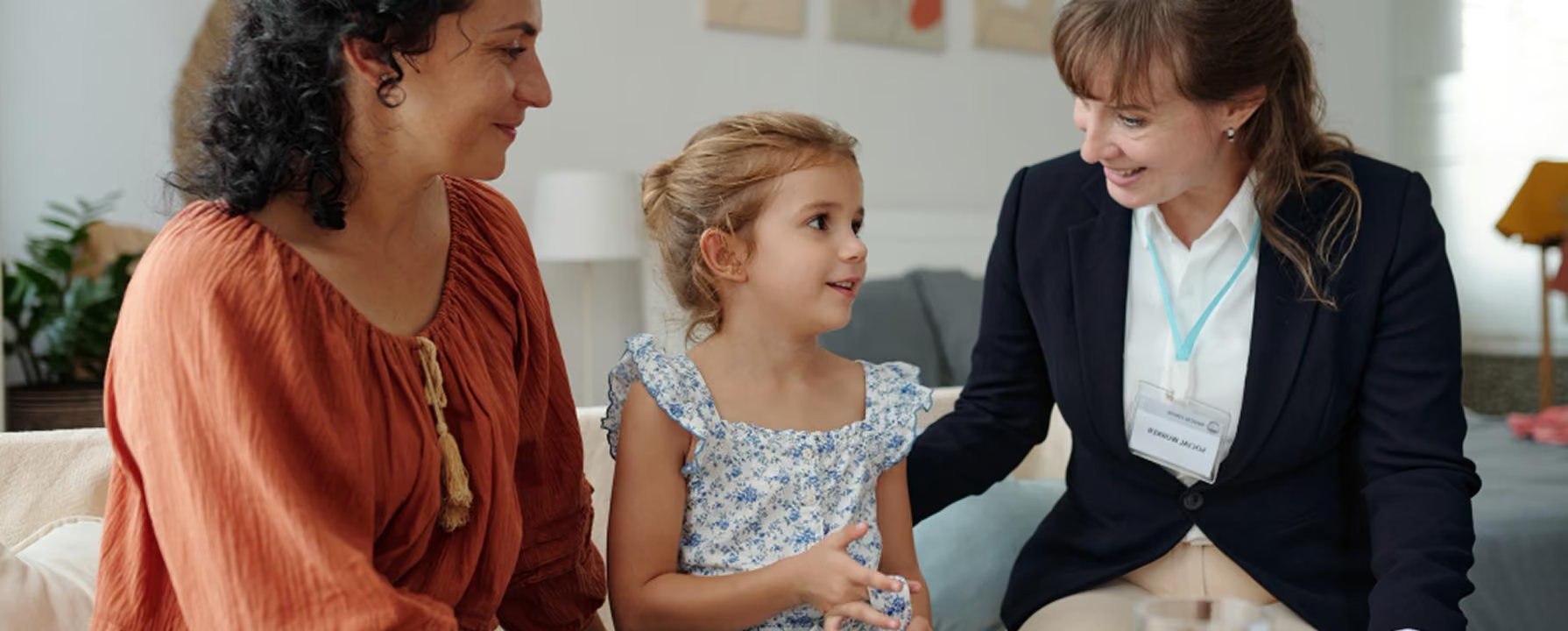
A child may request “play” from a therapist, then use the same word with a sibling, teacher, or peer. That shift shows communication generalization, using words, signs, gestures, picture symbols, or an AAC device with different people.
For example, a child might activate an AAC device to start an interaction with a parent during dinner after practicing with a therapist. Another child may say “help please” in therapy and later ask a teacher for assistance during group math, without an adult prompt.
The skill includes more than producing a message. Care teams also consider who hears it, where it happens, what the child is communicating, and whether the child can initiate with different partners. People, settings, materials, and time can all change. Practice helps the message remain useful through those changes.
Family routines provide natural practice. Meals, dressing, choosing a game, and asking for assistance each create a meaningful reason to communicate. The child can use the same picture, device, gesture, or word in a new routine while adults respond consistently.
Build a shared communication map
Instead of limiting practice to therapy, families and care-team partners can identify where communication already works and where support is still needed. A short conversation with the therapist may clarify which target messages to share with siblings, grandparents, babysitters, teachers, and peers.
- Honor approximations: If “pah” means “play,” respond to that meaning and reinforce the attempt as the therapist recommends.
- Rotate partners: Create requests with a parent or sibling, then practice with a teacher or peer when the child is ready.
- Vary materials and timing: Use the child's AAC device, picture symbols, or spoken words during meals, games, and community routines.
- Keep practice low pressure: A family game or park visit can offer communication opportunities without requiring a performance.
- Record useful details: Note who understood the message, what helped, and when the child initiated independently.
Families can find practical ideas in strategies for access to better communication. Parent training also helps caregivers use related strategies across home, school, and community settings (the role of parent training in generalizing skills across environments). Small gains, such as requesting help from a new person, show that communication is becoming more flexible and available to the child.
4. Play and Social Skills From Structured Therapy to Real Friendships and Peer Play
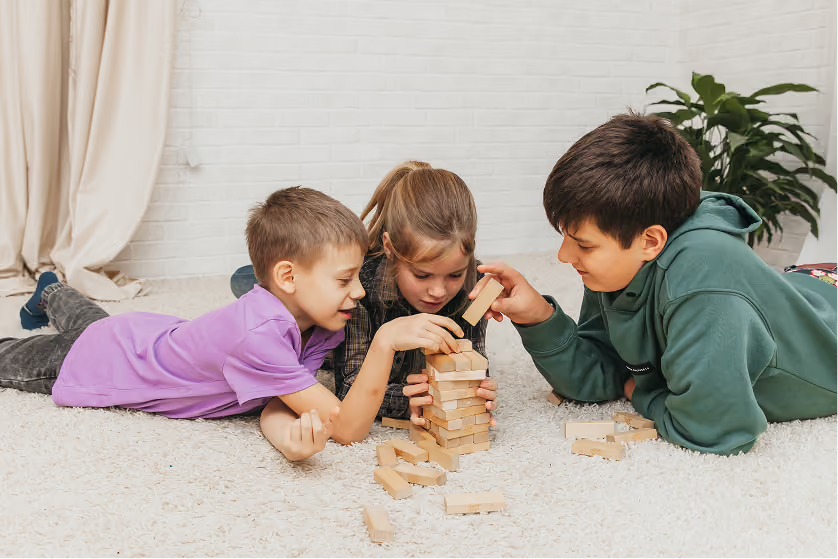
A child may practice “my turn” and “your turn” with a therapist, then use the same idea while playing a board game with a sibling. Later, turn-taking may appear with a classmate, neighbor, or friend, even when the game, materials, and adult support change. Generalization connects one learned social routine to many real relationships.
Peer play moves quickly. Children may change the rules, communicate with gestures or words, and continue without waiting for an adult cue. A visual turn-taking card, a familiar phrase, or a brief reminder can help a child follow the shared rhythm while staying engaged in a preferred activity.
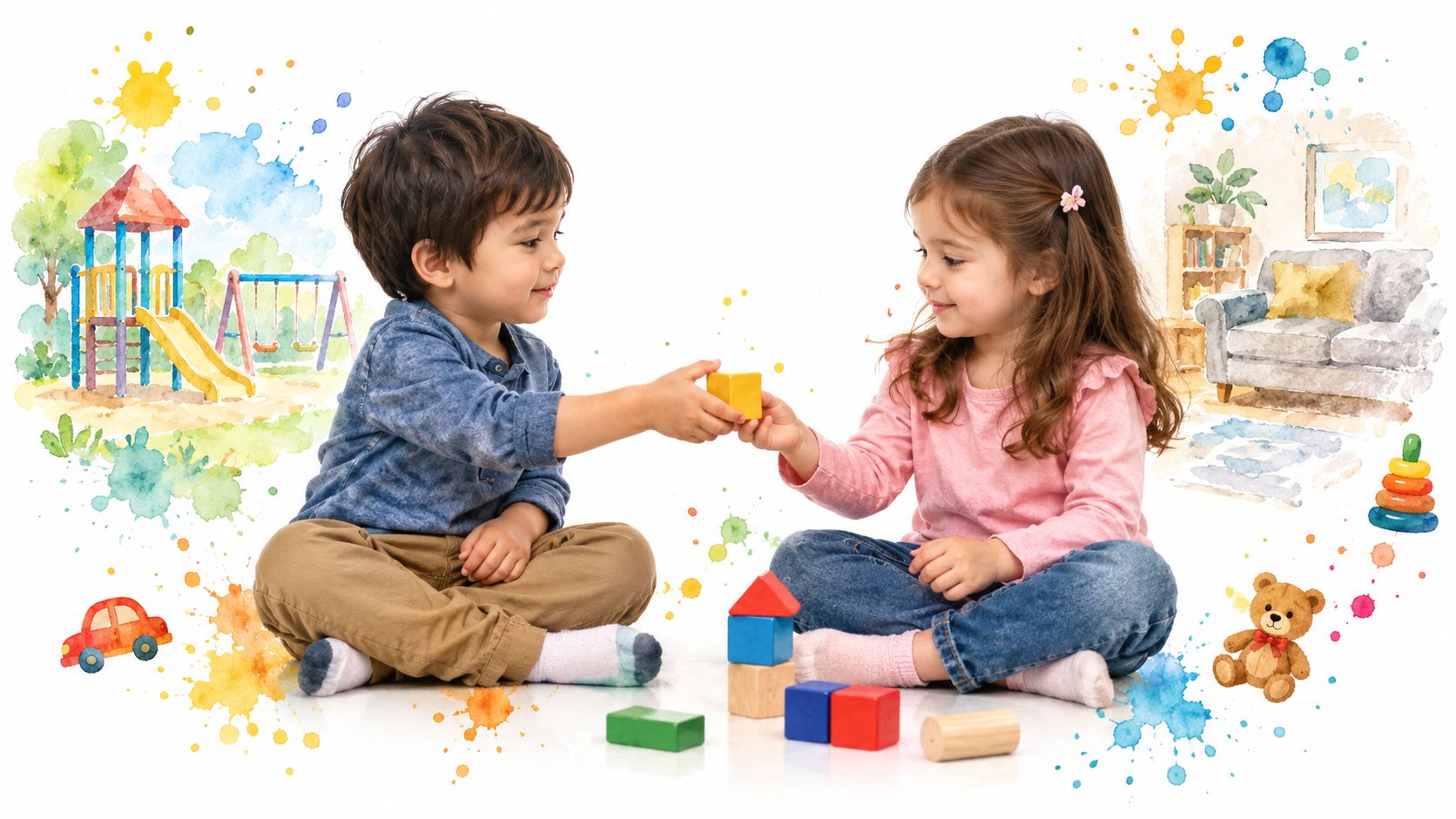
A birthday party creates another practice opportunity. A child who has worked on joining group play can watch first, receive quiet support from a parent, and enter when ready. The goal is participation that feels understandable and manageable, connected to the child's interests and communication style.
Build social flexibility through familiar play
Ask the therapist which skill is being practiced, such as sharing, waiting, joining an activity, or responding to a peer. Families and care teams can then choose a simple starting point, such as one sibling, one peer, or a familiar setting, before trying a larger group.
- Set up a clear play routine: Choose one peer, a comfortable location, and an activity such as blocks or a favorite game.
- Give the interaction a rhythm: A sibling can go first, the friend can follow, and the child can take another turn.
- Vary people and materials: Practice with different play partners, toys, and games so the skill does not depend on one person or object.
- Support without taking over: Stay nearby, offer the agreed prompt, and give the child time to respond.
- Share specific observations: Note whether the child joined, waited, shared, or responded, and what support helped.
- Fade support gradually: Reduce reminders as the child becomes more comfortable, while keeping help available when the setting changes.
The generalization strategies resource explains why practice should include varied examples and natural settings. Families can discuss these options with providers, adjust the plan together, and treat small gains as useful information about what helps the child connect with peers.
5. Bathroom and Hygiene Independence From the Therapy Bathroom to Every Bathroom
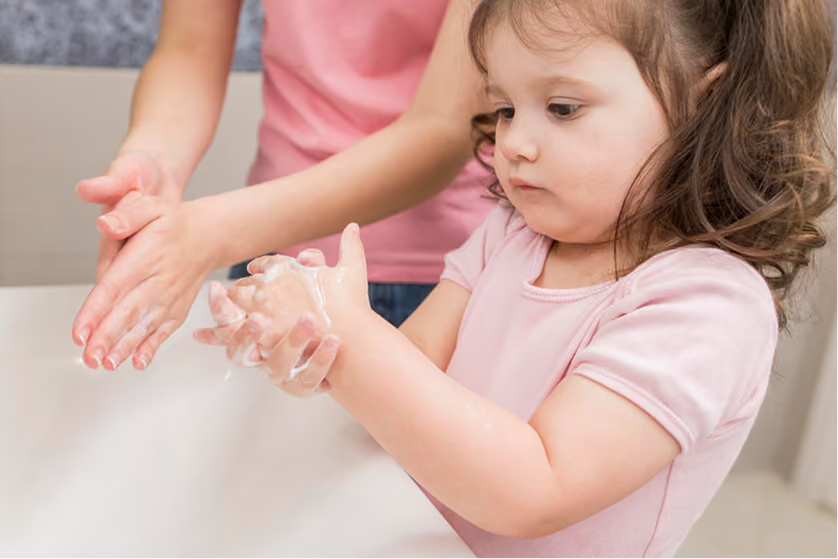
A child may wash hands, brush teeth, toilet, or wipe successfully in the therapy bathroom, then pause when the same routine appears elsewhere. Generalization means carrying that skill across people, bathrooms, materials, and time, including home, school, a friend's house, and a public restroom.
The routine may stay familiar while the details change. One sink might be higher, soap may come from an automatic dispenser, or a toilet may use a button rather than a handle. These differences can make the task feel new, so practice should expand gradually and respectfully.
A child who learns to wipe and flush in the clinic could first try the routine at home with a parent, then at school with a teacher or aide. A child using a hand-washing picture sequence might meet an automatic soap dispenser during an outing and respond after a brief reminder. Later, the team can check whether the skill remains available after a break or with a different caregiver.
Build independence without sacrificing privacy
Keep the overall sequence recognizable, while teaching the child how to respond to small changes. A portable steps chart or photo sequence can connect different bathrooms to the same routine. Families can also review home strategies for supporting independence with the care team and decide which prompts protect dignity without doing the task for the child.
Try this progression:
- Start with another bathroom at home, then add school, clinic, and familiar public restrooms.
- Teach a simple choice-based response: “This toilet has a button. What could you try?”
- Practise with different soap containers, taps, towels, and toilet controls when the child is ready.
- Tell the therapist when the child completes a step independently, asks for help, or needs a reminder.
- Track progress across settings and days, since success in one bathroom may not yet carry to every bathroom.
Uneven progress is useful information, not failure. Families, therapists, teachers, and caregivers can adjust the plan together while preserving the child's privacy and control.
6. Transitions and Schedule Changes From Predictable Therapy Routines to Flexible Real-World Adjustments
The visual schedule says “park,” but rain starts before the family leaves. A child who has practised transitions with a therapist may need support to accept “Change of plans. We're staying home.” Generalization means using familiar transition skills with different people, in different places, with different tools, and after routines have changed.
Begin with changes that feel manageable. After the child follows a visual schedule, a parent and therapist might vary the activity order, such as doing lunch before snack. Later, the child can practise a different destination, a changed pickup plan, or a postponed favourite activity. Each variation is like adding a new piece to the same puzzle. The routine stays understandable while flexibility grows.
The support itself can vary. A child who relies on a therapy timer might practise with a phone timer, kitchen timer, or smart speaker. A teacher, parent, or caregiver can use a countdown, transition song, picture cue, or brief verbal reminder. The team should watch which cue helps, then gradually give the child more opportunity to respond independently.
Unexpected events require careful planning. Fire drills, school assemblies, visitors, and appointments may be introduced through simple previews, social stories, or practice with small changes. Families can tell the therapist and teacher what happened, including whether the child asked for help, used a coping strategy, or needed extra time. That information helps the team adjust the next practice instead of treating distress as misbehavior.
Plan for flexible transitions together
- Change one feature at a time: Alter the order, location, person, timing, or activity while keeping another familiar support in place.
- Offer a transition kit: A visual timer, countdown, song, verbal prompt, or choice card gives the child more than one way to understand what comes next.
- Use clear, respectful language: “The store is closed. We can go to the park or return home.”
- Share observations across settings: Parents, teachers, therapists, and caregivers can compare what works at home, school, and in the community.
- Recognize small steps: Waiting briefly, accepting a new order, or asking for help all show developing flexibility.
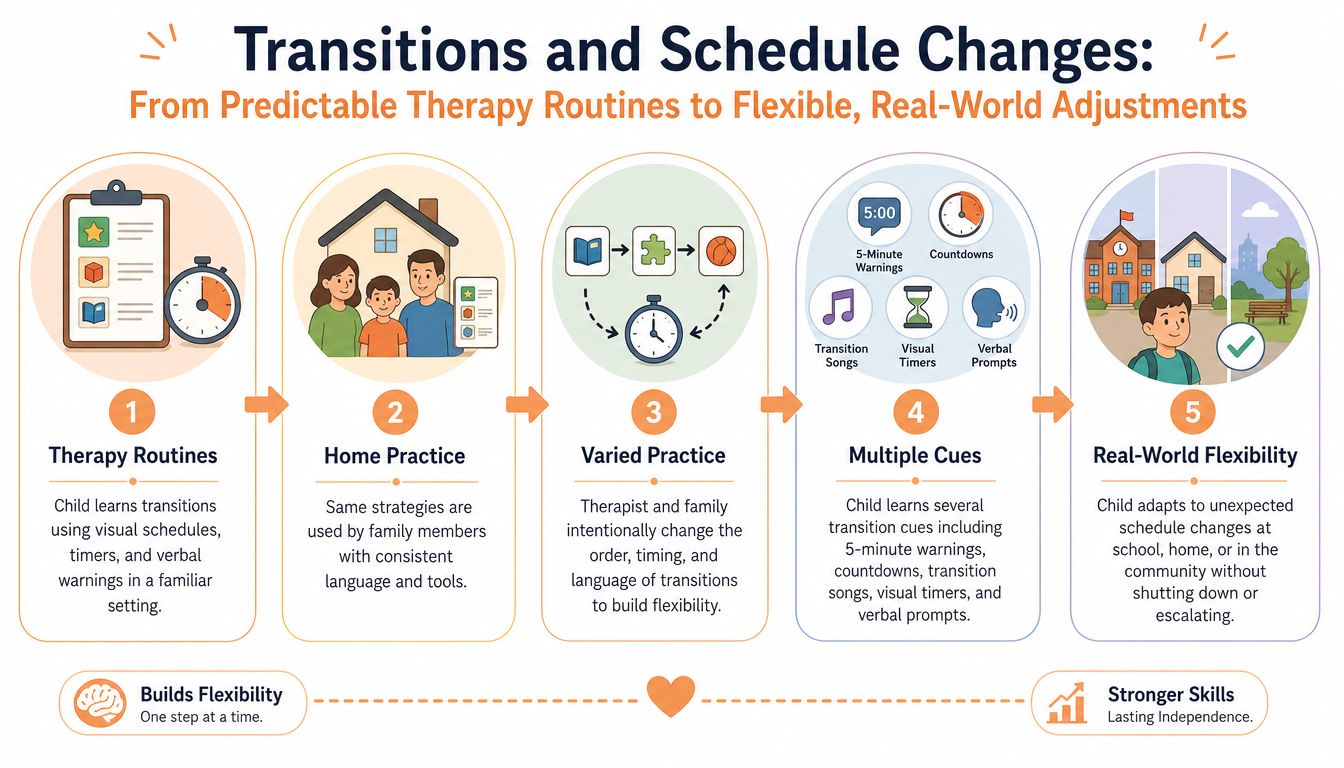
A classic parent-training study found that brief demonstrations could teach parents to teach specific skills, while adult teaching skills did not automatically transfer to new child targets when training omitted broader behavior-modification procedures. The finding supports continued coaching and measurement of both acquisition and generalization, rather than assuming one successful routine will cover every change.
7. Community and Outing Behavior From Controlled Therapy Settings to Unpredictable Public Spaces
A child may follow directions and stay near a caregiver in a quiet therapy room, yet find a grocery store, restaurant, playground, or shopping center difficult. Public outings combine noise, crowds, movement, waiting, and unexpected changes. Generalization helps the child use familiar skills across people, places, materials, and times.
Start with a small, clear sequence. The family might take a short walk near the clinic, visit a quiet park, and later enter a grocery store during a less busy period. Each setting adds a new feature while familiar communication tools and visual supports remain available.
The same approach applies to communication. A child who requests items at home and in therapy might ask a restaurant server for a meal item while a parent stays nearby. A child who joins structured activities in therapy can gradually participate for longer periods and in more complex community activities.
Plan the outing with the therapist, then adjust it from the child's responses rather than a fixed schedule.
- Keep familiar tools: Bring the same communication device, visual cue, behavior chart, or reinforcement approach when appropriate.
- Support sensory comfort: Headphones, sunglasses, fidget tools, or other agreed-upon supports may make participation easier.
- Measure small gains: A brief successful store visit counts as progress, even when a longer outing is still difficult.
- Review what happened: If a visit becomes hard, consider noise, crowds, waiting, sensory input, or an unexpected change. Discuss possible adjustments with the therapist and other caregivers.

Planned variation helps children learn the broader skill instead of one exact routine. Strategies may include practicing with common cues, visiting more than one place, and presenting varied examples, as described in planned generalization strategies. Families and care teams can compare observations, choose the next manageable challenge, and recognize each step toward comfortable community participation.
7-Point Comparison of Generalization Examples
| Area | 🔄 Implementation Complexity | ⚡ Resource Requirements | 📊 Expected Outcomes | Ideal Use Cases | ⭐ Key Advantages / 💡 Tip |
|---|---|---|---|---|---|
| Mealtime Skills: From Therapy Sessions to Family Dinners | Moderate, needs consistent home carryover and varied settings | Therapist guidance, family training, simple visual supports | Improved utensil use, independence, smoother family meals | Home meals, restaurants, school lunch, family gatherings | High visible progress; Tip: Keep mealtime setup and language consistent across caregivers |
| School Routines: Applying Classroom Skills in Real Academic and Social Settings | High, requires coordinated therapist–teacher collaboration | School consultation, teacher coaching, visual schedules, possible IEP/504 | Increased classroom participation, smoother transitions, better peer access | Classrooms, group lessons, inclusive settings | Supports academic inclusion; Tip: Provide teachers a one-page skills snapshot |
| Communication Across People: Speaking to Therapists, Teachers, Family, and Peers | High, systematic practice with many communication partners | Family and teacher coaching, AAC/devices if needed, repeated exposures | Consistent requests across partners, reduced frustration, stronger relationships | Home, school, peer interactions, community settings | Greatly improves relationships; Tip: Share target words/phrases with all key people |
| Play and Social Skills: From Structured Therapy to Real Friendships and Peer Play | High, peer-driven, unpredictable contexts slow progress | Structured playdates, peer coaching, therapist-facilitated fade, supervised practice | More peer initiation, cooperative play, improved self‑esteem | Playgrounds, playdates, birthday parties, recess | Strong quality-of-life gains; Tip: Start with brief, structured playdates and fade support |
| Bathroom and Hygiene Independence: From the Therapy Bathroom to Every Bathroom | Moderate–High, must generalize across varied fixtures and layouts | Visual step charts in multiple bathrooms, systematic exposure, caregiver consistency | Greater independence, fewer accidents, increased participation in school/community | Home, school restrooms, public bathrooms, friends' houses | Major independence milestone; Tip: Use identical visual supports across locations and practice variations |
| Transitions and Schedule Changes: From Predictable Therapy Routines to Flexible, Real-World Adjustments | High, demands intentional variability training and modeling | Multiple transition cues (timers, songs, visuals), family practice, planned schedule changes | Improved flexibility, fewer meltdowns, increased resilience | Unexpected schedule changes, school transitions, community activities | Reduces change-related stress; Tip: Teach several transition cues and vary routines in practice |
| Community and Outing Behavior: From Controlled Therapy Settings to Unpredictable Public Spaces | High, many uncontrolled variables; gradual exposure required | Outing plan, sensory supports (headphones, fidgets), therapist-guided community practice | Increased community participation, reduced caregiver anxiety, better regulation | Grocery stores, restaurants, parks, shopping centers | Enables typical family outings; Tip: Start in low-stimulation settings and incrementally increase complexity |
Building Skills That Belong Everywhere
Generalization can involve people, places, materials, routines, and time. A child may communicate with a therapist before communicating with a parent, use a bathroom routine at home before trying it at school, or follow a visual schedule before adapting to an unexpected change. These steps are connected, but they don't always happen at the same pace.
Parents can use a simple planning sequence with the care team:
- Choose one meaningful skill: Pick something that matters in your child's daily life, such as requesting help during dinner or transitioning from play to bedtime.
- Vary one part at a time: Change the person, setting, material, or routine gradually instead of changing everything at once.
- Keep helpful supports consistent: Use familiar visuals, communication tools, and prompting language while the surroundings become more varied.
- Celebrate attempts: A partial request, a brief peer interaction, or a supported transition can provide useful information and deserves encouragement.
- Share observations: Tell the therapist and care coordinator what happened, where the skill worked, and what made it harder.
A successful therapy session doesn't promise automatic use everywhere. The 2020 review noted that children transferred some skills beyond teaching contexts, but generalization wasn't consistent across all skills or studies (review findings on transfer beyond intervention contexts). That's why families should ask how a provider checks for transfer, uses multiple examples, and practices in natural environments.
Setbacks are information, not proof that your child has failed. A difficult grocery trip may show that the setting was too busy, the wait was too long, or the communication support wasn't available. Your therapist and care coordinator can use those observations to adjust the plan, and your family can continue at a pace that respects your child's comfort and strengths.
A coordinated model can also reduce the burden on caregivers. A pediatric care-coordination intervention for children with complex neurodevelopmental disorders reported improvements in care coordination access, use of a single point of contact, goals achieved, needs met, family support, and reduced parental worry, with the authors concluding that the family-centered model was feasible and effective (2018 pediatric care-coordination intervention). For families, scheduled check-ins and a dedicated coordinator can make it easier to connect home, school, therapy, and community goals.
Friendly ABA Premier offers individualized ABA treatment planning, parent coaching, home-based therapy, social skills development, school support, scheduled progress check-ins, and coordinated family communication across CT, GA, MD, MA, NC, SC, VA, and WA. Visit Friendly ABA Premier to talk with the team about helping skills carry into the routines and places that matter most to your family.
Our Latest Insights













Experience ABA Therapy with a More Personalized Level of Support
Discover how FriendlyABA Premier combines evidence-based ABA therapy with dedicated coordination, proactive communication, and individualized family support.