

What Is Functional Behavior Assessment
What is functional behavior assessment. Learn what a functional behavior assessment is, how it works in ABA therapy, and how the results shape a plan that truly

Dinner is on the table, but your child is on the floor, hands over their ears. You're standing nearby, unsure whether to comfort them, wait quietly, or set a firm limit. Underneath the immediate question, “What should I do?” is often a more painful one: What's going on inside my child right now?
A functional behavior assessment, often called an FBA, can help a family and care team move toward an answer. It doesn't judge your child, assign blame, or reduce them to a behavior. Instead, it gathers clues from everyday situations so the adults around the child can respond with greater understanding and teach skills that fit the child's needs.
If you're also wondering whether your child could benefit from additional communication, daily living, or social support, you may find this guide to signs your child may benefit from ABA therapy helpful. An FBA is one possible starting point for making support more individualized.
Table of Contents
- Indirect information provides the first clues
- Direct observation tests the story against daily life
- Experimental methods examine the hypothesis
A Calm Place to Start
At dinner, the floor may be only the visible part of the story. Perhaps the room is loud, a new food is on the plate, a sibling is talking over everyone, or your child doesn't yet have a reliable way to say, “I need a break.” The behavior is real, but it's also information.
That doesn't mean every difficult moment has one simple explanation. Children can react to several conditions at once, including demands, noise, fatigue, communication challenges, changes in routine, or the way other people respond. An FBA helps the team slow down enough to look for patterns instead of guessing from one hard evening.
A behavior is something to understand, not a verdict about a child.
The assessment begins with a practical question: What happens before the behavior, what does the behavior look like in observable terms, and what happens afterward? Those details help the team consider what the child may be trying to communicate, avoid, access, or regulate.
For parents, this can feel relieving because it replaces a cycle of “try this and hope” with a more organized conversation. You're not expected to know the answer before the assessment begins. Your observations, questions, and knowledge of your child are part of the information the team needs.
The process may take place at home, at school, or in another familiar setting. The aim is to understand the child in the situations where support is needed, while respecting the child's dignity, routines, strengths, and relationships.
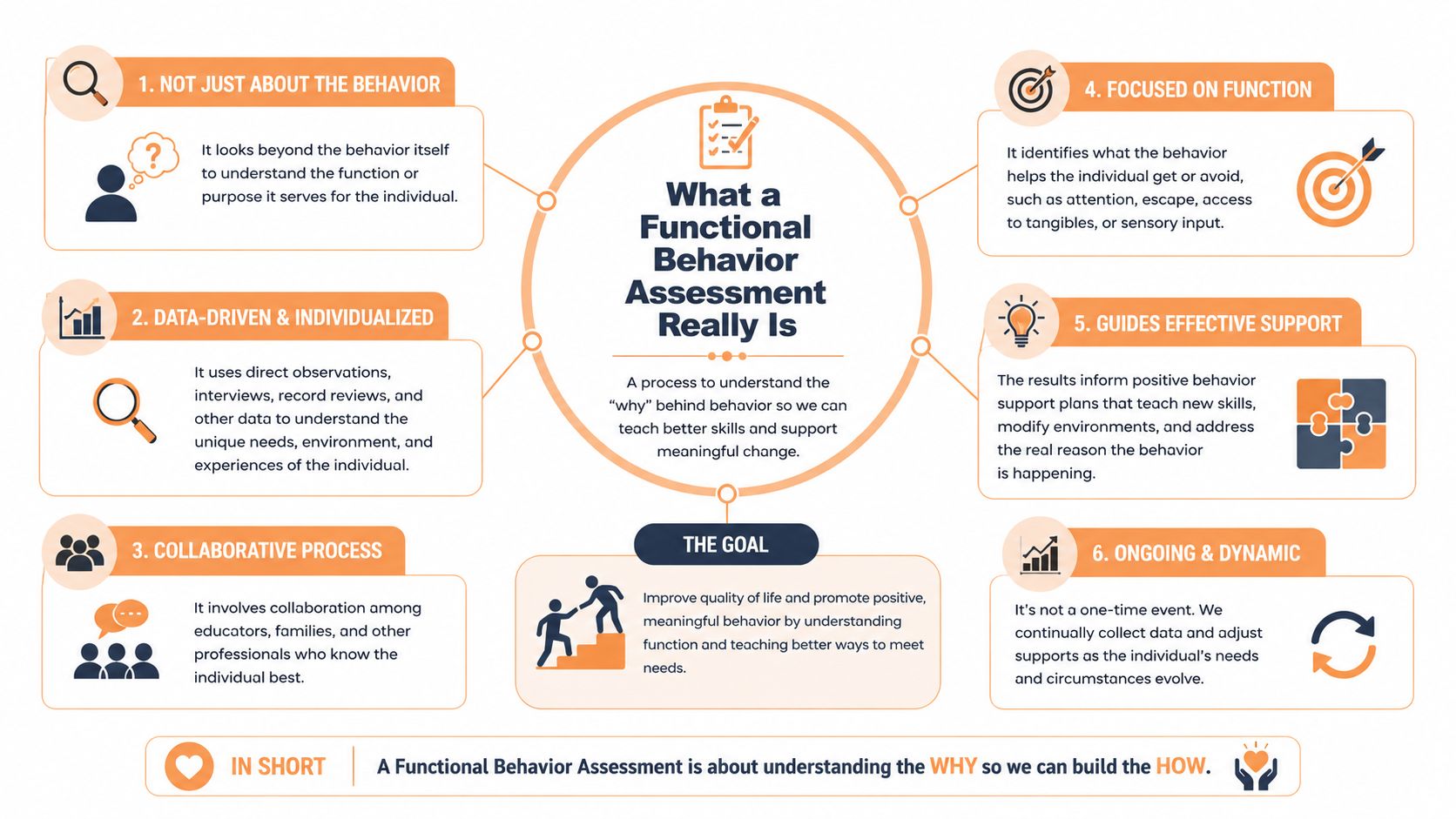
What a Functional Behavior Assessment Really Is
Think of an FBA as careful detective work, not a test your child passes or fails. A clinician collects clues from interviews, records, observations, and sometimes structured trials to understand the environmental conditions connected with a behavior.
A functional behavior assessment is a multi-method process that links an observable behavior with what happens before it and what happens after it. The technical purpose is to identify environmental variables that may be maintaining the behavior, then develop a function-based hypothesis such as escape, attention, access to tangibles, or automatic or sensory reinforcement. Research on function-based treatment supports matching intervention to the behavior's function rather than relying on a generic response.
What an FBA isn't
An FBA isn't an autism diagnosis. It also isn't a single classroom note, one brief observation, or a generic behavior chart that records whether a child had a “good” or “bad” day.
A strong assessment defines the behavior clearly. “Has a meltdown” is too broad to guide consistent support. A more useful description might identify the observable action, such as dropping to the floor, covering the ears, pushing materials away, or crying after a particular demand. Virginia special-education guidance emphasizes that an interfering behavior should be described in clear, specific, measurable, observable, and objective terms.
The team then looks for repetition across settings and times. A child may respond differently during breakfast, group work, recess, homework, or a crowded family gathering. Federal education guidance describes FBA as a way to understand function and contributing factors so teams can create positive behavioral interventions and supports.
The legal history matters, too. The term FBA entered federal law through the 1997 amendments to IDEA, and IDEA 2004 reinforced requirements related to inappropriate or aggressive behavior and disciplinary situations involving students with disabilities, as explained in this overview of FBA and IDEA. For families, that means an FBA is both a clinical tool and a recognized school-based process.
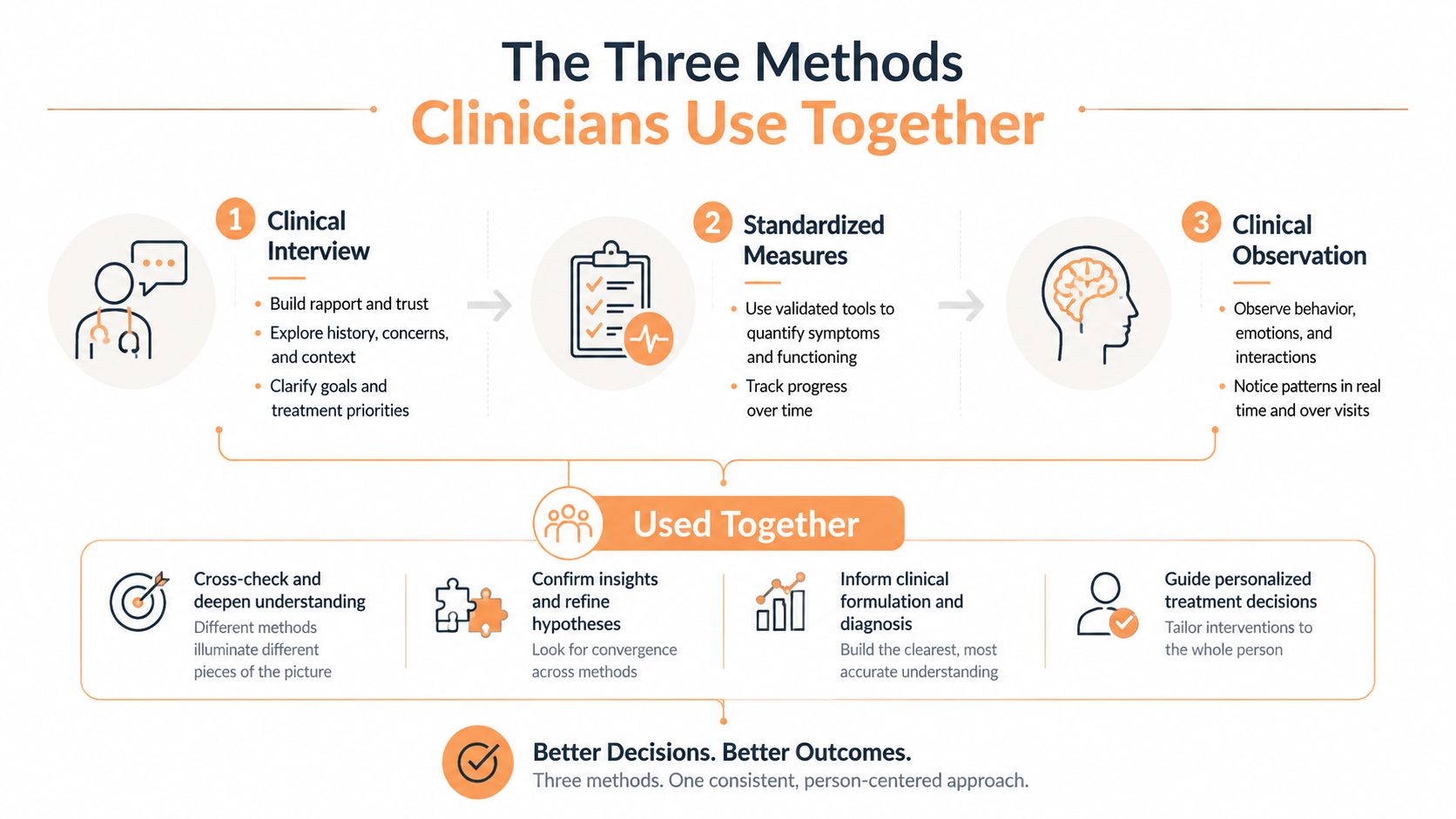
The Three Methods Clinicians Use Together
Clinicians usually build an FBA in layers. They begin broadly, focus through direct measurement, and use carefully planned testing when the team needs stronger evidence.
Indirect information provides the first clues
The first layer often includes conversations with parents, caregivers, teachers, and other people who know the child. A clinician may ask when the behavior began, where it happens, what routines are difficult, what the child can already communicate, and how adults and peers typically respond.
Interviews and rating scales can reveal patterns that aren't visible during a short visit. A parent might explain that the behavior is most likely after poor sleep or during unexpected changes. A teacher might notice that it appears during written work but not during hands-on activities.
A structured interview has a specific purpose. It helps the team generate a working hypothesis about why the behavior occurs, based on details provided by caregivers or school staff, as described in this research on structured interviews in FBA.
Direct observation tests the story against daily life
The next layer involves watching and recording what happens in real situations. ABC data means documenting the antecedent, or what happens before; the behavior itself; and the consequence, or what happens immediately afterward. This plain-language explanation of ABC data shows why each part matters.
A scatterplot can help the team see when behavior is more likely across days, activities, locations, or times. Direct observation might happen during classroom work, cafeteria time, group activities, play, transitions, or home routines.
Experimental methods examine the hypothesis
Sometimes indirect and direct information point in the same direction. When uncertainty remains, a qualified clinician may use an experimental method to test the hypothesis by changing a relevant condition in a controlled and ethical way. This can include examining whether a break, attention, an item, or another consequence changes the pattern.
Functional communication training trials may also help test whether teaching a practical request meets the same need more effectively. The method must be planned around safety, consent, and the child's individual circumstances.
These layers shouldn't be treated as competing choices. Together, they help the team avoid building an entire plan around one person's impression or one isolated event.
A short video can also help families visualize how assessment methods fit together:
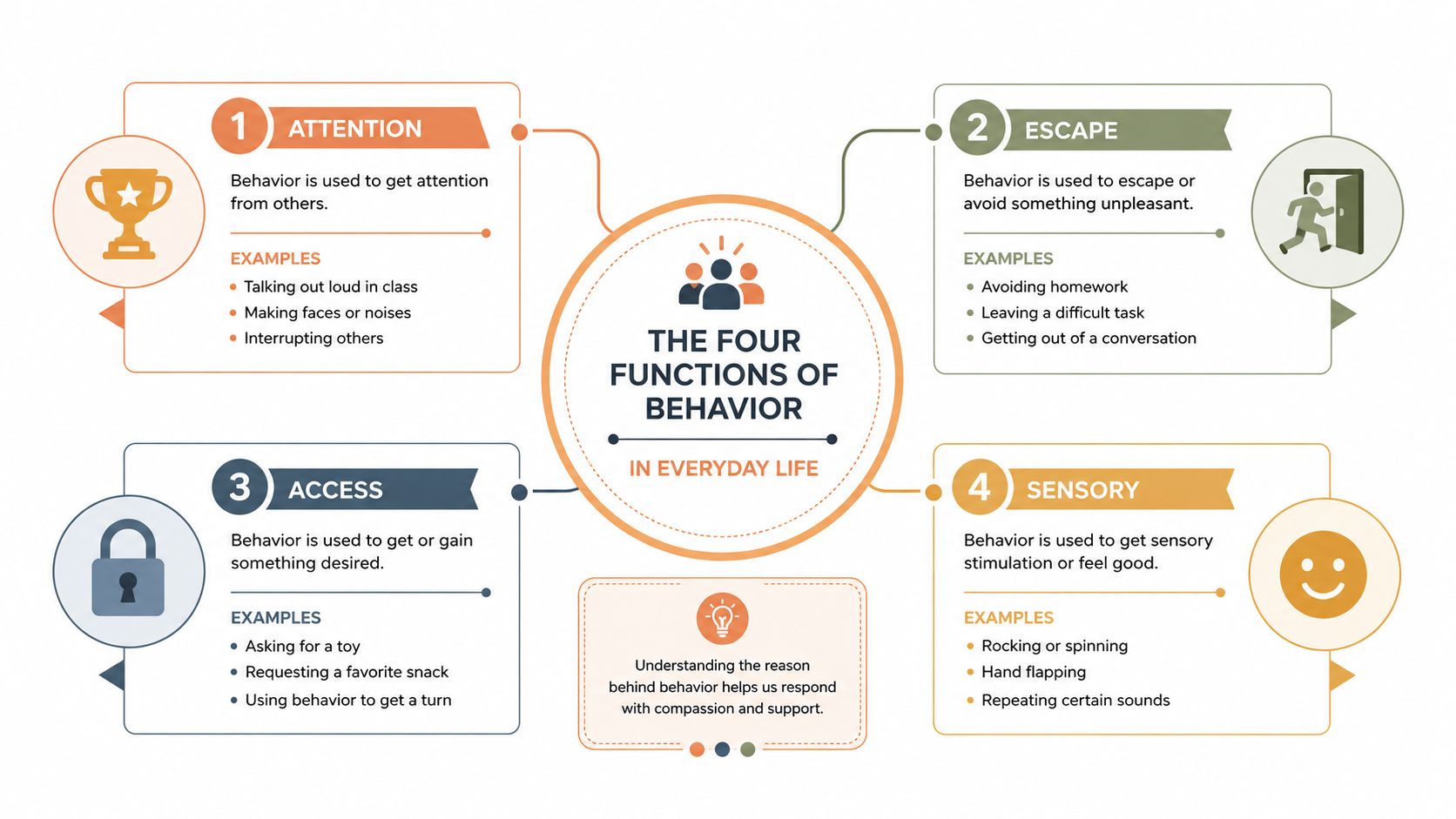
The Four Functions of Behavior in Everyday Life
A function is the outcome a behavior appears to produce for a child. It isn't a moral reason or a conscious plan. It's a practical way for the team to ask what changes for the child after the behavior occurs.
Escape or avoidance
Homework begins, and your child pushes the paper away, cries, or leaves the table. If the work stops each time, the behavior may be connected with escaping a difficult, confusing, lengthy, or uncomfortable task.
That doesn't mean the child is “trying to get out of everything.” The task may be too hard, the instructions may be unclear, or the child may need a way to request help or a short pause.
Attention
You're on the phone helping a sibling, and your child starts shouting or repeatedly tapping your arm. If conversation, reassurance, correction, or physical closeness follows, the behavior may be maintained by social attention.
Attention can be positive, neutral, or corrective. From the child's perspective, the important feature may be that another person responds.
Access to tangibles or activities
A tablet is visible before dinner, or a favorite toy is on a high shelf. Your child grabs, cries, or drops to the floor after being told to wait. If the item or activity follows the behavior, access may be part of the pattern.
The team looks at timing, communication opportunities, waiting skills, and the responses adults provide. A child may need to learn a clearer way to request, negotiate, or tolerate “not yet.”
Automatic or sensory reinforcement
Some behaviors occur without an obvious social trigger or immediate change in the environment. Hand-flapping, rocking, humming, or mouthing an object may provide sensory input, regulation, or another internal effect.
The same behavior can have different functions in different settings. A clinician compares observations rather than assuming that one explanation applies everywhere.
The question isn't “How do we stop this?” It's “What need is this behavior meeting, and what safer or more effective skill could meet that need?”
How FBA Results Shape Your Child's Plan
An FBA should lead somewhere useful. Its findings can guide a behavior intervention plan, or BIP, that connects the observed behavior with a specific function and a teachable replacement skill.
A thoughtful plan usually includes:
- Observable behavior description: What exactly does the child do, and how will adults recognize it consistently?
- Function-based hypothesis: What appears to happen before and after the behavior, and what outcome may be maintaining it?
- Antecedent supports: How can adults adjust instructions, routines, choices, materials, or transitions before difficulty escalates?
- Replacement behavior: What can the child do instead, such as requesting help, asking for a break, waiting, or using a communication system?
- Response strategies: How will adults respond safely and consistently while reinforcing the new skill?
- Progress monitoring: What information will the team review to decide whether the plan needs adjustment?
Suppose a child's tantrums are linked with escaping challenging tasks. A function-matched plan might break work into manageable parts, offer a clear way to request help or a break, teach gradual tolerance, and reinforce returning to the activity. Removing the child from every task may quiet the moment while leaving the underlying communication and participation needs untouched.
This is different from a punishment-based reaction, which focuses mainly on stopping the visible behavior after it occurs. The team may also consider noncontingent reinforcement in ABA, an approach that provides reinforcement on a planned basis rather than waiting for interfering behavior.
| Identified Function | Function-Matched Strategy | Outdated Reaction to Avoid |
|---|---|---|
| Escape from difficult work | Teach “help” or “break,” adjust task difficulty, and build tolerance gradually | Removing all demands or responding only with reprimands |
| Attention from adults | Schedule positive attention and teach an appropriate attention request | Giving lengthy corrections only after shouting |
| Access to a preferred item | Teach requesting, waiting, and accepting a clear transition | Returning the item unpredictably after escalation |
| Sensory or automatic input | Identify safe regulation options and teach appropriate access to them | Blocking the behavior without offering a useful alternative |
Parents should expect the written plan to explain what adults will do before, during, and after the behavior, not just list what the child should stop doing. Ask for examples that fit your child's routines, communication style, strengths, and support needs.
What the Process Looks Like for Families
At first, Maya's parents described the process in one sentence: “School says she refuses work, and we don't know why.” During the initial conversation, the clinician asked about mornings, transitions, sleep, homework, favorite activities, communication, and what happened after Maya left the table. Her parents began to see that they held important information, even though they didn't use clinical terms.
The clinician then reviewed available records and arranged observations at school and home. The school observation focused on written work and transitions. At home, the team watched a routine that often became difficult, while the family continued with ordinary activities rather than creating a performance for the assessor.
A care coordinator can make these logistics less confusing by confirming appointments, explaining who will attend, sharing what information would help, and keeping communication moving between family members and clinicians. That support matters when a parent is balancing work, school messages, therapy schedules, and the emotional weight of seeing a child struggle.
You shouldn't have to decode every clinical phrase before you can participate in your child's plan.
As data accumulated, the team discussed a hypothesis with Maya's parents and teacher. The adults noticed that written tasks became harder when instructions were lengthy and that leaving the area often resulted in the work stopping. They also noticed Maya could complete more when she had a visual sequence, a brief help request, and a predictable break routine.
The written recommendations gave the family something concrete to review. They could ask what each strategy looked like, how the team would measure progress, and what would happen if the plan didn't fit. For a practical overview of what to expect during your first ABA assessment, parents can prepare questions before the first conversation.
The process should feel collaborative and paced around the child. A parent may recognize their child in the clinician's notes, while a teacher tries a new support that same week. Those small moments can turn a confusing pattern into a shared plan.
Common Worries Parents Can Set Aside
Parents often worry that an FBA will label their child. In reality, the assessment describes a behavior in a particular context and develops a hypothesis about what may be influencing it. It doesn't define the child's personality, potential, identity, or worth.
Another common fear is that the assessment will judge parenting. A careful FBA examines environmental conditions, communication opportunities, task demands, sensory factors, and adult responses because those details help explain patterns. That focus isn't an accusation. It's an invitation to make the environment more supportive.
Some families expect the assessment to produce a guaranteed answer or a fixed outcome. It doesn't. An FBA produces a hypothesis supported by available information, and the team may need to test, monitor, and revise that hypothesis. It isn't a prescription for medication, and it doesn't determine a child's future.
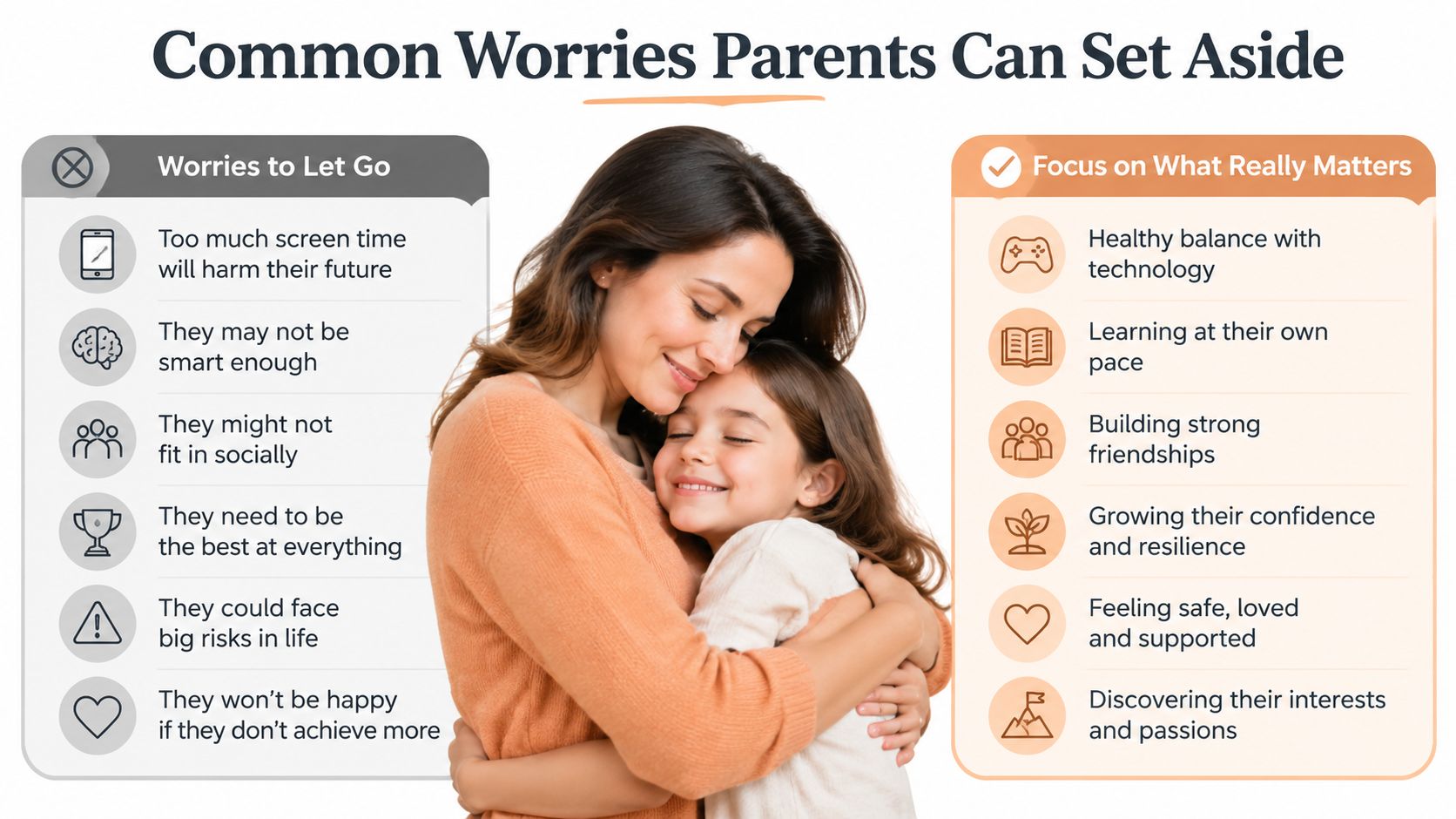
You may also worry about long meetings or intrusive questions. Families usually contribute through conversation, records, and observations of ordinary routines. You can ask why a question matters, request plain-language explanations, and share limits around privacy or scheduling.
You're allowed to ask, “How does this finding change what we do tomorrow?”
A school-based FBA can also be confused with an automatic requirement for a BIP in every situation. Education guidance notes that IDEA requires a behavior intervention plan when a disciplinary removal leads to a manifestation determination that the behavior was caused by the student's disability, while teams may use positive behavior supports in other circumstances as well. Your school team can explain how the rules apply to your child's situation.
Your Next Step With Confidence
You don't need to arrive at the first conversation with a finished explanation. A small amount of organized information can help the team begin with your priorities instead of starting from scratch.
Write down a few recent examples. Include what happened before the behavior, the observable actions, what happened afterward, where it occurred, who was present, and what helped the situation settle. Avoid labels such as “defiant” or “out of control” when you can describe what you saw.
Bring these questions:
- Assessment leadership: Who will conduct the FBA, and what training or credential do they hold?
- Process and setting: Where will observations happen, and how will home and school information be considered?
- Family preparation: What records, examples, communication notes, or home observations would be useful?
- Plan development: How will the team explain the function-based hypothesis and replacement skill?
- Measurement: What behavior or skill will be tracked, and how will the team share updates?
- Revision: What will happen if the strategy doesn't fit the child or the data doesn't improve?
You're a full member of the team, not someone waiting to receive decisions. Your child's preferences, strengths, communication style, routines, and relationships should shape the assessment and any plan that follows.
Choosing an FBA is choosing clarity, but the next step doesn't have to be large. It may be one message, one conversation with the school, or one call to a provider who can explain your options without rushing you. Ask your care team for individualized guidance, especially when behavior involves safety, significant distress, or complex medical or developmental concerns.
Friendly ABA Premier offers individualized ABA therapy, home-based support, social skills development, school support, and parent coaching across Connecticut, Georgia, Maryland, Massachusetts, North Carolina, South Carolina, Virginia, and Washington. Families work with a dedicated care coordinator, scheduled progress check-ins, and proactive communication as assessment findings are translated into practical support. Visit Friendly ABA Premier to start a no-pressure conversation about your child's needs and next steps.
Our Latest Insights
























Experience ABA Therapy with a More Personalized Level of Support
Discover how FriendlyABA Premier combines evidence-based ABA therapy with dedicated coordination, proactive communication, and individualized family support.