

Examples of Target Behaviors: A Practical Guide for Families
Explore 8 examples of target behaviors across communication, self-care, social skills, and problem behaviors with practical operational definitions for

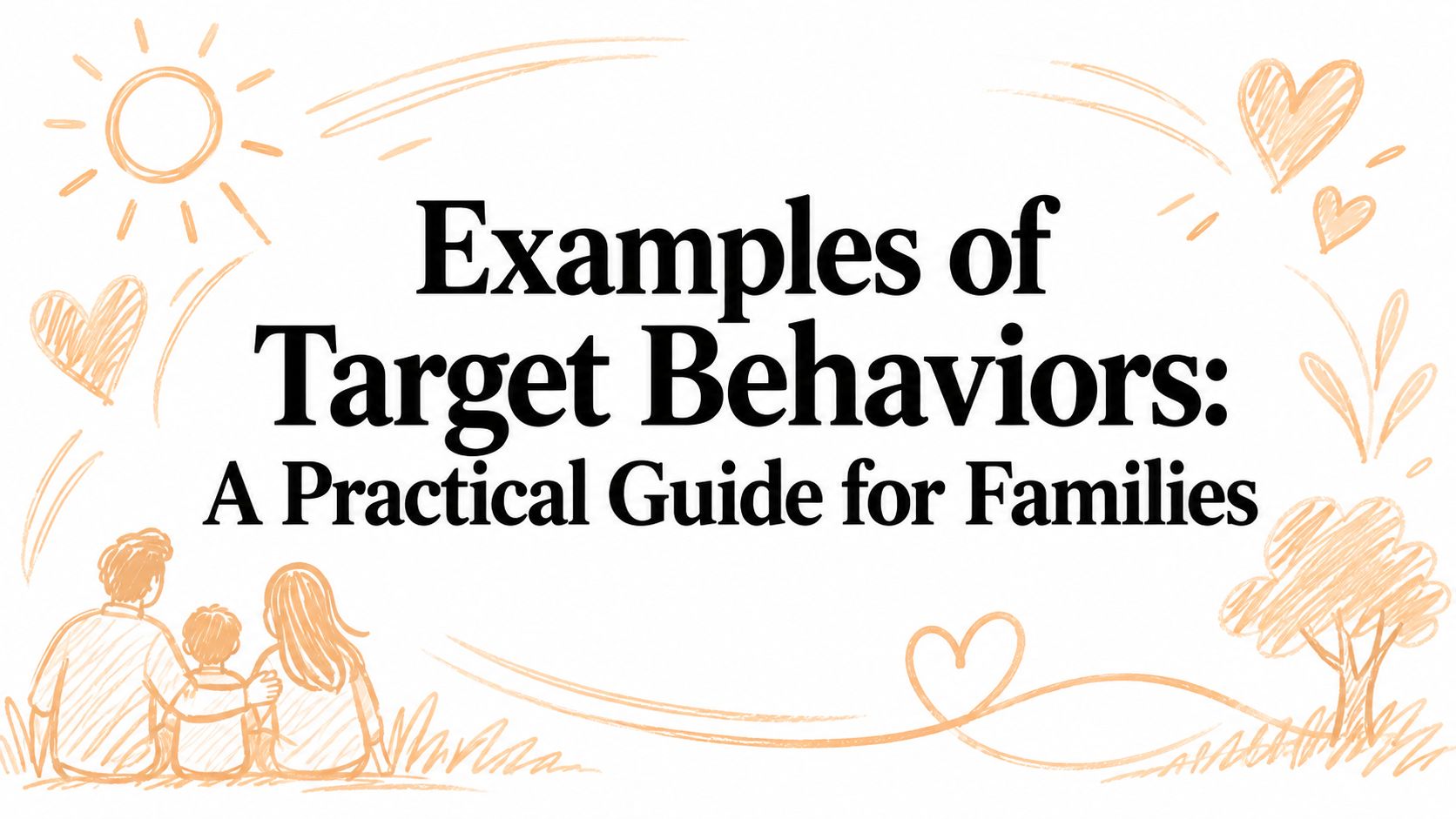
A child wants help opening a snack, but the request never comes. Another child becomes upset when playtime ends, or leaves the table when a familiar routine changes. These moments can feel confusing for families, especially when everyone is trying to understand what the child needs.
In ABA, a target behavior is an observable skill or response that a family and care team choose to understand and support. It isn't a label for the child. It might be a communication skill, a self-care step, a way to participate with other people, or a response that signals an unmet need.
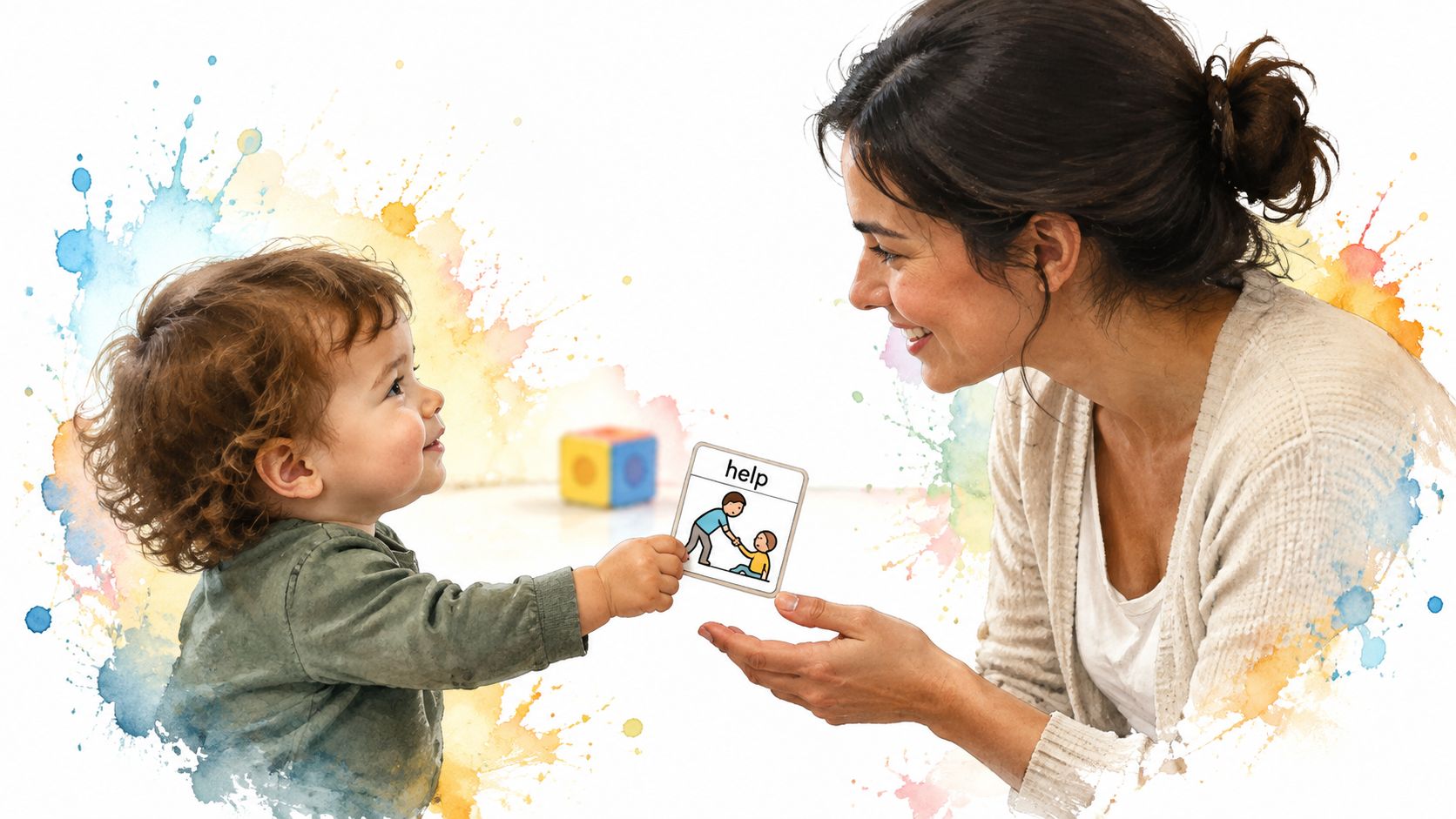
An operational definition makes the target clear by describing exactly what someone could see or hear. “Frustrated” is an internal state and is too broad to measure on its own. “Says ‘help,’ hands over a picture card, or presses the help button” gives caregivers something concrete to recognize and track, as explained in this family-focused overview of observable target behaviors.
The examples below cover communication, self-care and routines, social participation, and behaviors that may communicate discomfort or a need for support. Each goal should be individualized with the child's clinicians, caregivers, and educators.
Table of Contents
1. Requesting or Asking for Help
A child may need a way to ask for a favorite toy, more food, a break, or assistance with a difficult task. That request can use spoken words, sounds, signs, gestures, a picture card, or a communication device. In ABA, a request for something wanted or needed is often called a mand, but families don't need to use the term to support the skill.
A useful operational definition could be: “When the child wants an item or assistance, they say a word, make an agreed-upon sound, use a sign, point to a symbol, or activate a communication device within the routine.” The team can then observe whether the request happens during snack, play, schoolwork, or transitions.
At snack time, a preschooler might say “more crackers” instead of pushing food away. A child who doesn't speak may hand over a picture card for a favorite video. During a transition, a child might use a device to ask, “Can I play outside?” A student who needs clarification could raise a hand and ask the teacher for help rather than abandoning the assignment.
Practical rule: Start with requests that matter to the child right now, and respond consistently when the child communicates safely.
Begin with highly preferred items and simple requests. Honor the request when it's safe and possible, because a child learns that communication has meaning when other people respond. Practice with parents, grandparents, teachers, and therapists so the skill can carry across people and settings.
Celebrate approximations and early attempts. A care team can help decide whether to begin with one word, a gesture, a picture, or a device response, then gradually build toward more detailed communication. For families seeking practical support, access to better communication can become part of everyday routines rather than a separate task.
2. Following Instructions or Directions
Following a direction can support safety, learning, and participation in family life. The target might be responding to “come here,” putting toys away, getting dressed, or completing a short sequence before snack.
A measurable definition should describe the action and the cue. For example: “After an adult gives the direction ‘put your shoes on,’ the child places both shoes on their feet with available visual or verbal support.” Another target could involve responding to their name and moving toward a caregiver when called.
Start with a direction that fits the child's current skills. A three-year-old might put toys in a bin after hearing “clean up.” A child in the middle of play might stop, look toward a caregiver, and come over when called. At school, a student might follow a two-step direction such as washing hands and sitting down for snack.
Visual supports can make spoken instructions easier to understand. A child may use a picture schedule to move from breakfast to dressing, then to the bus. A demonstration, gesture, or first-then board can provide useful information without requiring the child to process a long verbal explanation.
Make directions easier to act on
Use a calm, consistent tone and position yourself where the child can see and hear you. Give processing time before repeating the instruction. If you give a direction, be ready to follow through with appropriate support rather than repeating it many times.
Specific praise connects the action to the positive response. “You put on your shoes so quickly” tells the child exactly what worked. A care coordinator can help a family and therapist identify which directions matter most, such as safety instructions, morning steps, or classroom participation.
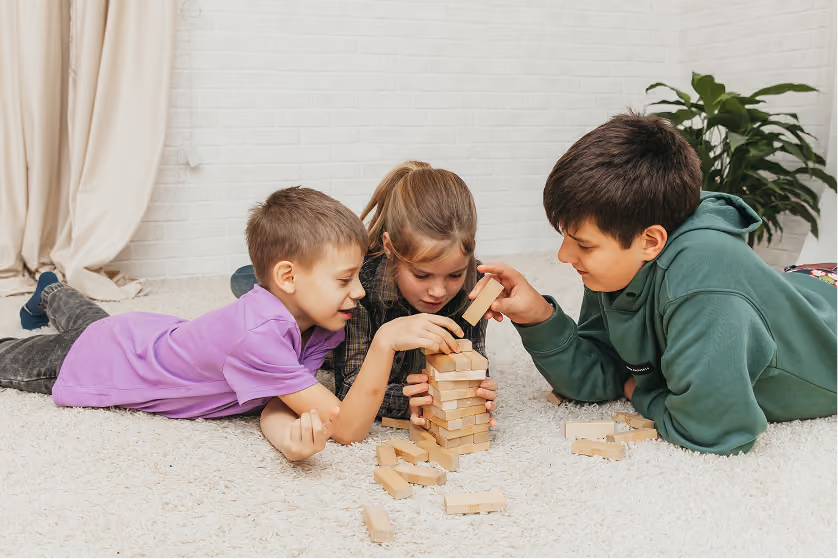
3. Sharing and Turn-Taking in Play
A ball rolling between two children shows what turn-taking can look like in real life. One child rolls, the other waits, and both remain part of the activity. The same skill can appear when siblings choose a game, classmates use a water table, or children take turns speaking during a group activity.
An operational definition might be: “During a shared activity, the child waits while another person takes a turn, then uses the activity materials when cued or when their turn begins.” The team might also define sharing as handing over a toy after a visual or verbal cue, while keeping the child's comfort and communication style in mind.
Waiting can be demanding because it combines flexibility, impulse control, and awareness of another person. Start with a trusted adult or sibling and an activity the child enjoys. Short turns can build confidence before the family introduces longer waits or a larger peer group.
A visual timer can show when the child's turn is coming. Adults can narrate the sequence in simple language: “You're waiting. I have the ball. Then it's your turn.” Praise the specific success, such as “You waited, and now you can roll.”
“You don't have to begin with a busy group. A predictable game with one supportive partner can create a strong starting point.”
Turn-taking can be practiced through rolling a beach ball, adding pieces to a puzzle, choosing songs, or taking turns pressing a button on a favorite toy. The therapist can embed the practice in play instead of treating it as an isolated drill. Families also exploring preschool support may find this ABA therapy resource for preschool routines useful when discussing social participation with their care team.
The following video can provide another visual example of shared play:
4. Responding to Their Name and Making Eye Contact
A caregiver may call a child's name during play, at the playground, or before giving an instruction. A target could be the child turning toward the speaker, looking up briefly, orienting their body, or using another response that shows shared attention.
A clear definition might say: “When a caregiver says the child's name from a nearby position, the child turns their head, looks toward the caregiver, or pauses the activity within the agreed observation period.” The care team can decide which response is meaningful for that child. Direct eye contact isn't the only sign of connection, and it shouldn't be forced.
A toddler might look up from blocks when their name is called. A student might orient toward a teacher before receiving classroom instructions. A non-speaking child might turn toward a caregiver to share interest in a bird or point toward something across the room.
Use the child's name positively, not only when correction or compliance is expected. Pair it with a favorite toy, snack, song, or playful interaction. Get down to the child's level when appropriate, and reinforce brief responses without demanding a prolonged gaze.
Attend to connection, not appearance
Some children show attention through body orientation, shared movement, gestures, or sounds rather than sustained eye contact. A care coordinator and clinical team can help define a target that supports communication and participation without making the child perform an uncomfortable social behavior.
The target may be “turns toward the teacher when spoken to” rather than “maintains eye contact.” That distinction keeps the goal observable while respecting individual differences.
5. Using Functional Words and Simple Sentences
Functional communication helps a child participate in everyday routines. A word, sign, picture, sound, or communication device might name an object, show a preference, answer a question, describe an event, or tell someone what the child needs. The goal is a useful message, not one particular form of speech.
A measurable definition could be: “When shown or encountering a familiar item, activity, or event, the child uses an agreed-upon word, sign, symbol, or device response to identify, request, reject, or comment.” This definition focuses on an observable action and its purpose. Repeating a word without directing it toward another person may be recorded differently from using that word to communicate.
During a family walk, a toddler might say “dog” when the pet enters the room. At the playground, a child could use a communication app to say “I want swing.” A preschooler might answer “red car” when asked what they see, while an older child could share, “I played and ate snack,” after school.
Build language into ordinary routines
Model useful words during play, meals, bath time, and errands. If trains are highly motivating, “train,” “go,” “stop,” “more,” and “help” may be practical starting points. Pause after modeling to give the child time to respond, while keeping the interaction enjoyable rather than turning each exchange into a test.
Treat approximations as meaningful communication. If a child reaches for a ball and says “ba,” respond to the request and model “ball.” Once that response becomes reliable, the care team can consider shaping a longer phrase, adding a symbol, or teaching another way to express the same message.
- Follow interests: Use objects and activities the child already seeks out.
- Repeat naturally: Model useful words across meals, play, and community routines.
- Share vocabulary: Tell caregivers and teachers which words, symbols, or signs are being practiced.
- Honor communication: Respond to appropriate requests and preferences whenever safety allows.
The best starting words differ from child to child. A therapist and care coordinator can help the family choose language that supports daily participation, and this communication-focused ABA resource can support conversations about family priorities. The family and care team can then adjust the target as the child's communication becomes more consistent, meaningful, and independent.
6. Transitioning Between Activities Without Major Meltdowns
Leaving a favorite activity can challenge any child. A trip to the park ends, a video stops, school preparation begins, or play gives way to dinner. Each change asks the child to shift attention, accept a different plan, and understand what will happen next.
A useful target definition is: “After a transition cue, the child stops the current activity, moves to the next location or routine, and begins the next activity with the agreed level of support.” This wording describes actions adults can see instead of using a broad label such as “has a meltdown.” Observable details might include dropping to the floor, refusing to move, or walking toward the next activity.
For example, a child may leave the park after a visual countdown and walk to the car. A preschooler might check a picture schedule showing home, school, and snack. In class, a five-minute warning and brief transition activity may support movement between centers. At home, a timer can signal that screen time is ending before the child chooses the next routine.
Make the next step predictable
Visual schedules, first-then language, and a steady transition routine can make the change easier to understand. Practice during calm moments, when the family is not rushed. A small preferred activity after the transition may give the child a clear reason to continue.
Begin with a manageable change, then build toward harder ones. Moving from blocks to snack may come before leaving a preferred community activity. The family and therapist can observe which support fits the child: a warning, visual cue, help carrying an item, or a way to request more time. A prompt may help at first, then fade as the child participates more independently.
Trade-offs matter. A timer may support predictability for one child but increase distress for another. A preferred activity can encourage participation, while the team also watches whether the child begins relying on that reward every time. Families can discuss noncontingent reinforcement in ABA with their care team when attention, access, or predictability strongly affects transitions.
Small-step approach: Prepare the child before the change, show what comes next, and reinforce participation rather than expecting perfect calm immediately.
The plan should reflect the child's communication, sensory needs, safety considerations, and daily routines. The family and care team can review observable progress and adjust the target as transitions become more manageable.
7. Playing Independently and Engaging With Toys Appropriately
Independent play gives a child more opportunities to explore interests, practice problem-solving, and enjoy time without needing an adult to direct every moment. It doesn't mean there is only one correct way to play. A meaningful target should connect with the child's interests while expanding the range of actions they can use with materials.
An operational definition could be: “During a planned play period, the child uses the selected toy or materials in an agreed functional action, remains engaged, and seeks help or changes activities appropriately when needed.” The team might define engagement as stacking blocks, completing a puzzle, pretending with dolls, building with LEGO, or exploring a toy feature in a purposeful way.
A toddler might stack and knock down blocks. A preschooler could host a pretend tea party with dolls and toy food. Another child might build different LEGO structures rather than repeating only one model. An older student may complete a puzzle or build a model airplane with limited adult help.
Expand play without taking it over
Observe what the child already enjoys. If they like cars, model pushing cars along a road, parking them in a garage, and pretending to visit a store. If they like blocks, add a bridge or a tower challenge. Follow the child's lead, then offer a small variation rather than replacing their play with an adult-directed activity.
Set out one or two engaging choices instead of a crowded toy area. Rotate materials when interest fades, and use a timer only if it helps the child understand how long the play period will last. Praise independence specifically: “You built that tower by yourself.”
- Start with motivation: Choose toys connected to the child's current interests.
- Model briefly: Demonstrate a new action, then give the child space to try.
- Offer manageable choices: Present a small selection rather than many competing items.
- Teach help-seeking: Make “help,” a gesture, or a device response available when a task is hard.
A therapist can model ways to support functional and pretend play at home without turning play into pressure. The target might focus on duration, variety, independent initiation, or flexible use of materials, depending on what would make family routines easier.
8. Expressing Emotions and Preferences, Tolerating Small Changes and Handling Frustration
Children need reliable ways to communicate what they like, what they don't like, and when something feels difficult. A child might say “I like apple,” point to a preferred snack, use a picture for “no,” or show a caregiver that a task is too hard by requesting help.
A useful operational definition could be: “When offered a choice or faced with a change, the child indicates a preference, rejection, emotion, or coping response through words, sounds, gestures, pictures, facial expressions, or a communication device.” A separate observable response might be taking a breath, asking for help, choosing an alternative, or moving to a calm space with support.
At snack, a child could choose an apple and say “I like apple.” A preschooler might use “no thank you” instead of pushing away an unwanted item. If a favorite snack isn't available, the child might choose another option after seeing the choices. When a planned activity changes, a child may use a taught breathing strategy or say, “I'm frustrated.”
Respect preferences while building flexibility
Start with clear preferences, not neutral choices. Offer two items the child knows well and accept all communication forms. When the child communicates a preference, honor it when safely possible. That response teaches the child that their communication matters.
Flexibility can begin with tiny changes. A family might change the color of a cup, move a toy to a different shelf, or alter the order of two low-stakes activities. The adult can preview the change, offer support, and reinforce calm participation without expecting the child to tolerate every change at once.
- Name the response: Model “I like,” “no,” “help,” “break,” or “I'm frustrated.”
- Teach one coping action: Practice breathing, squeezing a pillow, requesting assistance, or checking a visual.
- Use preferences thoughtfully: Preferred foods, toys, or activities can motivate practice of other skills.
- Track the context: Note what changed, what the child communicated, and which support helped.
A care team can help distinguish communication, sensory discomfort, fatigue, and task difficulty. The aim isn't to erase emotion. It's to give the child safer, clearer ways to express it and participate in decisions that affect their day.
Comparison of 8 Target Behaviors
| Skill | Implementation Complexity 🔄 | Resource Requirements ⚡ | Expected Outcomes ⭐📊 | Ideal Use Cases 💡 | Key Advantages ⭐ |
|---|---|---|---|---|---|
| Requesting or Asking for Help | 🔄 Low–Moderate: teach mands with prompting and reinforcement | ⚡ Moderate: caregiver consistency, possible AAC or picture cards | ⭐⭐⭐⭐⭐ Immediate reduction in frustration, increased independence | Home routines, mealtimes, transitions where needs must be communicated | Empowers child to get needs met; highly motivating and individualized |
| Following Instructions or Directions | 🔄 Moderate: progress from 1-step to multi-step commands | ⚡ Moderate: visual cues, modeling, consistent adult follow-through | ⭐⭐⭐⭐ Better compliance, safety, smoother routines | Classroom instructions, daily routines, safety redirection | Reduces power struggles; prerequisite for many learning tasks |
| Sharing and Turn-Taking in Play | 🔄 Moderate–High: requires repeated social practice and coaching | ⚡ Moderate: peer/adult facilitation, timers, structured play activities | ⭐⭐⭐⭐ Increased peer interaction, fewer conflicts | Playdates, recess, sibling play, group activities | Builds social reciprocity, friendship skills, and resilience |
| Responding to Their Name and Making Eye Contact | 🔄 Low–Moderate: brief, frequent practice trials | ⚡ Low: short practice sessions with high-value reinforcement | ⭐⭐⭐⭐⭐ Improved attention, learning readiness, safety | Early intervention, initial teaching moments, safety cues | Foundation skill for teaching and social engagement |
| Using Functional Words and Simple Sentences | 🔄 Moderate–High: modeling, prompting, and generalization work | ⚡ Moderate–High: consistent modeling, ABA/speech sessions, AAC as needed | ⭐⭐⭐⭐⭐ Strong reduction in problem behavior; better expressive communication | Everyday requests, answering questions, social interactions | Transforms single words into meaningful two-way communication |
| Transitioning Between Activities Without Major Meltdowns | 🔄 High: planning, visual supports, gradual exposure to change | ⚡ Moderate: schedules, timers, caregiver planning and consistency | ⭐⭐⭐⭐ Fewer meltdowns, calmer routines, reduced family stress | Mornings, endings of preferred activities, school transitions | Increases predictability and reduces daily conflict |
| Playing Independently and Engaging With Toys Appropriately | 🔄 Moderate: modeling and environmental setup required | ⚡ Moderate: toy rotation, play stations, caregiver modeling time | ⭐⭐⭐⭐ Longer independent play, improved cognitive and play skills | Home quiet time, sibling care, independent learning moments | Promotes creativity, problem-solving, and caregiver respite |
| Expressing Emotions & Tolerating Small Changes | 🔄 High: teach communication of feelings and gradual tolerance building | ⚡ Moderate–High: coaching, planned exposures, reinforcement strategies | ⭐⭐⭐⭐⭐ Greater self-regulation, fewer behavior problems over time | Meal choices, minor routine changes, emotional/transition moments | Gives child agency, guides reinforcers, and builds emotional resilience |
Choose Skills That Make Daily Life Easier
The most useful target behaviors are individualized, observable skills connected to everyday life. A goal might support communication at snack, independence during the morning routine, participation with siblings, safety near a parking lot, or a child's ability to show that a task feels overwhelming.
Target selection shouldn't depend only on which behavior looks disruptive. Behavior-analytic guidance emphasizes clear definitions, measurement, and treatment priority, while family-centered planning considers the routines and relationships that matter most. When several concerns occur together, the first target may be the one connected to immediate safety, or it may be communication that gives the child a safer way to express a need.
A 2024 ABA study illustrates why repeated measurement can be useful. The study tracked “target mastery behaviors” as a session-level outcome and found that the mean number mastered per session increased from 5.3226 at baseline to 9.7204 at 2 weeks and 11.2903 at 4 weeks. The findings, reported in this peer-reviewed ABA study, show how a program can look at observable skill acquisition across sessions instead of relying only on general impressions.
Challenging behavior can also be defined by topography and tracked separately. A longitudinal report measured aggression, elopement, property destruction, and self-injury from treatment start through the most recent three months of care. It reported an overall 86% reduction in target behavior, with average hourly episodes dropping from 0.30 to 0.01, alongside changes of 92% for aggression, 74% for elopement, 97% for property destruction, and 59% for self-injurious behavior in the report's specific measures. Families can review the report's description of behavior-specific outcome tracking, while remembering that individual progress varies and requires individualized care.
Choose one routine to observe first. Write down what happens before the behavior, what you can see or hear, what happens afterward, and what the child may be trying to communicate. Then share those observations with the care team instead of trying to change everything at once.
Good goals can increase a skill, decrease a response that creates risk, maintain an important routine, or help a behavior generalize across people and settings. Parent-implemented intervention guidance supports identifying daily routines, selecting meaningful targets, and embedding practice into ordinary activities, as discussed in this resource on parent-implemented ABA intervention.
Friendly ABA Premier supports this process through individualized treatment planning, parent coaching, proactive communication, scheduled progress check-ins, and a dedicated care coordinator. Its services include home-based ABA therapy, social skills development, school support, and parent coaching across Connecticut, Georgia, Maryland, Massachusetts, North Carolina, South Carolina, Virginia, and Washington. Families can work with their clinical team to connect data collection with routines that matter at home, school, and in the community.
The right target behavior isn't the one that makes a child appear more typical. It's the skill that helps the child communicate, participate, feel understood, and move through daily life with greater support and independence. A thoughtful plan leaves room for the child's preferences, strengths, communication style, and changing priorities.
Friendly ABA Premier offers individualized ABA therapy, home-based support, social skills development, school support, and parent coaching for families across its service states. Visit Friendly ABA Premier to learn how a dedicated care coordinator and proactive communication can help connect meaningful target behaviors to your child's daily routines.
Our Latest Insights








Experience ABA Therapy with a More Personalized Level of Support
Discover how FriendlyABA Premier combines evidence-based ABA therapy with dedicated coordination, proactive communication, and individualized family support.