


How Much Does ABA Therapy Cost in 2026
Wondering how much does ABA therapy cost in 2026? Learn hourly rates, monthly totals, insurance factors, and tips to manage expenses for your family.

ABA therapy usually costs about $120–$250 per hour if you're paying privately, and in-home ABA often runs higher than center-based care because travel time and scheduling flexibility are part of the rate. If a child is receiving 20 hours a week, the bill can land around $9,600–$20,000 a month before insurance, so the answer to how much does ABA therapy cost is usually less about the sticker price and more about insurance, intensity, and setting (cost breakdown).
That's why so many parents feel stuck after the first few searches. One website gives a tidy hourly number, another mentions monthly costs that look completely different, and your own plan may add deductibles, prior authorization, or visit limits that change everything. If you're trying to budget for therapy while also keeping rent, groceries, and childcare in view, that confusion is normal.
Table of Contents
- Why ABA Costs Are Hard to Find in One Number
- The hour is made up of several pieces
- Why the first weeks can look more expensive
Why ABA Costs Are Hard to Find in One Number
A parent usually starts with a simple question, then gets buried in numbers that don't quite match. One quote might be for direct therapy only, another might include assessment and supervision, and a third might assume insurance is covering part of the bill. The result is a lot of staring at the screen and not much clarity.
The easiest way to make sense of it is to separate the cost into three layers. First is the billed charge, which is the full sticker price a provider submits. Second is the insurer payment, which depends on your plan, network status, and authorization. Third is your family responsibility, which includes deductibles, co-insurance, visit caps, and any uncovered services.
That three-layer view matters because the number on the invoice is rarely the number a family pays. A plan with strong in-network benefits can look very different from a plan that applies a deductible first or asks for co-insurance later. Two families can hear the same hourly rate and still end up with very different monthly bills.
Practical rule: don't stop at the hourly quote. Ask what the billed charge is, what insurance is expected to pay, and what your family could owe after the plan rules are applied.
If you're new to ABA and want the bigger picture before looking at costs, this overview of ABA therapy basics can help you understand how the service is usually organized.
What You Are Paying For Each Hour
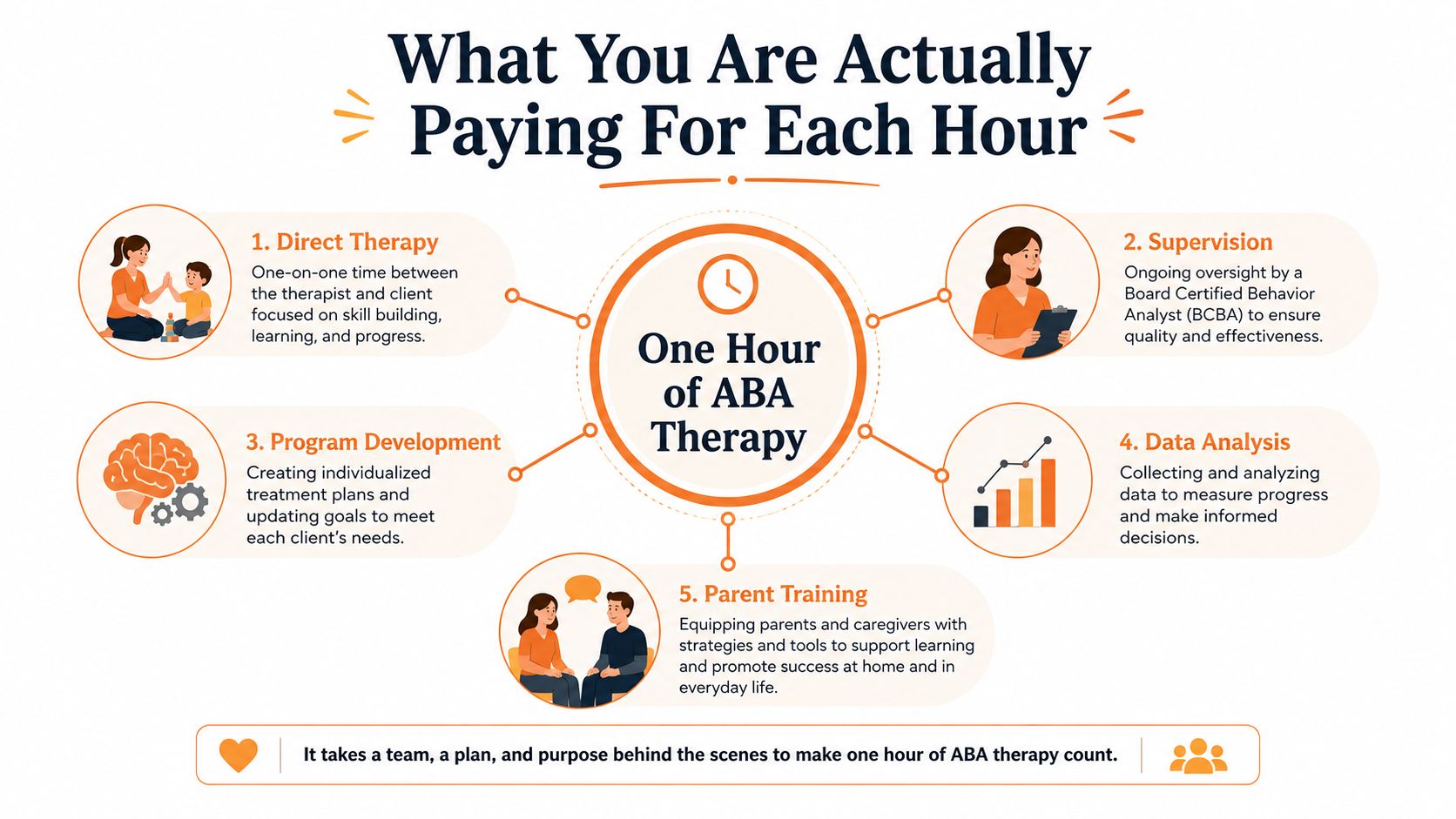
A single ABA hour is usually more than one person sitting with a child and running activities. It is more like a small team built around one hour of support, with different people contributing to different parts of the care plan. That is why two hourly quotes can look similar on paper but reflect very different levels of service behind the scenes.
The hour is made up of several pieces
Direct therapy is the part most parents picture first. This is the time spent working on everyday goals such as play, communication, transitions, mealtime routines, or following simple directions. It is the visible part of the service, but it is only one part of what keeps the hour useful.
Supervision is what happens when a more experienced clinician reviews the work, observes sessions, and helps adjust the plan. That layer matters because therapy is not supposed to stay static. A good plan changes as a child learns, struggles, or shows new strengths.
Program development, data analysis, and parent training also shape the hourly cost. Providers may build goals, review progress notes, look for patterns, and talk with caregivers about what is happening at home. If you have ever wondered why an invoice includes services that are not just “therapy time,” this is usually where those line items come from.
Why the first weeks can look more expensive
The early phase of care often includes assessment and treatment planning, and that work shapes everything that follows. A recent Medicaid fee-for-service toolkit shows that the same ABA CPT code can vary a great deal by state, with CPT 97151 ranging from $18.79 in Washington State to $112.65 in New Mexico (Medicaid fee-for-service toolkit). That range shows how much the assessment and planning side can shift the economics of care before a family even settles into a steady weekly routine.
If you are looking at a first evaluation, this guide to what to expect during your first ABA assessment can make those early steps feel less mysterious.
The first invoice is not always the best snapshot of long-term cost. Early planning can add work up front, then make the ongoing schedule easier to understand.
How Intensity and Setting Change the Bill
The biggest cost swing usually comes from how many hours your child needs each week. One child may do well with a smaller, focused schedule. Another may need a broader plan with more therapist time. That decision comes from the care plan, not the family budget, but it changes the monthly bill in very real ways.
A simple way to read the cost is to separate it into three layers, the billed charge, what insurance or Medicaid pays, and what the family still owes. Hours sit at the center of that math. More hours usually mean a higher billed charge, even before coverage enters the picture.
Weekly hours change the math fast
At private-pay rates, a 20-hour-per-week plan can reach roughly $9,600–$20,000 a month before insurance when the hourly rate falls in the common private-pay range (hourly benchmarks). Another cost breakdown places ABA at about $120 to $150 per hour before insurance and shows that a 20-hour-per-week plan can total roughly $124,800 to $156,000 per year at those rates (annual cost breakdown).
Those figures help show why parents often feel surprised by the sticker price. ABA is billed hour by hour, so the bill rises the way a grocery receipt rises when you add more items to the cart. A plan with fewer hours can stay noticeably lower, while a plan with more hours moves up quickly.
| Estimated ABA Therapy Costs by Weekly Intensity | |||
|---|---|---|---|
| Weekly Hours | Hourly Rate | Estimated Monthly Cost | Estimated Annual Cost |
| 10 | $120–$250 | Qualitative range, lower than a 20-hour plan | Qualitative range, lower than a 20-hour plan |
| 20 | $120–$250 | $9,600–$20,000 | $124,800–$156,000 |
| 30 | $120–$250 | Qualitative range, higher than a 20-hour plan | Qualitative range, higher than a 20-hour plan |
Setting changes the experience, not just the schedule
Home-based ABA often costs more than center-based care because the provider has to account for travel time and added flexibility. That can still be the right fit for families who want support during breakfast, getting dressed, homework, or bedtime, because the therapist sees the routines where they happen. Center-based ABA usually gives a more structured setting and can be easier for some families to plan around, while hybrid care blends the two approaches.
The setting does not change the fact that the service is individualized. It changes how much coordination the family needs, how the day is organized, and sometimes how the provider prices the work. A home visit may include different overhead than a clinic session, and a hybrid plan may divide those costs across both settings. That is why asking about setting matters just as much as asking about hours.
Good question to ask: “What exactly is included in the rate for home sessions, center sessions, and any hybrid plan?”
How Insurance and Medicaid Cover ABA
Insurance changes the picture more than almost anything else. A family that thinks ABA is out of reach may find the actual bill is much smaller after coverage rules, prior authorization, and network limits are applied. Another family may have coverage listed in the plan but still face a significant share of the cost because the deductible has not been met yet.
The key is to separate the billed charge from the insurer's payment and the family's responsibility. That three-part view is often the clearest way to understand what a plan does, because a covered service can still leave parents paying a meaningful amount out of pocket.
Why two similar plans can produce different quotes
Two ABA quotes can look almost the same on paper and still lead to very different bills. The same service may be reimbursed differently depending on state rules, plan type, and billing setup. The Medicaid toolkit shows a wide spread for CPT 97151, from $18.79 in Washington State to $112.65 in New Mexico (toolkit details). That matters because assessment is part of the work that shapes the treatment plan, and lower reimbursement can affect how much time a provider can spend on planning, supervision, and updates.
Private insurance can change the numbers too. Families may be dealing with employer plans, marketplace plans, in-network rules, and utilization requirements at the same time. The therapy may be the same, but the quote can still look affordable under one plan and tight under another.
What families usually need to know first
You do not need to become an insurance specialist to get a workable answer. Start with three questions. Is ABA covered as a benefit, is the provider in network, and is prior authorization required before services begin? Those answers usually tell you more than the headline hourly rate.
Medicaid can change the picture as well. State rules often affect what a family pays, even when two children receive similar therapy plans in the same general area. That is why a friend's bill is rarely a good comparison. Two families can hear the same service description and still end up with very different out-of-pocket costs.
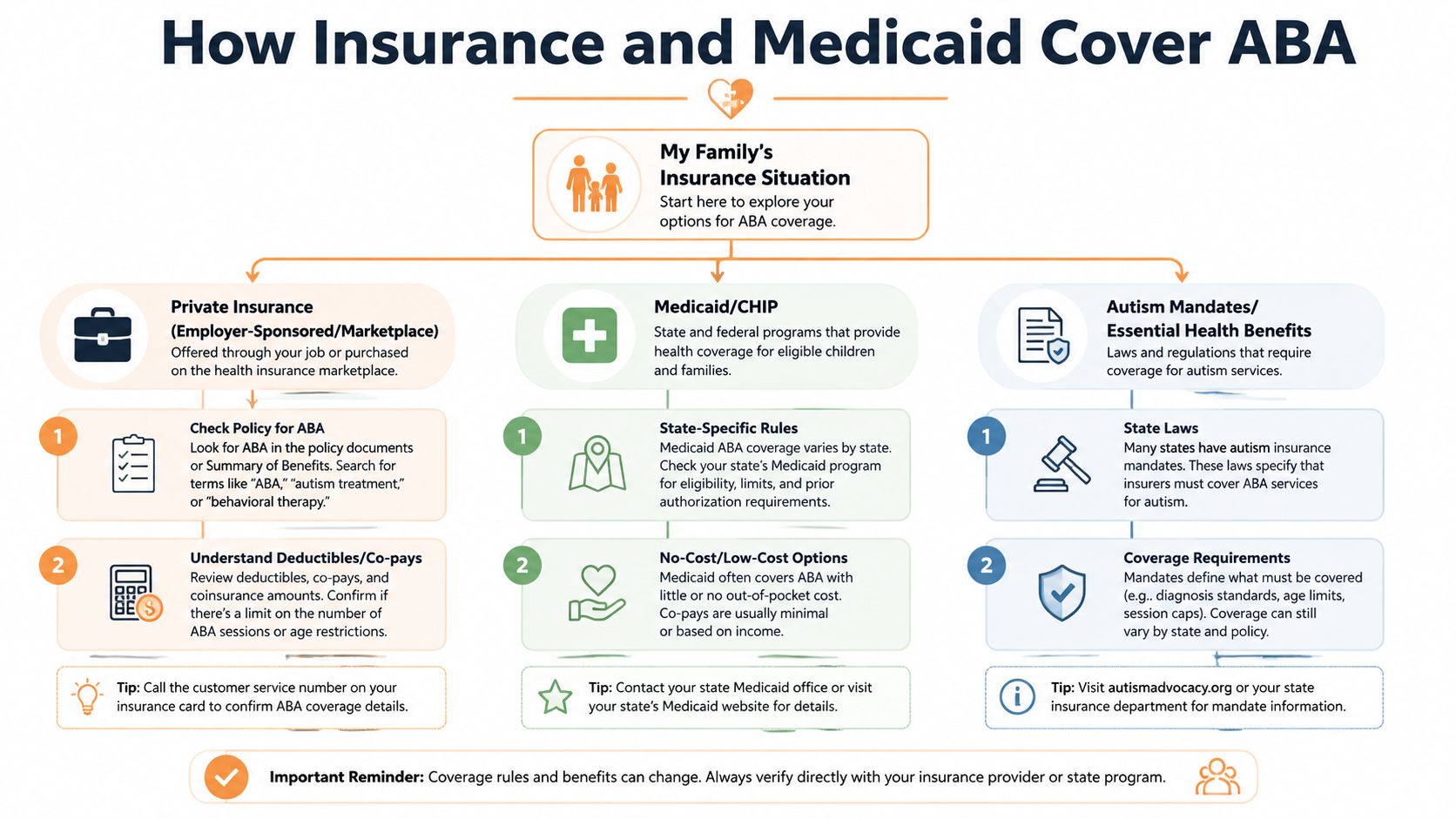
Coverage questions are less about memorizing insurance terms and more about finding the few details that change your bill the most.
What a Realistic Monthly Bill Looks Like After Insurance
A parent usually feels more settled once the bill is broken into parts instead of treated like one big mystery. Start with the billed charge, then look at what the insurer pays, then check what is left for the family. Seeing those layers separately makes the numbers easier to understand.
A simple way to read the bill
A child approved for a 20-hour-per-week ABA plan can still generate a large monthly charge before insurance enters the picture. Private-pay pricing for ABA often gives families a first look at the scale of the bill (private-pay range). If the plan has a deductible or co-insurance, the family may still pay part of the cost even when the service is covered.
Other charges can appear on the statement too. In-home care may include travel time, and some families see separate charges for family consultation, progress reporting, or other care-management tasks. These details are easy to miss when a quote only lists an hourly rate.
What to watch for on the statement
A statement may look technical at first, but the structure is usually simple. One line shows what was billed, one line shows what insurance allowed or paid, and one line shows what remains for the family. Once those three pieces are clear, it is easier to tell whether the plan is helping as expected.
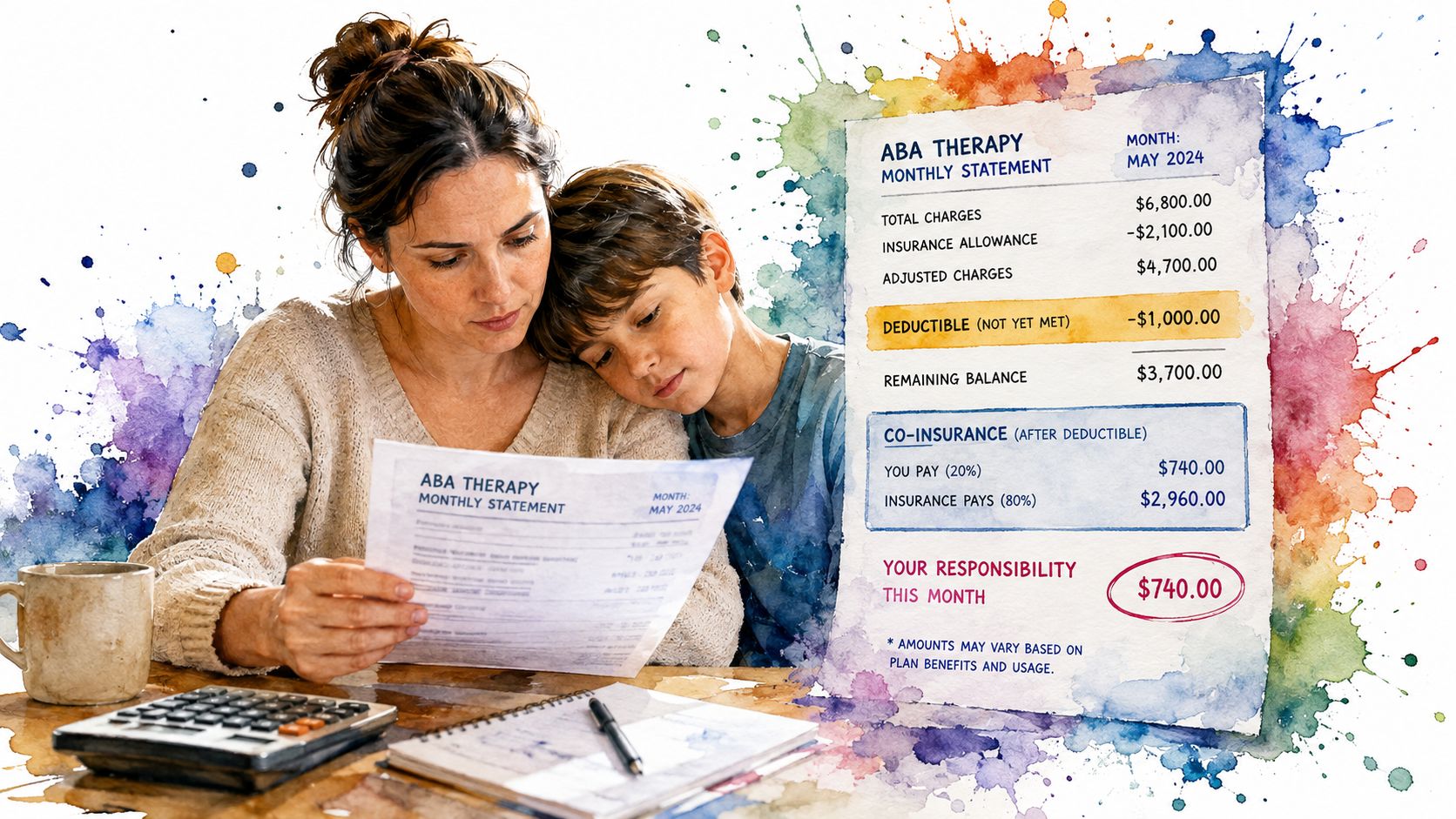
When the bill is confusing, ask for the allowed amount, the insurer payment, and the family responsibility. Those three numbers tell a clearer story than the sticker price alone.
A Practical Checklist for Verifying Coverage
The fastest way to reduce financial stress is to confirm the details before the first regular session starts. A short phone call can save a lot of back-and-forth later, especially if the plan requires authorization or specific billing codes. It's also a good place to ask for plain language instead of insurance jargon.
Use these questions in your first call
- Call your insurance provider. Ask whether ABA is covered under your child's plan and whether the provider must be in network.
- Request ABA-specific policy language. Ask for the exact wording that applies to behavioral therapy benefits.
- Confirm the deductible and out-of-pocket maximum. Those two numbers tell you when your share may drop.
- Ask about visit caps or restrictions. Some plans limit the number of sessions or require periodic review.
- Check pre-authorization steps. Find out what paperwork is needed before care starts.
- Write down every name and reference number. If a detail changes later, your notes will matter.
If you're working with a provider that has a dedicated care coordinator, that person can often help organize the calls, paperwork, and follow-ups so you're not doing it alone. That kind of support is especially helpful when the plan approval process feels like one more task on an already full plate.
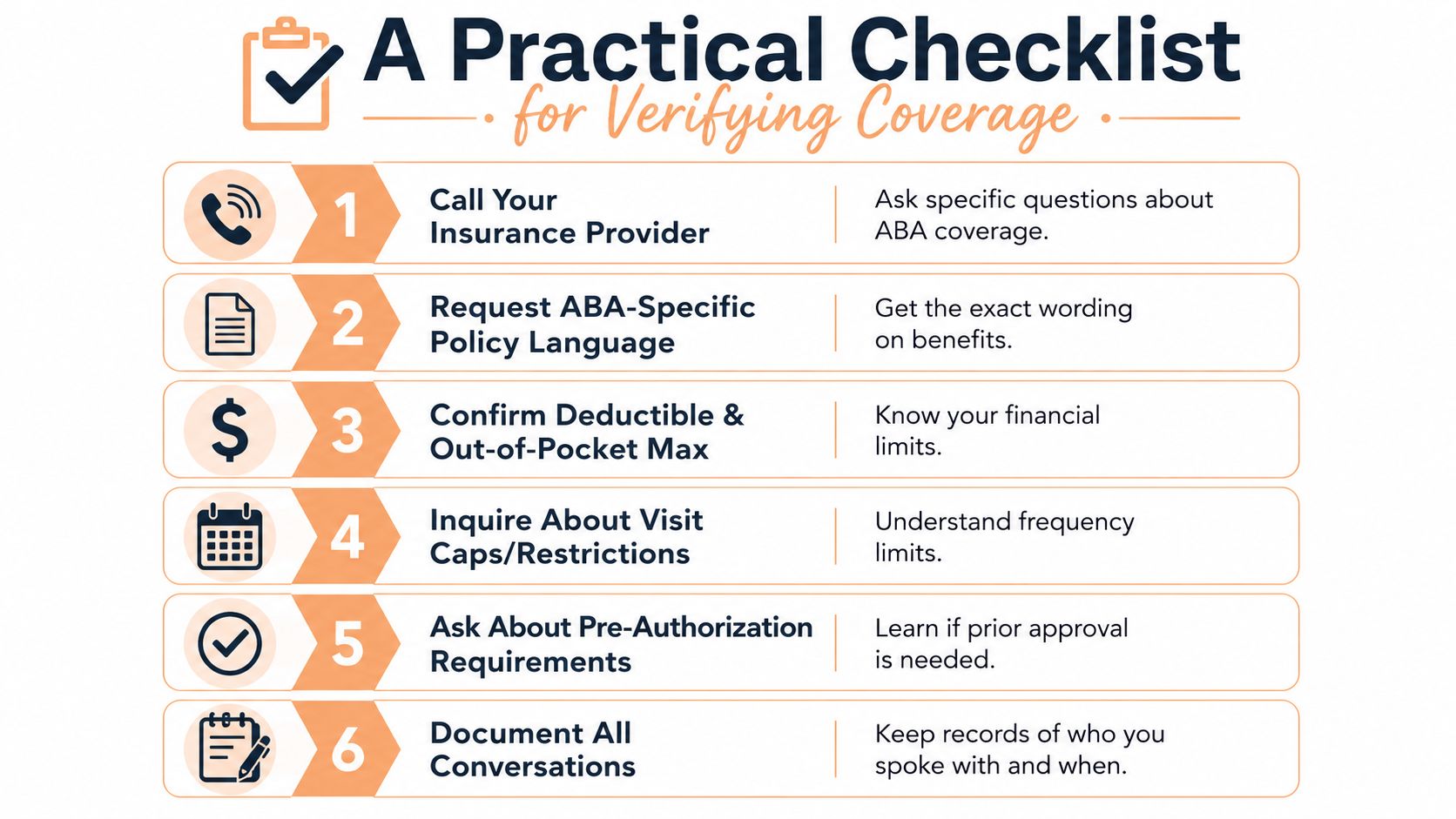
Keep the notes from your calls in one place. When a claim is questioned later, a clean paper trail can make the next step much easier.
Everyday Ways Families Manage ABA Costs
Families usually get the most mileage out of a mix of planning and practical support. Some use FSA or HSA funds for out-of-pocket expenses, some ask about sliding-scale or scholarship help, and some pair ABA with school services so they aren't paying privately for work that's already being covered elsewhere. Those choices aren't about cutting corners, they're about protecting the family budget while keeping care steady.
Small choices can soften the monthly strain
Parent coaching can also help families stretch the value of each hour. When a child practices skills during mealtime, bath time, homework, or getting out the door in the morning, the learning carries into real life instead of staying inside a session. If you want a closer look at that kind of support, parent coaching is often the piece that helps families feel less alone between visits.
A thoughtful care plan should leave room for family routines, not crowd them out. That's why many parents look for therapy that feels personal, responsive, and built around real communication with the team. A dedicated coordinator, regular check-ins, and clear updates can make the whole process easier to understand, especially when insurance questions and daily life are happening at the same time.
The best cost strategy is usually the one that protects both your budget and your child's daily routines.
If you're comparing ABA options and want a team that treats coverage questions as part of family support, visit Friendly ABA Premier to talk through your child's needs, your insurance, and what a personalized plan might look like for your family.
Our Latest Insights





























Experience ABA Therapy with a More Personalized Level of Support
Discover how FriendlyABA Premier combines evidence-based ABA therapy with dedicated coordination, proactive communication, and individualized family support.