

How Long Does ABA Therapy Last? a Parent's Guide
Wondering how long does ABA therapy last? Learn typical duration ranges, what shapes length, and how families plan for milestones and transitions.

About 66% of children referred for ABA are still in services at 12 months, and 46% are still in services at 24 months. For many families, that means ABA often lasts one to three years, with some focused plans ending sooner and some programs lasting longer.
That answer can feel like a relief, or it can feel unsettling if you were hoping for a clearer finish line. Most parents ask this question while they're trying to picture real life, school drop-off, dinner, bedtime, and all the therapy decisions in between. The honest answer is that ABA doesn't have one fixed length, and the timeline usually becomes clearer once the team knows your child, your goals, and how support fits into daily life.
Table of Contents
A Familiar Question at the Kitchen Table
A parent often asks this question after a long day, phone in hand, wondering how many months or years are ahead. The worry underneath it is usually simple. You're not just asking about therapy, you're trying to understand what your family calendar might look like.
That's why the first answer shouldn't be a hard deadline. A good team won't guess at the start and call that a plan. They'll learn your child's strengths, watch how support goes, and adjust the timeline as the work unfolds.
Practical rule: if someone gives you a fixed ABA ending date before they know your child, they're skipping the part that matters most.
A helpful place to begin is a basic overview of what ABA is and how families usually experience it, which you can read in this parent-friendly guide to ABA therapy basics. From there, the timeline makes more sense when you separate weekly intensity from total duration, because those are related but not the same thing.
Parents usually want to know three things at once. How many hours per week will my child need, how long will that schedule last, and how will we know when to change it? Those questions are the right ones.
What ABA Intensity Actually Means
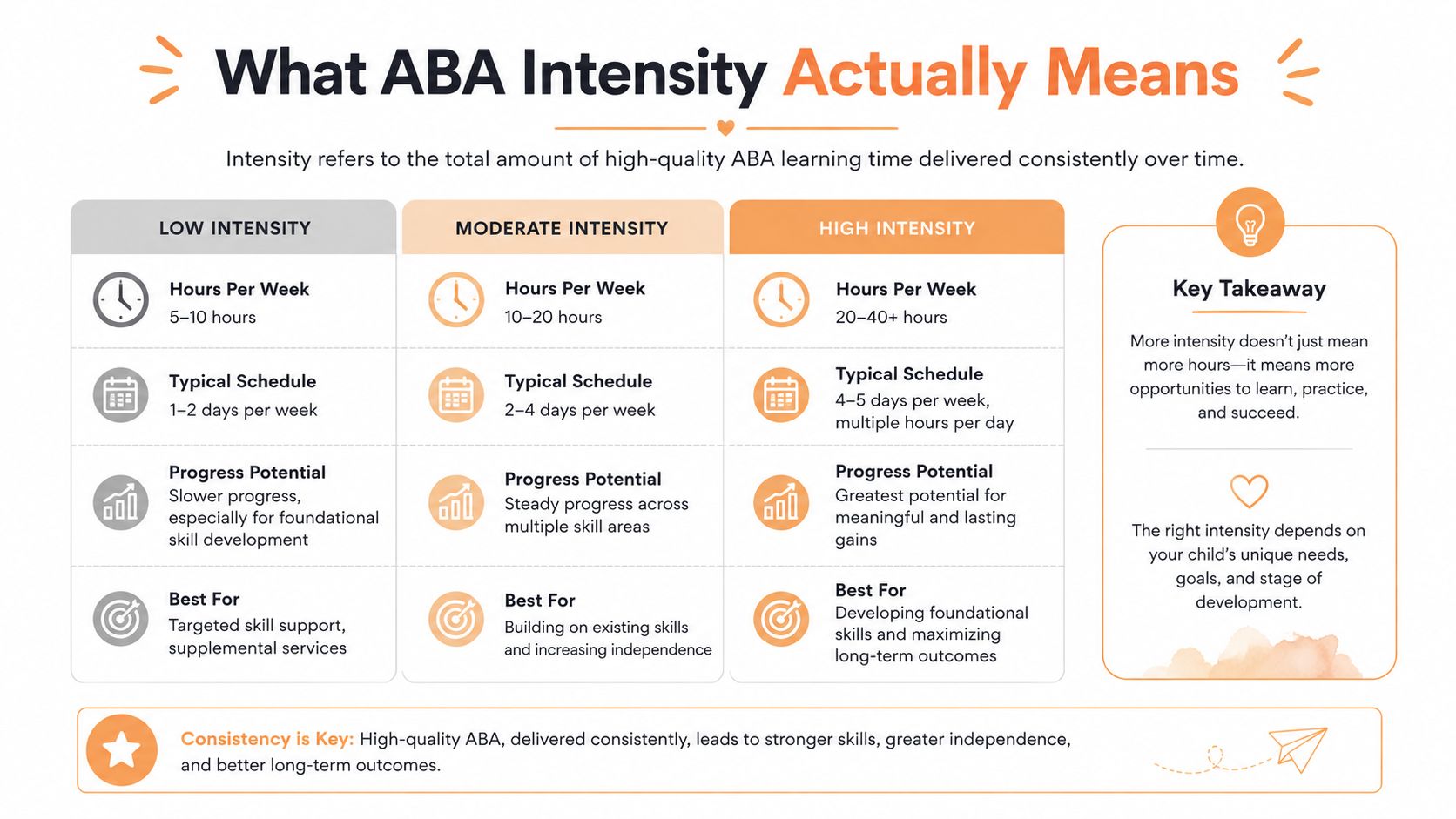
ABA programs are often described in two broad bands. Focused ABA usually means about 10 to 25 hours per week, while full ABA often means about 26 to 40 hours per week. The Council of Autism Service Providers describes the higher range as fitting broader skill-building and a larger number of treatment targets, not as a requirement for every child (practice guidelines).
The weekly number matters because it changes how quickly a child gets practice. More hours can create more learning opportunities, but that doesn't mean every goal needs the same schedule. A child working on a few very specific priorities may do well in a focused plan, while a child building communication, play, and daily living skills at the same time may need a broader program.
Why weekly hours and total duration are different
A 10-hour plan doesn't automatically mean a shorter overall journey, and a 30-hour plan doesn't automatically mean a better one. They create different pacing. Some children make steady gains with fewer hours because the target is narrow and the family is practicing at home, while others need a larger weekly block because the goals are more complex.
The easiest way to think about it is this. Intensity affects how often learning happens. Duration depends on how many goals are in the plan, how quickly the child is mastering them, and how much support is still needed in everyday settings.
A child can be in services for a longer calendar period even when weekly hours are modest, especially when the team is building skills slowly and carefully.
That's why parents should ask about both the weekly schedule and the expected service episode. The hour count is only one piece of the picture.
Typical Duration Ranges for ABA Therapy
A parent often wants a clear answer here. ABA timelines do not usually come in one fixed length, though. They tend to fall into a few patterns, depending on what the child is working on and how many skills are being built at the same time.
Some children need only a short focused block for one priority skill. Others stay in therapy longer because the plan includes communication, independence, and social skills together. A major outcomes study found that about 66% of children referred for ABA were still in services at 12 months, and 46% were still in services at 24 months (outcomes study summary). A review of ABA outcomes also notes that clinically meaningful gains in adaptive behavior often take 12 to 24 months or more (review). For many families, that means ABA is measured in months, and often years, rather than weeks.
| Duration Band | Weekly Hours | Common Goals | Typical Length |
|---|---|---|---|
| Short focused block | Focused ABA range | One priority skill, such as toileting, sleep routines, or mealtime support | 3 to 6 months |
| Mid-range plan | Focused or moderate intensity | Communication growth, school readiness, routine following, early social skills | 6 to 18 months |
| Longer sustained program | Full-intensity support | Broader skill-building across communication, social development, and daily living | 1 to 3 years |
A treatment-outcomes study also reported a mean treatment duration of 13.96 months, with a range from 2 to 36 months (treatment timeline overview). That spread helps explain why one family may finish a focused chapter in under a year, while another stays in therapy much longer because the goals are wider.
The best way to read any duration range is as a planning frame, not a promise. ABA should be reassessed as the child grows and the family's priorities shift.
What Shapes How Long ABA Lasts for Your Family
The clearest driver is the goal list. If the plan centers on one or two practical targets, like safety, sleep, or mealtime rigidity, the service episode may stay relatively contained. If the plan spans communication, social interaction, adaptive routines, and behavior support, the work usually stretches longer because there's more to practice and more to generalize.
Goals, pace, and real-life routines
Intensity changes the pacing too. A child in a 10-hour focused plan gets fewer practice opportunities each week than a child in a 30-hour plan, so the calendar can move differently even when both children are making progress. That doesn't make one plan better. It just means the learning rhythm is different.
Insurance and authorization cycles also shape the timeline. Medicaid's ABA toolkit notes that medical necessity is typically reviewed with a formal evaluation every six months, with repeated validation assessments about every six to 12 months (review schedule reference). In many insurance systems, those reviews act like checkpoints, not automatic stop dates.
Family life matters too. School transitions, sibling schedules, caregiver bandwidth, and cultural priorities all affect what's realistic. A care coordinator helps keep those pieces visible so the family doesn't have to hold every moving part alone.
If you're preparing for that first evaluation, this overview of what happens during an ABA assessment can make the process feel less mysterious.
Milestones That Signal Progress and Transitions
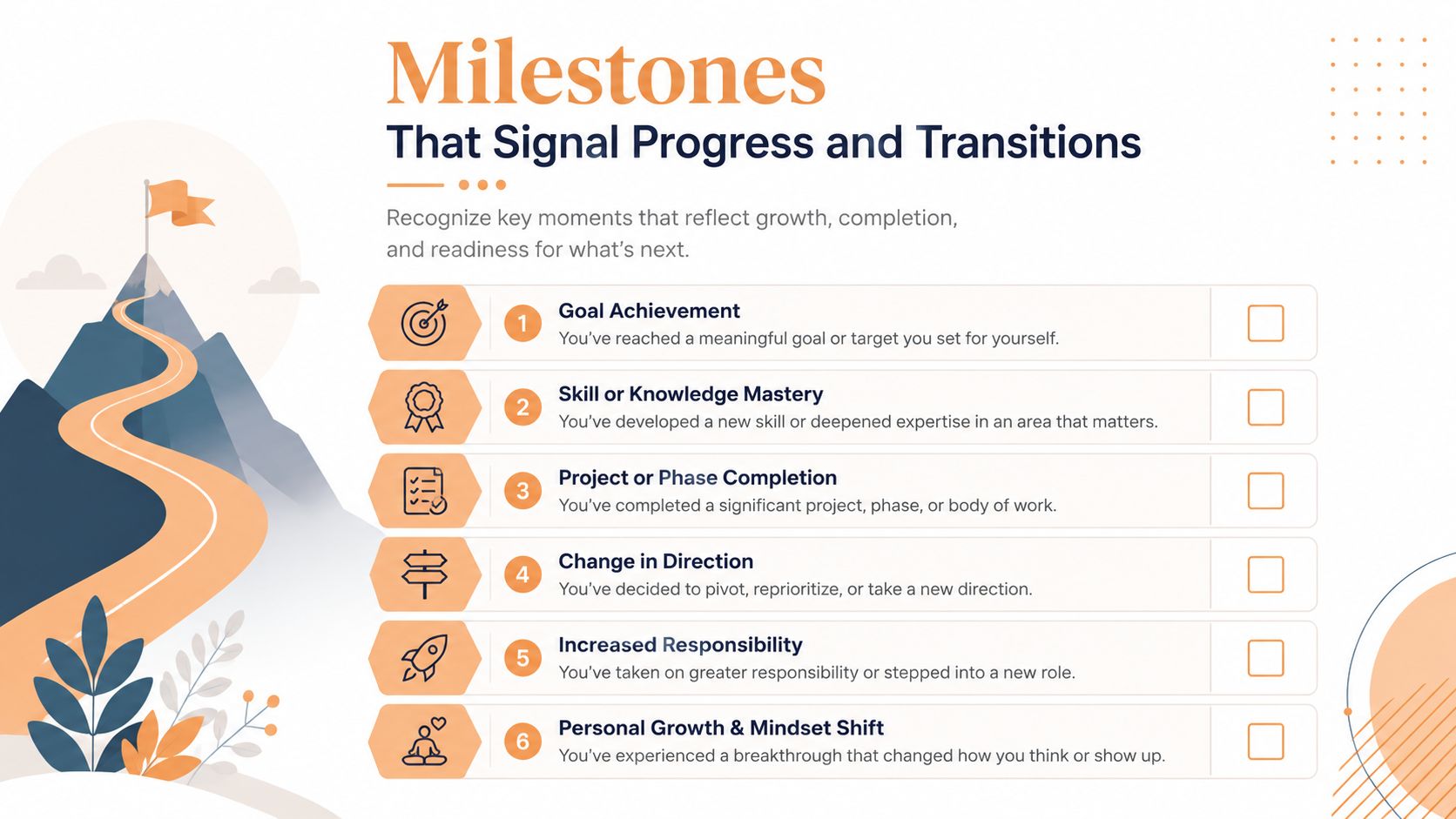
ABA usually starts to taper when the child is doing more of the work independently. Clinicians watch for everyday wins, not just test-style achievements. The question becomes whether the skill is showing up at home, at school, and in community routines.
Everyday signs that the plan may be ready to change
A communication milestone might look like a child using a new word to ask for help during a meltdown, or asking for a snack instead of reaching or crying. It can also show up in smaller ways, like naming a friend, following two-step directions, or answering more clearly during daily routines.
Independence milestones often matter just as much. A child may start self-dressing with fewer prompts, tolerate a haircut more calmly, sit through a restaurant meal, or move from one activity to the next with less support. Those are the kinds of changes that tell the team the skill is becoming part of daily life.
Social growth matters too. Shared attention with peers, parallel play, and turn-taking in games are all signs that a child is building beyond one-to-one therapy time. When those skills hold up across settings, the BCBA and care coordinator may reduce hours, shift to consultative check-ins, or build a discharge plan tied to school and community supports.
Common Misconceptions About ABA Length
One common myth is that more hours always mean faster progress. In real life, the answer depends on the child's goals, age, learning style, and response to treatment. A higher-intensity plan can be useful, but only when the extra hours match what the child needs.
Another misconception is that every child should be in a 25-to-40-hour schedule. That's not how good ABA planning works. Some children do well in focused plans of about 10 to 25 hours per week, especially when the target is specific and the family is practicing skills outside sessions.
People also worry that ABA is forever. It isn't meant to be. Many children transition out once they've met goals, gained independence, and no longer need the same level of support.
The final myth is that the timeline is fixed at intake. It isn't. Progress data, family priorities, school demands, and reauthorization outcomes all shape the next step, which is why duration should stay flexible rather than locked in on day one.
A newer randomized controlled trial cited in 2026 found no outcome difference between 5 to 10 hours and 15 to 20 hours per week in that study context, while a 2026 review reported an overall dose-response relationship with higher-intensity ABA linked to larger gains in cognitive and adaptive skills (dose and intensity review). The takeaway for families is simple, more hours aren't automatically better, and less hours aren't automatically enough. The right dose is the one that fits the child and the goal.
Planning the Months Ahead With Your Team
A practical way to think about ABA is in six-month blocks. That lines up well with authorization reviews, progress summaries, and school calendar changes, so the family isn't surprised by paperwork or a shift in services. Quarterly check-ins can keep the plan grounded in real life instead of waiting until the end of a block to notice something needs adjusting.
Questions worth bringing to the BCBA
- What are the top priorities this quarter? Ask which goals matter most right now, and why they're in that order.
- How are you measuring progress? You want to know what data the team is watching and what would count as meaningful change.
- What's the fading plan? Ask how hours may change if skills become more independent.
- How will home and school support match therapy? The plan works better when caregivers and teachers are using similar strategies.
A dedicated care coordinator can help with the practical side of this. That includes keeping track of authorizations, aligning clinician updates, and making sure the family knows what happens next. For parents balancing therapy with work, school pickups, and sibling needs, that steady communication can make the whole process feel less fragmented.
If cost questions are part of your planning, this overview of ABA therapy cost considerations can help you prepare for those conversations too.
Good planning protects caregiver bandwidth. If the schedule starts to crowd out sleep, work, or family routines, ask the team to revisit the plan instead of pushing through unchanged.
A Steady Partnership for the Long Run
If you're still sitting at the kitchen table wondering how long ABA therapy lasts, the most honest answer is that the timeline grows out of the child, not the calendar. For many families, the path stretches one to three years, but focused tracks can be shorter and programs can run longer when broader support is still needed.
The best plans stay responsive. Milestones change, school demands shift, and family life doesn't pause while therapy is happening. A strong team notices those changes early, adjusts the plan, and keeps the conversation open so you're not guessing what comes next.
Progress is rarely perfectly linear, and that's normal. A pause, a step-down, or a new goal doesn't mean something went wrong. It usually means the team is following the child's growth and making sure services stay useful.
If you're ready to talk through your child's needs, start with a conversation, not a commitment. A first call should leave you clearer, not more overwhelmed.
Friendly ABA Premier supports families with individualized ABA therapy, parent coaching, school support, and a dedicated care coordinator who keeps communication moving. If you're comparing providers or trying to understand what your child's timeline might look like, visit Friendly ABA Premier to connect with a team that plans with families, not just for them.
Our Latest Insights



























Experience ABA Therapy with a More Personalized Level of Support
Discover how FriendlyABA Premier combines evidence-based ABA therapy with dedicated coordination, proactive communication, and individualized family support.