

7 Best ABA Therapy in Maryland Providers
Compare the 7 best ABA therapy in Maryland providers by services, settings, insurance, parent coaching, care coordination, pros, and cons.

You're comparing Maryland ABA providers while juggling questions that don't fit neatly into a brochure. Should therapy happen at home or in a clinic? How will the schedule work with school, work, and siblings? Who will explain insurance requirements, answer questions, and help you understand whether your child is making meaningful progress?
There isn't one best ABA provider for every Maryland family. The right fit depends on your child's age, goals, preferred setting, need for specialized support, caregiver availability, location, and the provider's ability to start and communicate reliably. This list looks at those practical decisions, not just credentials or general reputation.
Maryland families are navigating a growing need for autism services. The CDC reported that about 1 in 38 eight-year-olds in its Maryland surveillance area were identified with autism in 2022, compared with about 1 in 43 in 2020 and 1 in 49 in 2018. You can review the CDC's Maryland autism surveillance findings for the underlying context.
The providers below are compared by individualized goals, home and clinic delivery, caregiver involvement, school coordination, local access, insurance questions, and everyday priorities such as communication, play, school routines, and independence. ABA should be discussed with your child's pediatrician and care team, and each provider must confirm current availability, authorization requirements, and coverage for your plan.
Table of Contents
- A practical comparison path
- What to expect during the first assessment
- Local questions families often ask
1. Friendly ABA Premier
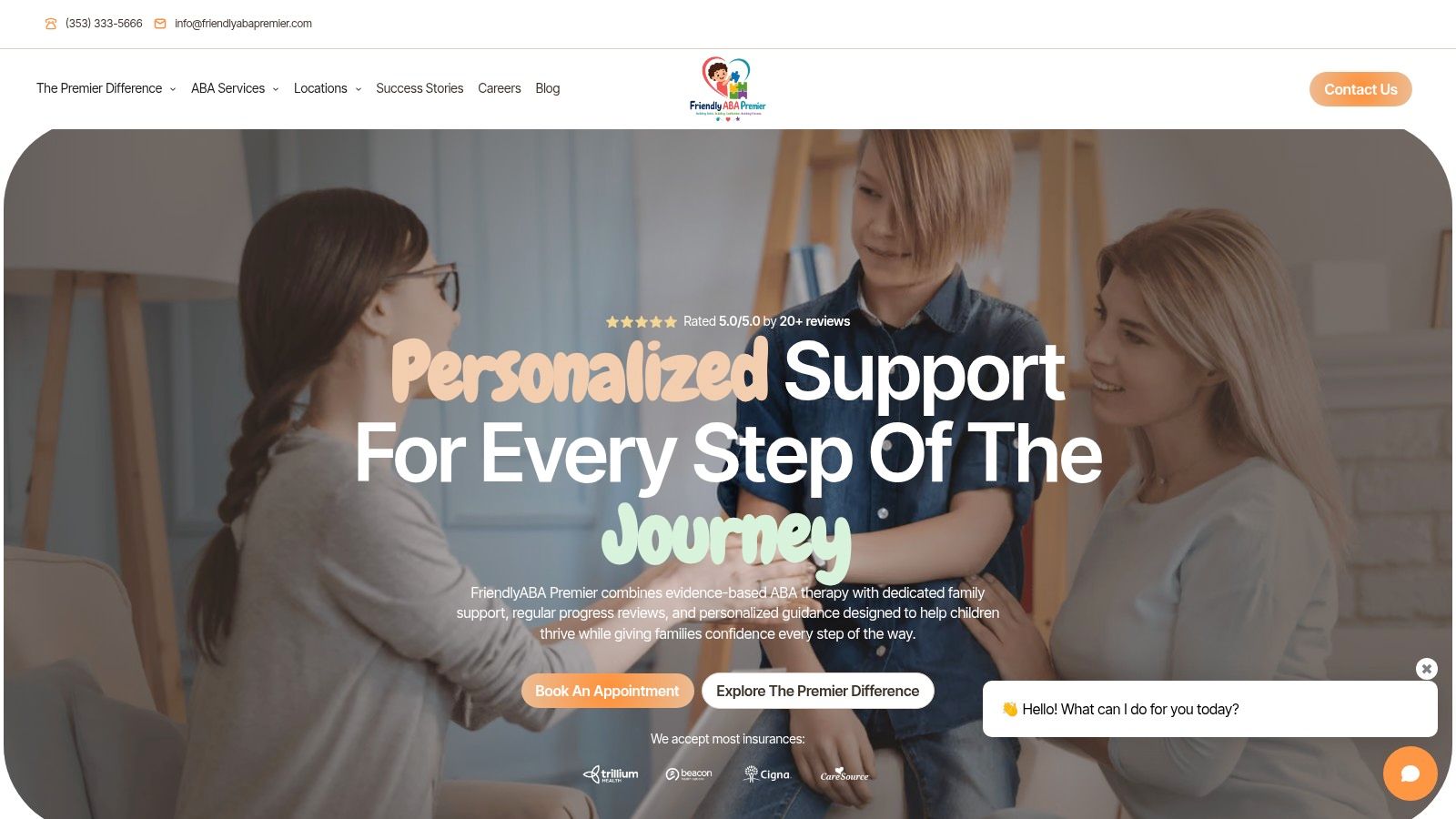
Friendly ABA Premier is a strong starting point for families who want home-based ABA with hands-on coordination, rather than a service that leaves caregivers managing every logistical detail alone. The provider serves Maryland along with Connecticut, Georgia, Massachusetts, North Carolina, South Carolina, Virginia, and Washington, and its model combines ABA therapy with social skills development, school support, and parent coaching.
The defining feature is a dedicated care coordinator. Families have one central contact for scheduling questions, communication, and coordination with clinicians. That arrangement can be especially helpful after a new diagnosis, when parents are learning unfamiliar terms and trying to keep insurance paperwork, appointments, school conversations, and home routines aligned.
A family-centered service model
Treatment plans are individualized around a child's strengths, needs, and goals. A family might focus on requesting help during meals, participating in a classroom routine, joining a sibling's play, tolerating changes in plans, or building independence with dressing and hygiene. The plan should connect those goals to daily life, not treat therapy as something separate from the child's real environment.
Friendly ABA Premier's service model includes home-based ABA, school support, social skills groups, and parent coaching. That range gives families the opportunity to ask how skills will carry over between home, school, and community settings. Parents also receive scheduled progress check-ins, which can make it easier to understand what the team is working on and how caregivers can respond consistently.
Practical rule: Ask who will coordinate the moving parts before services begin. A clear point of contact can matter as much as the therapy setting.
The provider describes a four-step journey, beginning with an initial consultation and personalized assessment, followed by a customized therapy plan and ongoing support with check-ins. Friendly ABA Premier accepts most major insurance plans, although families still need to verify benefits, medical-necessity criteria, authorization rules, and local availability with the provider and insurer. Maryland Medicaid covers medically necessary ABA for enrolled members under age 21 when state requirements are met, including a confirmed ASD diagnosis, qualified referral, and home or community delivery, as explained by the Maryland Medicaid ABA program.
Best fit and trade-offs
This provider may suit families seeking in-home care, parent participation, school collaboration, and frequent communication. It can also be a reasonable option for caregivers who have felt overlooked by a low-touch provider and want a more organized partnership.
Public pricing isn't listed, so costs depend on the child's plan of care and insurance benefits. Service availability is also limited to the states listed above, and Maryland families should confirm whether the team serves their address and can offer the schedule they need. Families can explore the Friendly ABA Premier website for current service information.
2. Little Leaves Behavioral Services
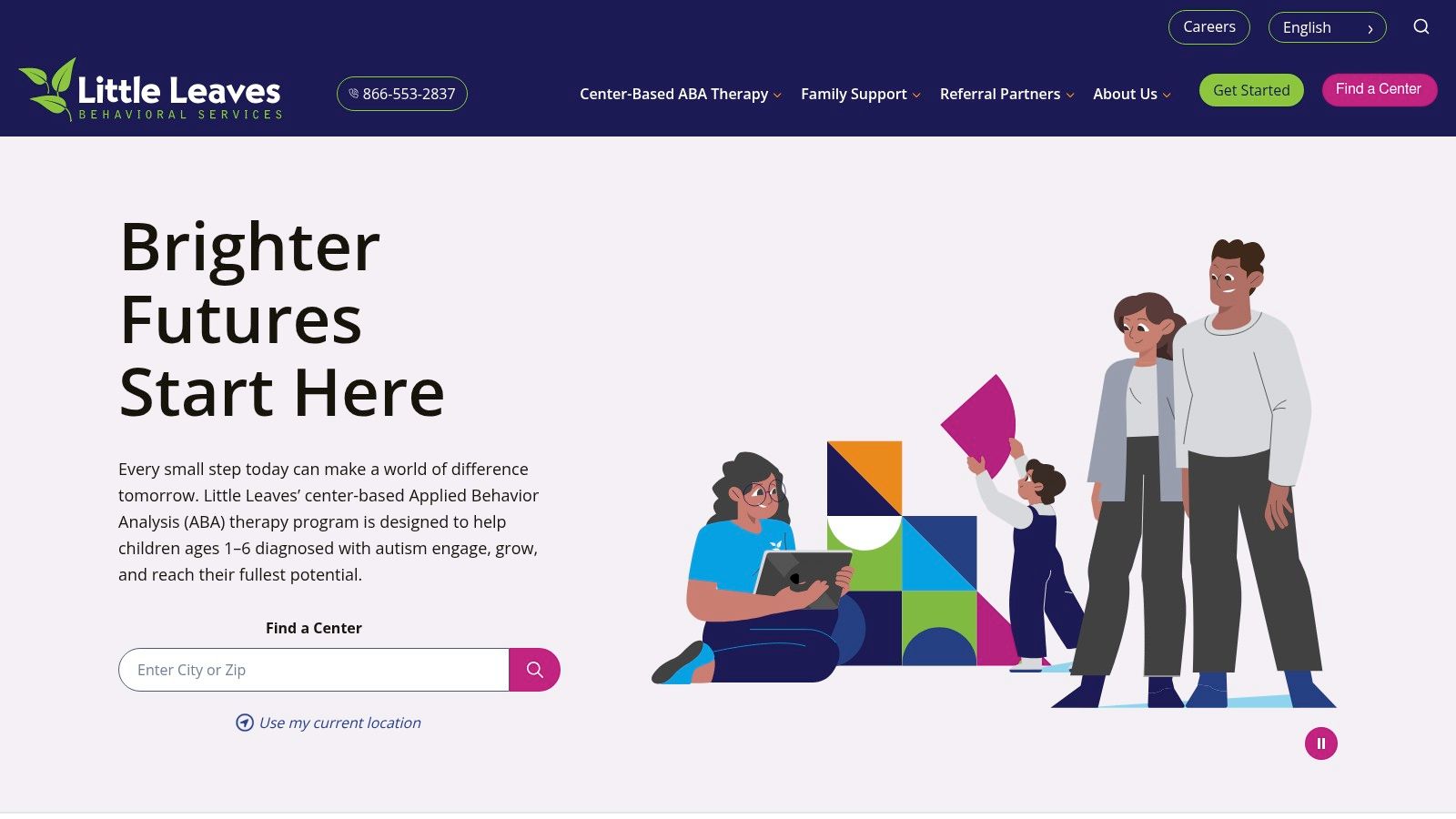
Little Leaves Behavioral Services is designed for families looking for a center-based early-intervention experience for young children. Its preschool-like learning centers in communities including Columbia, Silver Spring, and Frederick are structured to support communication, social learning, play, and school readiness within a predictable group environment.
The center model may appeal to caregivers who want their child to practice routines that resemble an early learning setting. A child might work on transitioning between activities, following a visual schedule, asking for a preferred toy, participating near peers, or completing a classroom-style task. Those opportunities can be useful when the family's primary goal is preparation for preschool or kindergarten.
Little Leaves describes programming that can be intensive, with plans generally ranging from 30 to 40 hours per week according to its program materials. Because that is a substantial time commitment, parents should ask how the schedule would affect transportation, naps, family routines, and other therapies. The intensity should also be discussed with the child's clinical team rather than treated as a universal recommendation.
Coordinated developmental support
Little Leaves emphasizes coordination with speech and occupational therapy. For a child who is working on both functional communication and fine-motor participation, collaboration between professionals may help caregivers receive a more coherent plan. Families should ask whether those services are delivered on site, coordinated externally, or included only for particular programs and locations.
The organization also highlights BHCOE accreditation and reaccreditation, which can signal that a provider has established systems for clinical practice, staff training, and organizational quality. Accreditation is one factor to consider, not a substitute for asking about the actual clinicians, supervision, family communication, and current staffing at the location your child would attend.
Best fit and trade-offs
Little Leaves may be a good fit for toddlers and preschoolers who benefit from a structured, center-based school-readiness program. Multiple Maryland locations can reduce commuting for some families, though the best location depends on where you live and whether it has openings.
The main trade-off is setting. Families seeking therapy primarily in the home may find a center-led model less convenient or less aligned with their priorities. The age focus may also make it less suitable for older children who need school-age support, community practice, or home-based independence goals.
Ask how caregivers participate, how progress is communicated, and how the team helps skills carry over from the center into home and school routines.
Visit Little Leaves Behavioral Services to review current Maryland program options.
3. Trellis Services
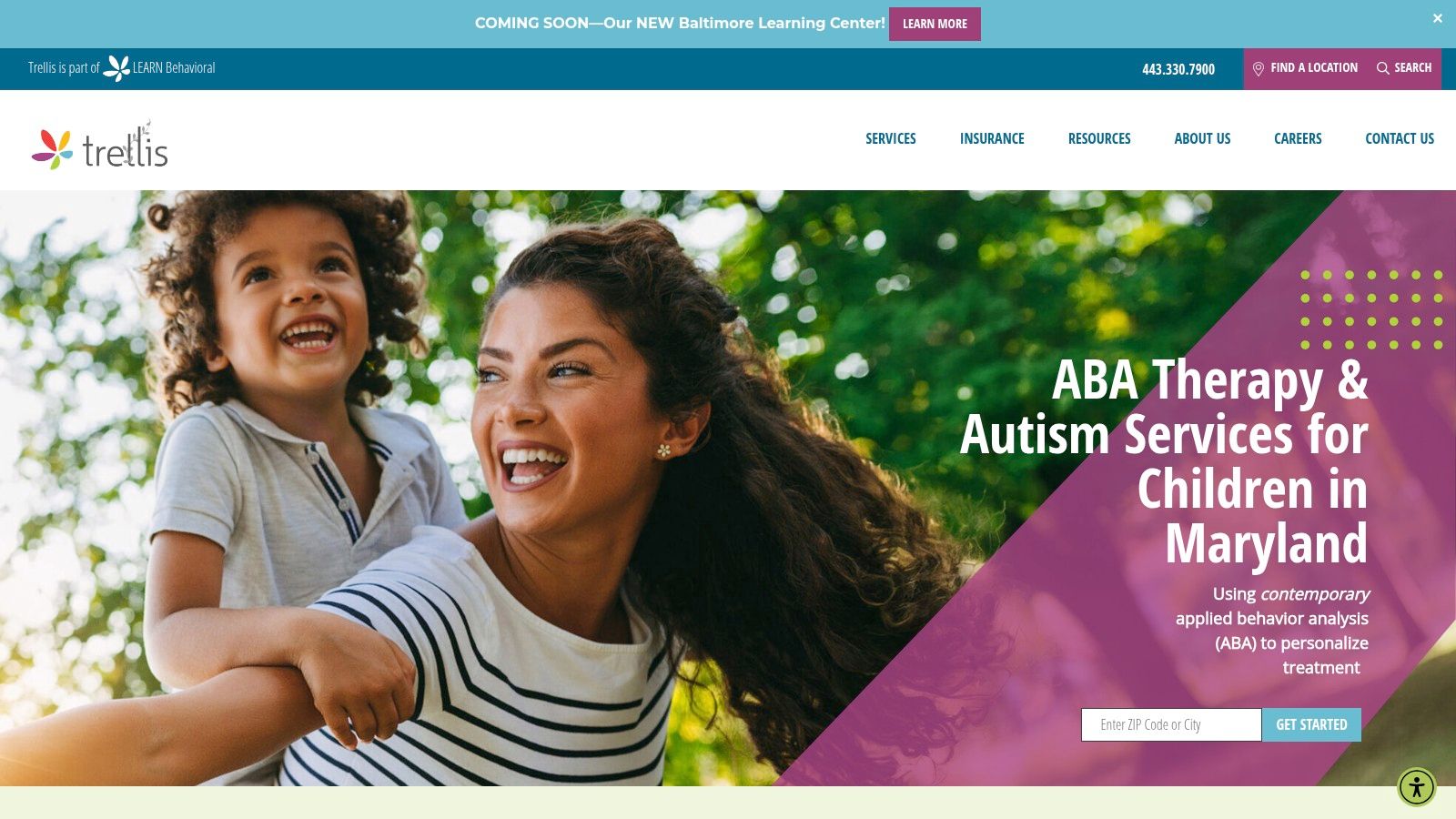
A child may follow directions at a center yet struggle with the same routine at home. Trellis Services, part of LEARN Behavioral, gives Maryland families an option to compare center-based programming alongside in-home ABA in parts of the state. Using both settings can connect structured learning with everyday goals such as communication, self-care, transitions, play, and independence.
Center sessions offer repeated practice with routines, planned activities, and learning near peers. Home sessions show the team what happens during breakfast, getting ready for school, screen-time changes, bedtime, or family outings. These settings answer different questions, so ask how Trellis coordinates goals, data, and parent coaching across them.
Flexible location and scheduling
Trellis maintains multiple Maryland Learning Center locations and has promoted new center openings to expand local capacity. Availability still depends on staffing, schedules, authorization, and the program recommended for the child. Ask for a realistic start-date estimate rather than relying only on a general service-area statement.
Scheduling also affects whether a program works for the whole family. Caregivers balancing work and school pickup can ask whether evening hours are offered at the nearest center, whether home services cover their address, and how the provider handles missed sessions or schedule changes.
The useful access details are the expected start date, service location, weekly schedule, and name of the person who will update you if staffing changes.
Trellis may also suit families seeking school coordination. Ask how the team communicates with teachers, supports classroom routines, and shares strategies that school staff can use. For questions to bring to your school team, see a guide to ABA support in school settings.
Best fit and trade-offs
Trellis may fit families who value multiple setting options, local centers, and scheduling flexibility. Its larger network may provide organizational resources and training, while the child's daily experience will still depend on the local center, supervising clinician, and assigned team.
The main trade-off is that availability and in-network coverage vary by location. Before choosing, verify insurance participation, authorization steps, staffing, parent-coaching expectations, and whether the preferred mix of home and center sessions is currently offered. These details can determine whether the plan fits school routines and life at home.
Explore Trellis Services for current Maryland locations and intake details.
4. Kennedy Krieger Institute
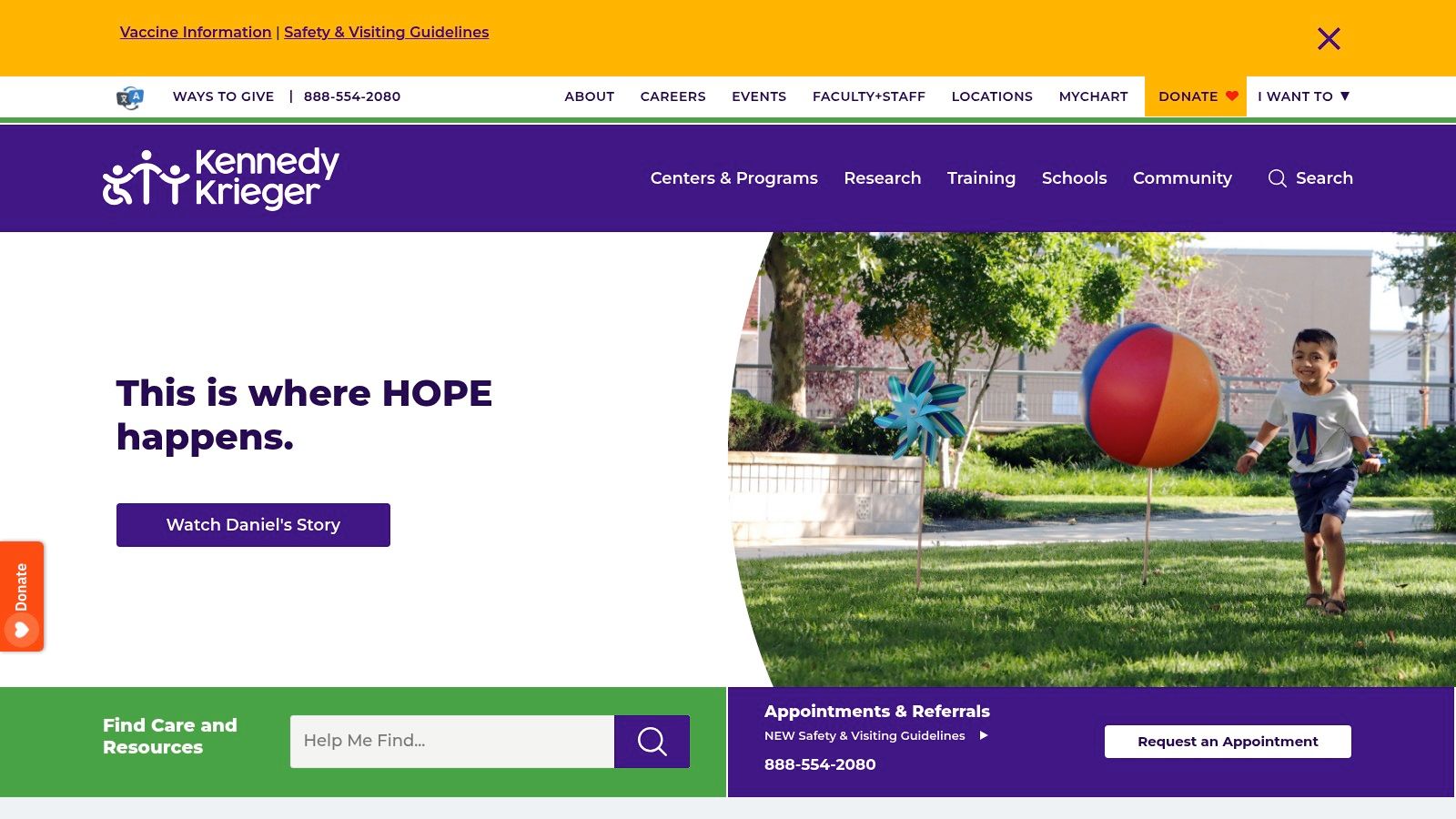
Kennedy Krieger Institute is a pediatric specialty organization in Baltimore with programs for children who need highly specialized medical and behavioral expertise. Its behavioral psychology and autism services include intensive outpatient ABA, inpatient neurobehavioral care for severe behavior, outpatient services, and Maryland State Department of Education-approved special education school programs.
This setting can be particularly relevant when a child's needs involve complex behavior, safety concerns, medical considerations, or several developmental specialties at once. Kennedy Krieger brings together professionals from areas such as psychology, psychiatry, neurology, speech-language pathology, and occupational therapy. That interdisciplinary structure may help when one provider alone can't address the full picture.
Specialized intensity for complex needs
The institute describes an intensive outpatient model that may involve five hours per day, five days per week, for approximately three weeks, while inpatient services address situations requiring a more controlled clinical environment. These programs are specialized and should be considered with the child's physicians and care team.
Short-term intensive treatment can provide concentrated assessment, skill-building, and recommendations. It may not look like ongoing community-based ABA, however. Families may need a separate provider for continued in-home services, caregiver coaching, or everyday implementation after an intensive program ends.
Kennedy Krieger's school programs and research-driven protocols may also appeal to families seeking education support connected to specialized clinical services. Parents should ask how recommendations will be shared with the child's current school and whether follow-up support is available after an evaluation or intensive episode.
Best fit and trade-offs
Kennedy Krieger is a strong fit to investigate when a child has complex behavioral or developmental needs that call for integrated specialty care. Its broad expertise can be reassuring when families have struggled to find coordinated answers.
Demand may create longer waits, and the structure can feel more formal or short-term than a community provider delivering regular home sessions. Families should ask about referral requirements, the expected wait, program length, follow-up, insurance authorization, and what happens after discharge or completion.
Learn more through the Kennedy Krieger Institute, then discuss whether a specialty referral fits your child's current needs.
5. Verbal Beginnings
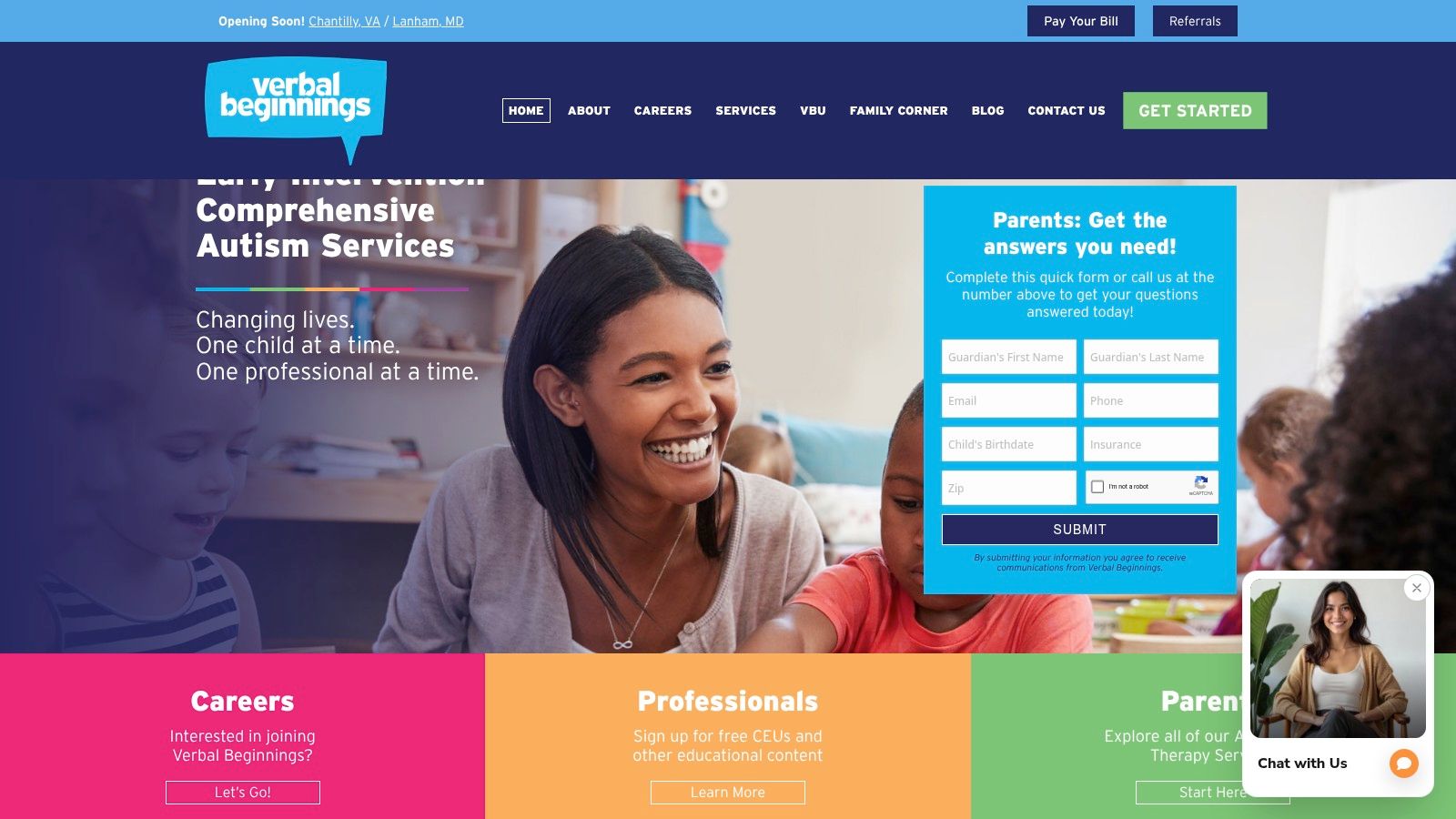
Verbal Beginnings gives Maryland families several ways to arrange support, including center-based ABA, in-home therapy, social skills groups, and feeding support. Early Beginnings focuses on early intervention, Social Beginnings supports social learning, and Healthy Beginnings offers pediatric feeding therapy.
That variety can help when goals cross settings. A child may practice requesting and conversation at home, joining peers in a group, and sitting through meals with feeding support. Ask whether each service follows the same priorities, how progress is shared, and how caregivers can use the strategies during school routines, play, and daily activities. Families looking for home-based communication ideas can also read this guide to building better communication skills at home.
More than one route to support
Verbal Beginnings has Maryland roots, serves families through multiple locations, and highlights a BHCOE-accredited training center in Columbia. Training affects the consistency of care. Direct-care staff need clear supervision, practical feedback, and teaching methods that match a child's communication style rather than relying on one routine for everyone.
Insurance verification deserves a specific conversation. Ask whether the location and service you want are in network for your plan, whether Maryland Medicaid MCO options such as HealthChoice plans are accepted, and which services require authorization. The organization's intake team can then confirm benefits for your child instead of offering a general answer. Maryland-regulated insurance plans must cover autism-related behavioral health treatment, including ABA. The Maryland Insurance Administration coverage guidance explains that insurers cannot deny covered treatment solely by labeling it experimental or investigational, while individual plan terms still determine access.
Ask before enrolling: Who will coordinate ABA, feeding, and social services, and how will the team communicate progress to your family?
Best fit and trade-offs
Verbal Beginnings may fit families seeking multiple service types under one provider, particularly when feeding therapy or social skills groups matter alongside ABA. A clinic-based option may suit children who benefit from peers and predictable routines, while in-home care may better reflect communication, play, self-care, and independence goals in the places they happen.
Confirm availability near your address, age requirements, session intensity, parent coaching, and whether the current opening matches your schedule. Local labor disputes have been reported at one Rockville location, so families considering that site should check its current status directly. Waitlist information can differ by area. Visit Verbal Beginnings for local details and ask what is available now.
6. Ally Behavior Centers
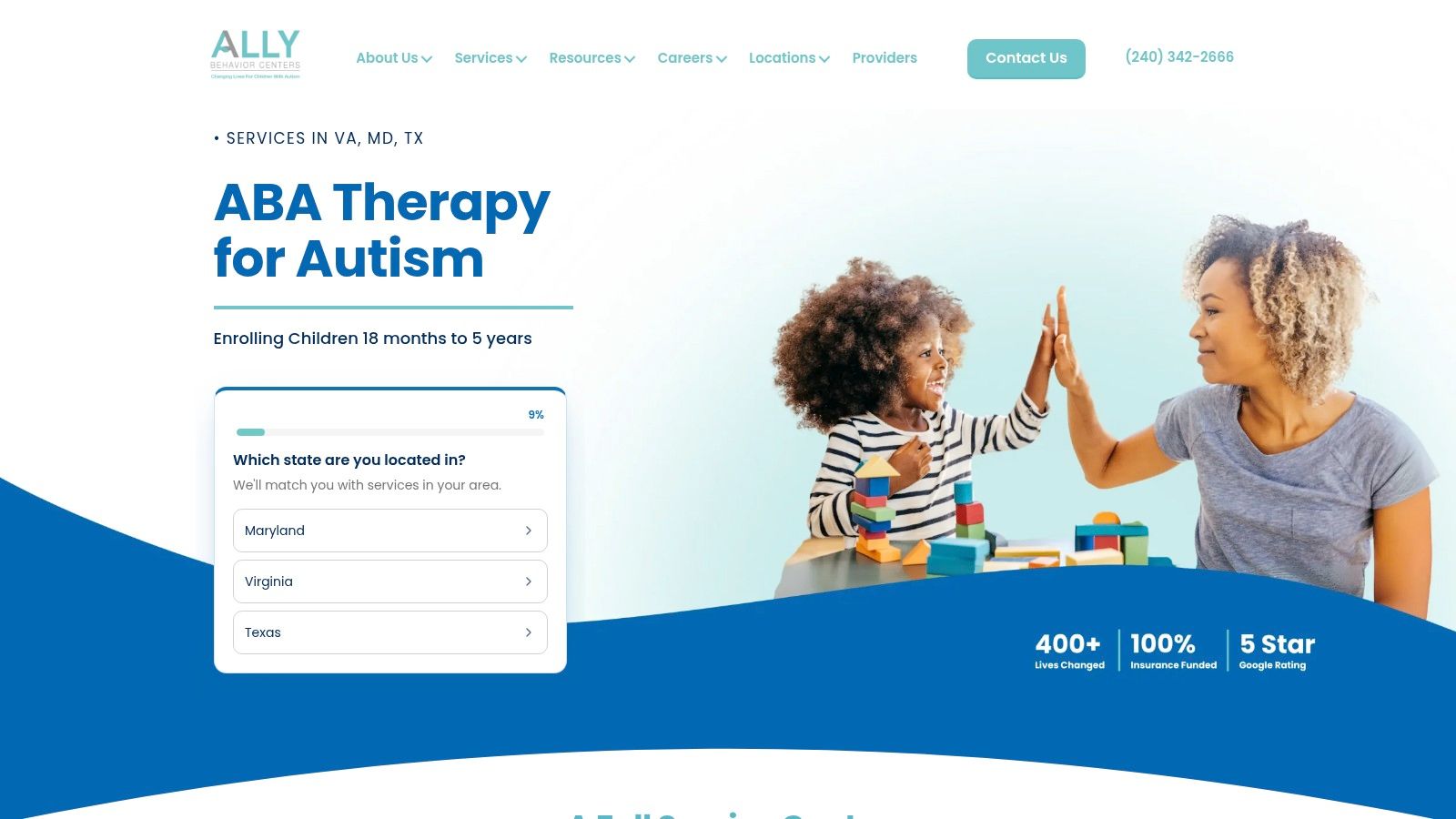
A family seeking care for a young child may prefer one predictable daytime setting instead of separate appointments across Maryland. Ally Behavior Centers focuses on full-day, center-based ABA for young children, with locations such as Rockville and Woodlawn. Its preschool-like model combines ABA with speech and occupational therapy through one center, which may simplify routines and communication.
A full-day program can give children repeated practice with transitions, group participation, requesting, following directions, play, and self-help skills. Ask how those individual goals fit the group schedule. Families should also learn how staff respond when a child needs a break, a different teaching method, or more time before joining an activity.
Integrated early intervention
Ally places speech and occupational therapy alongside ABA. Keeping these services in one location may reduce travel and give therapists more opportunities to coordinate. The arrangement does not by itself show how coordination works, so ask who leads treatment planning, how providers share updates, and how caregivers participate in reviewing progress.
Insurance questions deserve specific answers. Ask Ally to verify the child's benefits, identify any required referral or authorization, explain covered services, and provide written benefits information. Families should also request an estimate of out-of-pocket costs and ask what happens if the insurer changes or denies authorization. Coverage still depends on the individual plan, medical necessity, eligibility, and approval requirements.
To understand the difference between clinic-based and home-based care, review this overview of center-based ABA therapy.
Center practice needs to connect with home life. Ask whether caregivers receive coaching, whether home routines appear in the treatment plan, and how skills will carry over to meals, bedtime, community trips, family play, and independence.
Best fit and trade-offs
Ally may suit children in early intervention whose families prefer an intensive, structured center day and coordinated access to speech and occupational therapy. Families seeking primarily in-home ABA, services for older children, or less intensive scheduling may need to compare other options.
Before enrolling, confirm the specific location, current openings, daily schedule, staffing, caregiver-training expectations, insurance steps, and plan for carrying skills into the home. Review current Maryland location information from Ally Behavior Centers and ask which program can support goals such as communication, school routines, play, and self-care.
7. Helping Hands Family
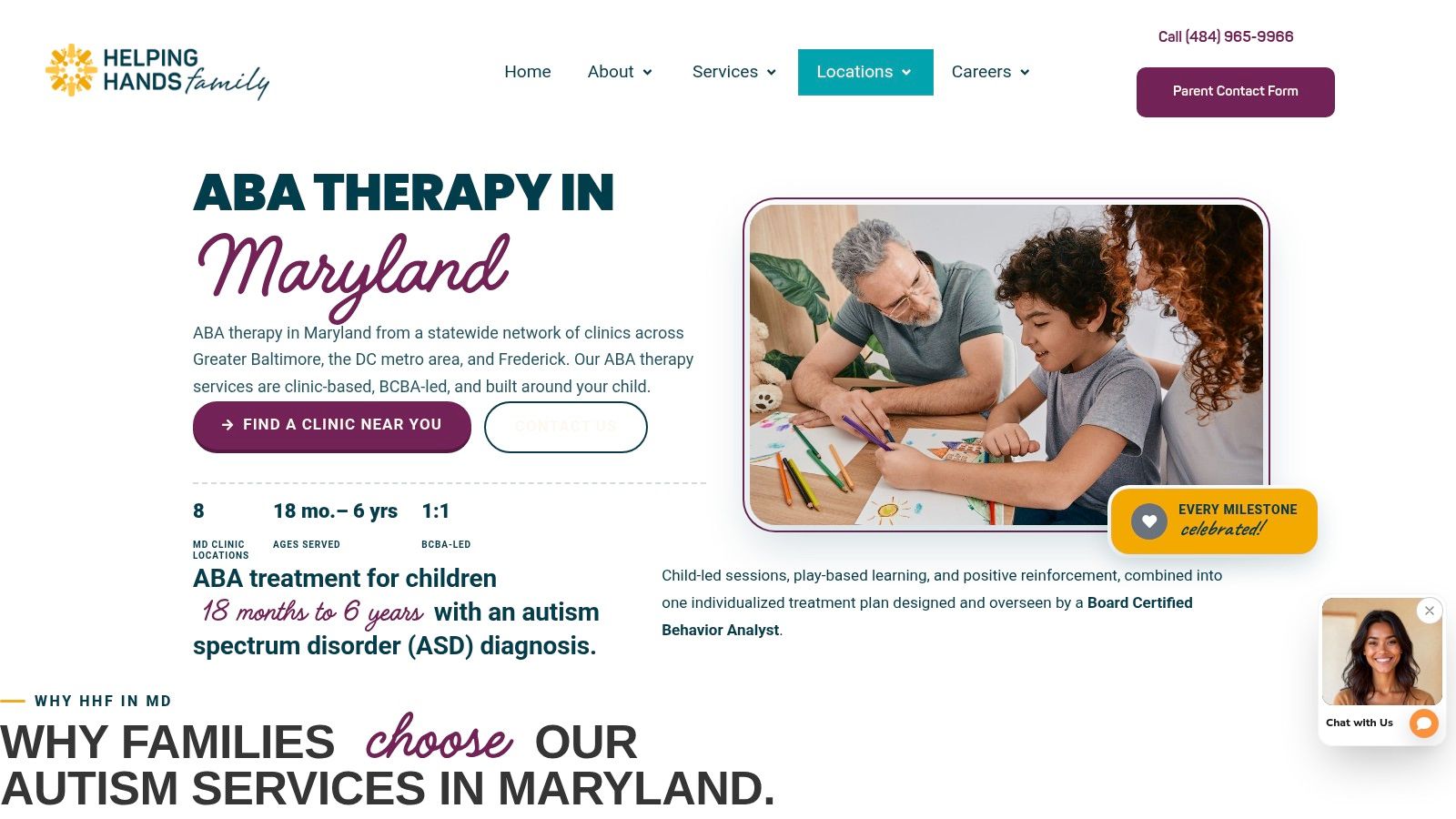
Helping Hands Family, often called HHF, gives Maryland families several clinic options around Baltimore and other counties, with some in-home availability based on staffing geography. Its programs emphasize personalized, play-based care and caregiver training, which can make therapy feel more connected to a child's interests and everyday routines.
Play-based teaching might involve practicing turn-taking with a favorite game, requesting a toy, joining a sibling, tolerating a change in play, or using communication during a shared activity. Families should ask how play is used to teach specific functional goals and how progress is measured without losing sight of the child's comfort and preferences.
Local access matters
HHF has multiple Maryland centers, including sites in and around Baltimore, Howard County, and the North Bethesda and Gaithersburg areas. The organization has also been expanding in Maryland, including Prince George's County. More locations can create options, but the nearest center may not have the right age program, staffing, schedule, or insurance participation.
Some clinics participate in Maryland Medicaid networks, but participation is site-specific. Maryland Medicaid's ABA provider guidance says services for eligible members under age 21 require a confirmed ASD diagnosis, qualified referral, and delivery in a home or community setting, with recurring authorization processes that families should understand. Review the Maryland ABA provider manual and ask HHF how its intake team handles documentation and reauthorization.
A nearby clinic only helps if it can serve your address, accept your plan, and offer a schedule your family can sustain.
Best fit and trade-offs
HHF may fit families who want several clinic choices, play-based programming, and caregiver training, especially in the Baltimore region. It may also be worth contacting for families using Medicaid when a particular clinic participates in the relevant network.
In-home care depends on where staff can travel, so families should provide their full address and ask directly about serviceability. Insurance panels, wait times, and openings can vary by clinic. Visit Helping Hands Family in Maryland for location-specific details.
Top 7 ABA Providers in Maryland, Comparison
| Provider | Implementation complexity 🔄 | Resource requirements ⚡ | Expected outcomes ⭐ / 📊 | Ideal use cases 💡 | Key advantages ⭐ |
|---|---|---|---|---|---|
| Friendly ABA Premier | 🔄 Moderate, white‑glove coordination with single point of contact | ⚡ Moderate, in‑home/school services; coordinator + clinicians; insurance‑dependent | ⭐⭐⭐⭐⭐ Strong, individualized plans, regular progress checks; high parent satisfaction 📊 | Families wanting hands‑on coordination, in‑home & school support, newly diagnosed children | Dedicated care coordinator; comprehensive in‑context services; insurance‑friendly |
| Little Leaves Behavioral Services | 🔄 High, intensive center model with structured daily schedule | ⚡ High, 30–40 hrs/week, integrated speech/OT, BHCOE‑level staffing | ⭐⭐⭐⭐ High, intensive early‑intervention with school‑readiness focus 📊 | Toddlers/preschoolers needing early, high‑intensity intervention | BHCOE accreditation; high treatment intensity; multidisciplinary teams |
| Trellis Services (LEARN Behavioral) | 🔄 Moderate, mix of center and in‑home options; flexible scheduling | ⚡ Moderate, multiple centers, network resources; site‑dependent coverage | ⭐⭐⭐⭐ Good, flexible models support progress; expanding capacity reduces waitlists 📊 | Families who want hybrid center/home care and flexible hours | Multiple locations; combine center & home services; flexible scheduling |
| Kennedy Krieger Institute | 🔄 High, large interdisciplinary teams, research protocols, inpatient options | ⚡ Very high, medical specialists, intensive units, complex case management | ⭐⭐⭐⭐⭐ Excellent for complex/severe cases, integrated medical/behavioral outcomes 📊 | Complex medical/behavioral cases, severe challenging behavior, inpatient needs | Integrated medical + behavioral expertise; specialized inpatient/outpatient programs; research affiliation |
| Verbal Beginnings | 🔄 Moderate, center and in‑home services plus specialty groups | ⚡ Moderate, social groups, feeding therapy, BHCOE training sites; insurance accepted | ⭐⭐⭐⭐ Good, broad service menu supports communication, feeding, social skills 📊 | Families needing feeding therapy, social groups, or statewide in‑home options | Broad service offering (feeding, social); BHCOE training centers; statewide coverage |
| Ally Behavior Centers | 🔄 High, full‑day, preschool‑like center programs with on‑site SLP/OT | ⚡ High, full‑day attendance (30–40 hrs), co‑located therapies, insurance coordination | ⭐⭐⭐⭐ High, integrated therapies support school readiness and functional gains 📊 | Families seeking intensive, integrated center model for children ~18 months–6 years | One‑stop center (ABA + SLP/OT); focused full‑day programming; clear insurance support |
| Helping Hands Family (HHF) | 🔄 Moderate, multiple clinics with some in‑home availability; play‑based approach | ⚡ Moderate, clinic staffing, site‑specific Medicaid participation; variable in‑home coverage | ⭐⭐⭐⭐ Good, personalized, play‑based programs with caregiver training; results vary by site 📊 | Families needing nearby clinics, Medicaid access at select sites, or play‑based programming | Multiple local clinics; Medicaid participation at select sites; caregiver training emphasis |
Your Next Steps for Choosing With Confidence
Choosing among the best ABA therapy options in Maryland becomes easier when you turn a broad search into a short set of family-specific decisions. Start by writing down the goals that matter most right now. They might include functional communication, smoother school transitions, play with peers, toileting, dressing, eating routines, safety, or greater independence at home.
Then decide which setting feels realistic. Home-based ABA can help a team work within everyday routines and coach caregivers in the moment. Center-based care can offer a predictable schedule, peer opportunities, and access to several professionals in one place. Some families need a combination, and some need a specialty program before moving into ongoing community care.
A practical comparison path
Use the first calls to gather concrete information, not just general descriptions.
- Ask about timing: What is the assessment timeline, and what start date is realistic for your address?
- Confirm the setting: Is care available at home, in a clinic, at school, or through a combination of settings?
- Clarify the age fit: Does the program serve your child's age and current developmental priorities?
- Review caregiver involvement: How often does parent training occur, and who will teach strategies for daily routines?
- Understand coordination: Will one person coordinate scheduling, insurance questions, school communication, and progress updates?
- Verify coverage: Which plans and Medicaid networks does the specific location accept, and what authorizations are required?
- Ask about continuity: What happens if an RBT leaves, a session is missed, or the assigned clinician changes?
Maryland families should also ask about waitlists and interim support. The state's End the Wait materials reported 5,111 people on the Autism Waiver waitlist by the end of FY 2025, with the list expected to continue growing. That public-system pressure makes transparent timelines, communication, and coordination especially important. Read the Maryland End the Wait materials for current state information.
What to expect during the first assessment
An initial ABA assessment usually involves conversations about your child's strengths, communication, routines, interests, learning preferences, and areas where support could help. The clinician may observe play or everyday activities, review existing evaluations, and ask what you'd like to change or make easier at home and school.
You don't need to prepare a perfect presentation. Bring questions, relevant records, examples of successful routines, and concerns about communication, transitions, sleep, eating, safety, or participation. A qualified Maryland ABA provider must meet state licensing requirements, and Maryland rules identify current BACB certification and relevant graduate education among requirements for behavior analyst licensure. Families can review the Maryland behavior analyst licensing rules.
Local questions families often ask
Is clinic-based or in-home ABA better? Neither setting is automatically best. Choose based on your child's goals, the skills you want to practice, transportation and scheduling realities, caregiver involvement, and whether the provider can coordinate across settings.
How does insurance verification work? Give the provider your plan details and ask the insurer and provider to explain eligibility, medical necessity, referrals, prior authorization, covered settings, reauthorization, copays, and exclusions. Maryland-regulated plans have autism coverage requirements, but individual benefits and administrative steps still need confirmation.
What if a provider has a waitlist? Ask for a specific estimate, whether a partial schedule is available, whether another location can help, and who will contact you when staffing changes. You can also ask how the provider supports families while they wait and whether your child's care team has other appropriate resources.
How much should parents participate? Maryland's ABA FAQ states that parent training is required. Ask how often it occurs, whether it happens during real routines, and whether the team will help align strategies with school staff and other professionals. The Maryland ABA FAQ also encourages families to ask about parent training, professional coordination, school services, and telehealth decisions.
When should you involve a pediatrician or existing care team? Include them when discussing diagnosis, referrals, medical concerns, medication, safety, developmental changes, or coordination with speech, occupational, mental health, and school services. Your child's care team can help you decide which questions need clinical attention and how ABA should fit alongside existing supports.
The best provider is the one whose services, communication style, staffing, setting, and schedule fit your family's actual life. Take time to compare answers, trust your questions, and choose a team that welcomes collaboration rather than asking you to accept a one-size-fits-all plan.
Friendly ABA Premier provides individualized, home-based ABA in Maryland, along with parent coaching, social skills development, and school support coordinated around your child's everyday goals. If a dedicated care coordinator and regular progress check-ins would make the process easier, visit Friendly ABA Premier to learn more or schedule a consultation.
Our Latest Insights


























Experience ABA Therapy with a More Personalized Level of Support
Discover how FriendlyABA Premier combines evidence-based ABA therapy with dedicated coordination, proactive communication, and individualized family support.