

Understanding the Autism Rage Cycle and How to Help
Learn what the autism rage cycle looks like, how to recognize each stage, evidence-based de-escalation strategies, and ABA prevention tips that support your

A weekday morning can unravel before anyone has finished breakfast. Cereal spills across the table, one sock feels unbearable, and a younger sibling reaches for the toy your child was holding. Your child covers their ears, drops to the floor, and pushes the cat away. You see refusal. They may be experiencing a body already overloaded by sound, touch, change, and frustration.
By pickup time, the strain may have been building for hours. A difficult transition at school, a missed snack, or a noisy classroom can leave very little flexibility for the evening. The autism rage cycle helps families recognize that a meltdown often has an early buildup and a recovery period. Understanding those stages can replace blame with a practical plan.
Table of Contents
- Start with the environment
- Teach a replacement message
- Reinforce flexible, safe responses
- Measure what changes
A Moment Many Parents Know Too Well
You're standing in the kitchen doorway, trying to keep your voice steady. Your child is pressing both hands over their ears while the younger sibling cries about the missing toy. The cat comes too close, and your child pushes it away. A request to put on shoes brings a sharp “No,” followed by repeated questions, pacing, and a sudden drop to the floor.
Nothing seems large enough to explain what happens next. Yet each small demand has added weight. The cereal spill changed the morning picture. The sock feels wrong against the skin. The sibling's voice is close and loud. The school day may have required constant adjustment, and the child may not have had a reliable way to say, “I need a break.”
The vocal protest becomes screaming. A toy flies across the room. Your child kicks when you approach and then curls tightly on the carpet, breathing hard. Afterward, there may be tears, silence, sleep, or a request to sit close. You're left replaying the scene, wondering which moment you should have handled differently.
A difficult episode doesn't mean you failed as a parent. It means your child reached a level of distress where ordinary coping tools were no longer available.
This kind of escalation is a stress response, not proof that your child is defiant or that your family lacks boundaries. The National Autistic Society's guidance on meltdowns describes an intense response to overwhelming circumstances that can include shouting, crying, kicking, lashing out, or biting. Early signs may include pacing, repeated reassurance-seeking, rocking, or becoming unusually still.
The next time, you may notice the quieter signals before the crisis peaks. That gives you an opportunity to reduce demands, change the environment, offer communication support, and protect recovery time.
What the Autism Rage Cycle Actually Means
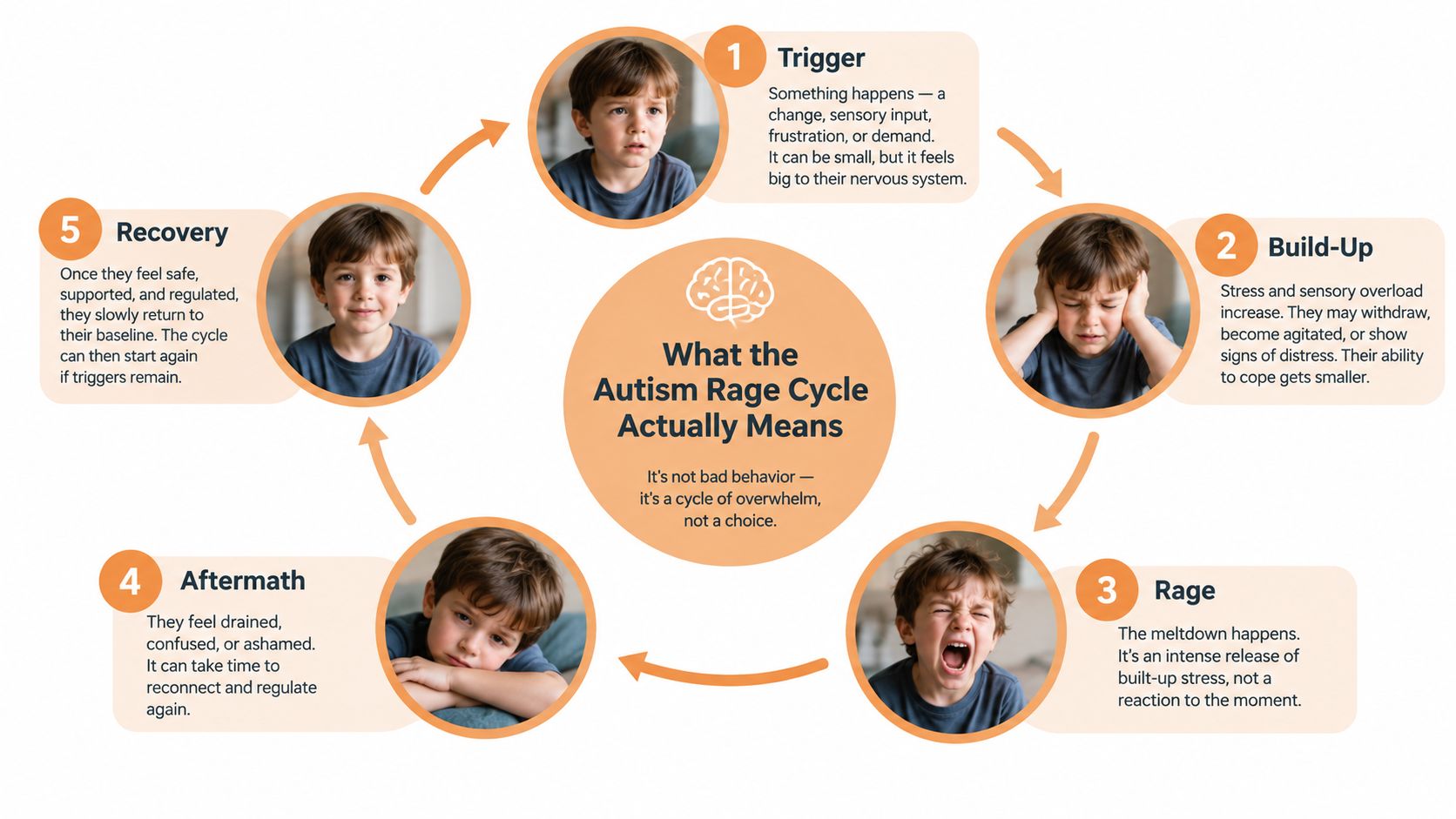
The autism rage cycle is a practical description of escalating distress. It isn't a diagnosis, and it doesn't predict that every autistic child will have aggressive episodes. Myles and Southwick documented the three-phase framework in 1999, and the Organization for Autism Research summarized it in 2004 through the stages of rumbling, rage, and recovery. You can read the framework in the Organization for Autism Research overview of the cycle.
Think of the pattern like changing weather. Stress clouds gather during rumbling. The storm breaks during rage. The air settles during recovery, but calm may take time.
Rumbling
Rumbling is the period when distress is becoming visible. Your child may show escalating frustration, repetitive behavior, verbal resistance, agitation, or withdrawal. A child might ask the same question again and again, pace near the door, cover their ears, refuse a task, or become unusually quiet.
This is often the best time to intervene. The child may still be able to choose a break, accept a visual schedule, move to a quieter room, or use a communication device.
Rage
The rage phase is the peak of reduced behavioral control. It may involve screaming, hitting, kicking, biting, destroying property, or self-injury. Some children withdraw or become unresponsive instead.
At this point, reasoning and lengthy explanations usually won't work well. The child's available language and problem-solving skills have narrowed, so safety and reduced stimulation matter more than teaching a lesson.
Recovery
Recovery follows the peak. It may include exhaustion, sleep, reduced communication, quiet withdrawal, or a gradual return to the child's usual state. The functional behavior assessment resource from Friendly ABA Premier can help families and clinicians examine what happens before and after behavior instead of treating the peak as an isolated event.
A meltdown also differs from an ordinary tantrum. A tantrum is generally directed toward an outcome and may stop when the child gets the desired item or attention. A meltdown is an involuntary response to overwhelming sensory, emotional, communication, or environmental demands, and it may continue after the original trigger is removed.
Naming the phases doesn't solve everything, but it changes the question from “How do I stop this behavior?” to “What state is my child in, and what support fits this state?”
Recognizing Each Phase in Your Child
The cycle has a different fingerprint for every child. One child may become louder and more active. Another may stop speaking, hide under a table, or move away from people. A behavior that looks like attention-seeking in one setting may signal sensory pain or escape from an impossible demand in another.
The early rumbling signs
Early signs can be easy to dismiss because they may appear small:
- Body changes: Fidgeting, pacing, chewing clothing, tensing the face, or moving away.
- Repetitive communication: Asking the same question, repeating a phrase, or increasing the speed of speech.
- Sensory protection: Covering the ears, squinting, avoiding touch, or seeking heavy movement.
- Social withdrawal: Becoming still, leaving the group, hiding, or refusing eye contact.
- Minor refusals: Pushing away a plate, dropping a pencil, or saying “no” to a familiar request.
Treat these signals as information rather than misbehavior. A child who refuses pajamas may be reacting to a scratchy seam, fatigue, a changed bedtime sequence, or a need for control after a demanding day.
The peak of distress
During rage, a child may scream, throw objects, bolt, hit, kick, bite, or injure themselves. Some children collapse, hide, or become unresponsive. This isn't the moment to insist that a child “use their words,” explain consequences, or answer a series of questions.
The return to baseline
Recovery may look like slowed breathing, seeking comfort, fatigue, remorse, quiet play, or complete withdrawal. A child may want a parent nearby without talking. Another may need a dark room and no physical contact.
A simple log can help you identify patterns. Record the time, setting, activity, sleep quality, food or drink, communication attempts, behavior, and what happened afterward. The ABC data collection guide explains how to note the antecedent, observable behavior, and consequence in a consistent way.
| Phase | What You May See | What to Do |
|---|---|---|
| Rumbling | Repetitive questions, pacing, refusal, ear-covering, withdrawal | Lower demands, check for pain or sensory stress, offer a break or communication tool |
| Rage | Screaming, aggression, self-injury, throwing, bolting, or unresponsiveness | Protect people and the child, reduce language, remove hazards, give space |
| Recovery | Fatigue, quiet withdrawal, reduced speech, comfort-seeking, sleep | Reduce expectations, offer calm support, restore routine gradually, discuss the event later |
Track the pattern without turning your child into a chart. The purpose is to notice what support helps, not to judge how well your child performed.
Common Triggers Hiding Behind the Outburst
An outburst is the visible end of a process that may have started much earlier. The trigger isn't always the last thing that happened. A grocery trip, for example, may involve bright lights, cart noise, a crowded aisle, a change from the usual route, hunger, and difficulty asking to leave. The final request to stand in line may be the moment the distress becomes visible.
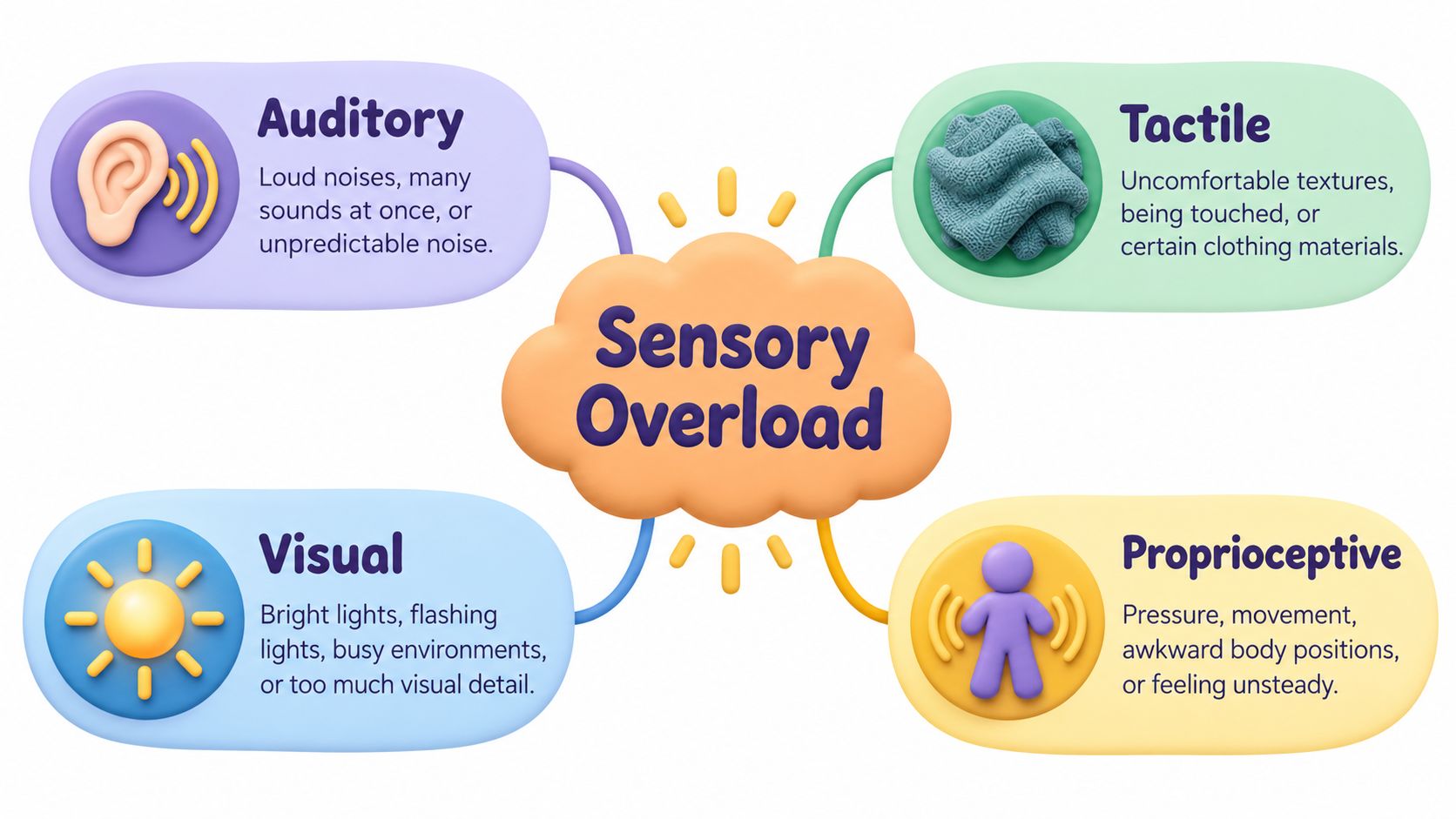
Sensory load
Sound, light, touch, smell, movement, and crowded spaces can raise arousal. A fluorescent buzz, scratchy shirt tag, loud conversation, or busy checkout may feel painful or impossible to filter. The Child Mind Institute's guidance on de-escalating an autistic meltdown recommends reducing noise and visual stimulation and allowing recovery rather than adding lengthy explanations during peak distress.
Communication breakdown
A child may understand more than they can express under pressure. If they can't say “stop,” “help,” “not that shirt,” or “I need to leave,” pushing materials away or hitting may become the fastest available message. The useful question is not only “What did my child do?” but also “What need could my child not communicate?”
Changes and demands
A substitute teacher, skipped snack, canceled playground visit, altered transportation plan, or unexpected visitor can disrupt a child's sense of predictability. A transition that looks minor to an adult may require several difficult shifts in attention, movement, and expectation.
Physical and emotional strain
Hunger, poor sleep, illness, pain, anxiety, constipation, dental discomfort, medication effects, and a task that is too difficult can all influence escalation. If a behavior changes suddenly or becomes more intense, share the pattern with the child's medical and care team.
The same hitting can have different meanings in different children. One child may be escaping noise, while another may be communicating pain or trying to end a confusing task.
A short trigger log can reveal whether episodes cluster around meals, transitions, particular clothing, school pickup, or difficult communication moments. A qualified team can use that information to test possible functions rather than guessing. Noncontingent reinforcement in ABA is one example of a strategy that may be considered within an individualized plan, but the right approach depends on the child and the context.
Staying Calm in the Middle of Escalation
Once a child reaches active escalation, safety comes before teaching. Move siblings, pets, sharp objects, and breakable items away when you can. Keep yourself close enough to supervise, but don't crowd a child who is trying to create distance.
Use fewer words. “Safe body,” “break,” “quiet room,” or “I'm here” may be more useful than a paragraph about what happened. Lower your voice, slow your movements, and take a deliberate breath so your body communicates less urgency.
Reduce the pressure
Pause the demand if doing so doesn't create an immediate safety risk. Avoid asking “Why are you doing this?” or “What do you want?” when your child can't process language. Negotiating, correcting, or repeating a rule may add more sound and attention to an already overloaded moment.
You can offer a simple choice without forcing an answer. “Couch or floor?” “Headphones or quiet room?” “Break card or tablet?” If your child doesn't respond, allow the choice to remain available without repeating it.
Protect without turning the moment into a struggle
If your child is moving toward a dangerous area, guide them toward a safer space when possible. If there is immediate risk of head-banging or another injury, follow the safety plan created with qualified professionals. Don't improvise restraint or use a physical hold unless you have been specifically trained and the plan allows it.
The Autism Speaks crisis planning guidance emphasizes watching for warning signs, reducing stressors, staying calm, giving space, and using short, clear directions. If aggression or self-injury creates immediate danger, follow your family's crisis plan and seek emergency help.
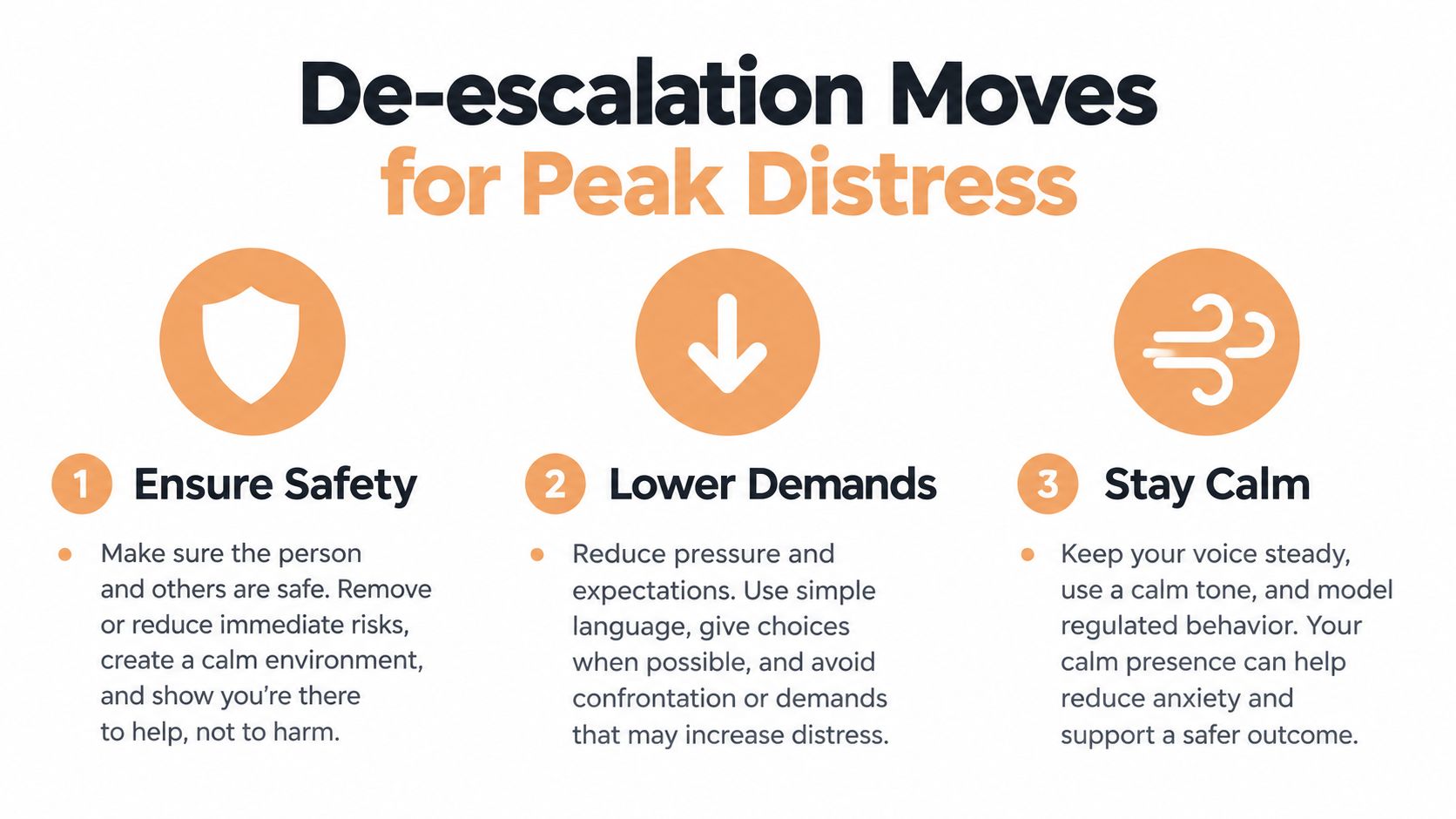
The aim is co-regulation, not compliance. Your calm presence can support the child's return to control, but you don't need to make the child talk, apologize, or practice a skill until recovery is complete.
Afterward, restore the environment in silence. Save the lesson for a calmer time.
ABA-Based Prevention That Actually Helps
Compassionate ABA doesn't begin with stopping an outburst. It begins by asking what the behavior may accomplish for the child. A functional behavior assessment, or FBA, examines whether escalation reliably leads to escape from a demand, access to attention or a preferred item, sensory input, or another outcome. Reviews describe positive results from FBAs addressing tantrums, aggression, self-injury, and property destruction, while also emphasizing individualized assessment.
Start with the environment
A team may adjust what happens before distress rises. Visual schedules can show the order of breakfast, dressing, school, and play. Transition warnings can make “all done” less sudden. A difficult task can be broken into smaller steps, with an easier request or movement opportunity included between demands.
The support should fit the child. One child may need fewer spoken instructions and a first-then board. Another may need a quieter workspace, a movement opportunity, or a predictable way to pause.
Teach a replacement message
The replacement skill must work as efficiently as the behavior it replaces. A child might learn to hand over a break card, press an AAC button, sign “help,” point to “finished,” or say “later.” Practice this communication while the child is calm, then honor it consistently when it's used.
A break request only becomes useful when adults respond to it as communication. If a child asks for help and receives more pressure, the child may stop trying that safer message.
Reinforce flexible, safe responses
When your child accepts a small change, waits briefly, transitions with support, or requests help, notice it. Reinforcement can be access to a preferred activity, enthusiastic recognition, a sensory option, or another meaningful response identified with the family. Practice coping tools during calm moments, not for the first time during a crisis.
Measure what changes
A plan becomes more useful when it tracks frequency, duration, intensity, latency, setting, antecedent, and recovery time. One family may discover that the number of episodes is unchanged while recovery is shorter. Another may see fewer injuries but longer quiet periods afterward. Those differences matter when a clinician adjusts the plan.
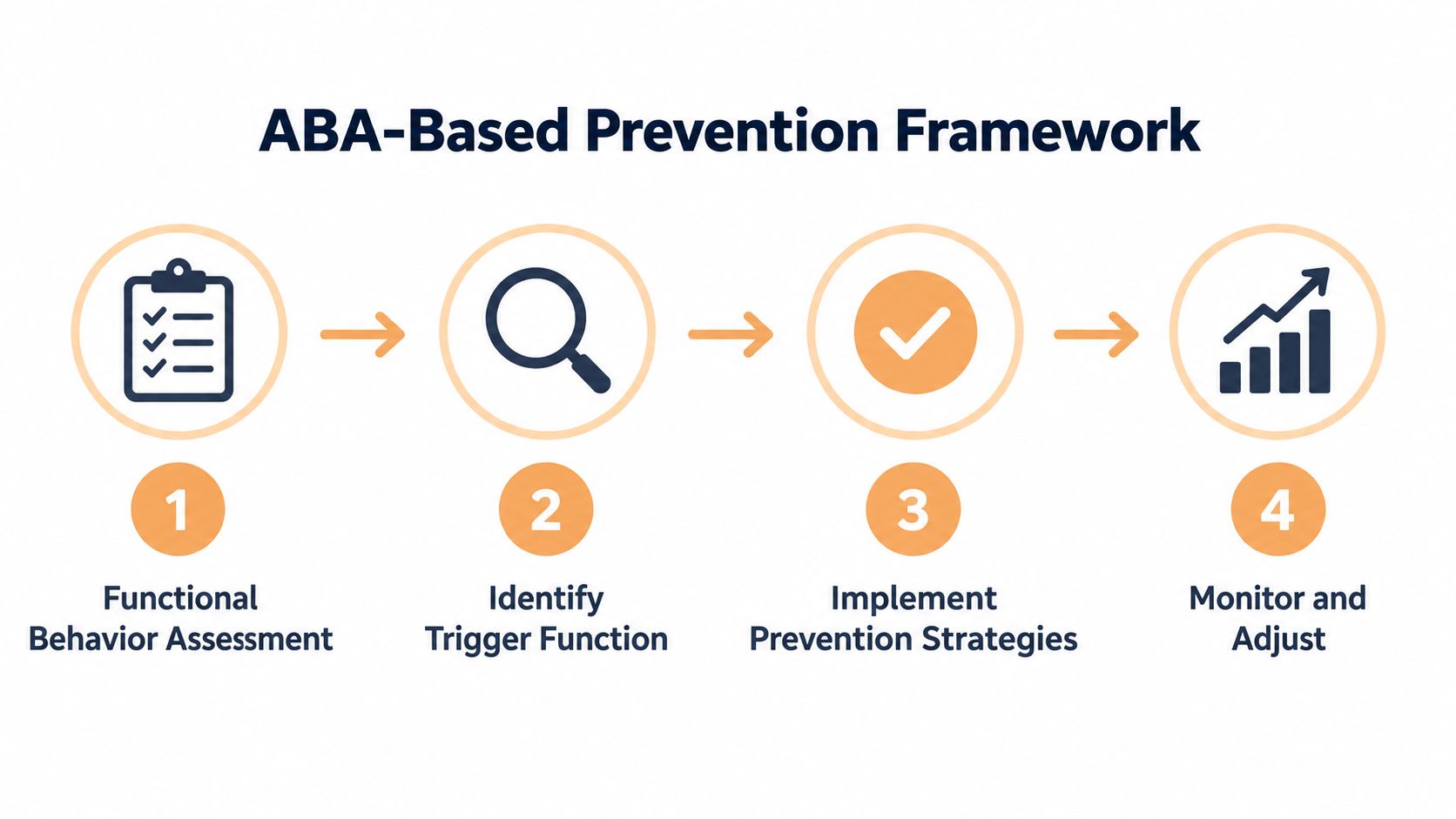
ABA should be respectful, individualized, and built around meaningful communication, participation, and safety. Parent coaching helps caregivers use the same tools at breakfast, during play, on school mornings, and after a difficult transition. A good plan also respects assent and adjusts when a strategy increases distress.
Recovery, Burnout, and Caring for the Whole Family
Recovery doesn't end when the screaming stops. Your child may be tired, quiet, clingy, less able to communicate, or more sensitive to ordinary demands for some time afterward. Episodes can also last from a few minutes to several hours, so families need to plan for the hours after the visible peak, not only the moment of crisis.
A small clinical study of autistic youth with anxiety shows why duration and intensity deserve careful tracking. In that study, 99 of 165 children, or 60%, had experienced an anger outburst during the preceding week; 34 children, or 21%, had clinically severe outbursts, and 49 children, or 29%, had an outburst lasting longer than 15 minutes (clinical study). These findings don't predict an individual child's experience, but they show why “frequent” and “severe” should be replaced with clear observations shared with the care team.
Make recovery smaller and quieter
A recovery plan might include a low-demand afternoon, familiar food, dimmer lighting, a favorite sensory activity, quiet time, or a gentle reconnection ritual such as reading side by side. Don't require immediate conversation or an apology. Wait until your child is fully regulated before reviewing what happened.
Long periods of stress can affect the whole household. Parents may stay alert for the next episode, siblings may avoid shared spaces, and sleep may become disrupted. Autistic burnout is also associated with prolonged exhaustion, increased sensory sensitivity, reduced functioning, and lower tolerance for demands. The systematic review of autistic burnout notes that its evidence base has important limits, including a participant group that was predominantly White, female, late-diagnosed adults with average or higher verbal and intellectual abilities.
Caregiver recovery belongs in the plan. Arrange respite when available, divide evening responsibilities, schedule quiet time after school, and ask the care team for practical coaching. Protecting your capacity isn't indulgent. It helps you respond consistently when the next difficult moment arrives.
Building a Plan That Grows With Your Child
A useful support plan is a living document, not a handout that sits in a drawer. Start with a clear baseline: what happens, where it happens, what comes before it, how long recovery takes, and which supports have helped or increased distress.
Then identify the highest-priority needs. A family may focus first on preventing injury, while another may prioritize communication during transitions or helping a child remain safely involved in school routines. Choose a small number of replacement skills that the child can use across home and school.
Include every adult who supports the child
A practical plan should define:
- Early signs: The child's individual rumbling signals.
- Prevention steps: Visual supports, sensory adjustments, transition warnings, and communication tools.
- Crisis responses: Who moves siblings, who clears the area, what words adults use, and when emergency help is needed.
- Recovery supports: How expectations change after an episode and how the child reconnects.
- Team roles: What parents, educators, clinicians, and a care coordinator each communicate and review.
The plan should change as communication grows, school demands shift, health factors change, or new stressors appear. Consistent language across settings can reduce confusion, but consistency doesn't mean using the same rigid response in every situation. Your child may need different supports at home, school, the grocery store, and a family gathering.
Progress may look like noticing rumbling sooner, using a break request once, accepting help before hitting, or recovering with less exhaustion. Parent coaching and collaborative meetings help turn those small moments into a shared strategy. Individualized care coordination also gives families a clear person to contact when home observations and school reports don't line up.
If your child has severe or rapidly worsening aggression, self-injury, injuries, or possible medical symptoms, contact qualified clinicians promptly. A pediatrician, behavioral clinician, school team, and other relevant professionals can help assess medical, emotional, sensory, and environmental contributors.
Friendly ABA Premier offers home-based ABA therapy, parent coaching, social skills development, school support, individualized treatment planning, and dedicated care coordination for families in Connecticut, Georgia, Maryland, Massachusetts, North Carolina, South Carolina, Virginia, and Washington. If you want help mapping your child's rumbling signs, communication needs, safety steps, and recovery supports, visit Friendly ABA Premier to talk with the team about a personalized plan.
Our Latest Insights



















Experience ABA Therapy with a More Personalized Level of Support
Discover how FriendlyABA Premier combines evidence-based ABA therapy with dedicated coordination, proactive communication, and individualized family support.