

Communication Skills and Body Language for Children
Communication Skills and Body Language. Learn how verbal and nonverbal communication shapes child development. Discover practical strategies

A child reaches toward the snack cupboard, glances at you, and shifts closer. Before saying a word, they've communicated a request, shared attention, and asked you to respond. You might answer with a smile, open the cupboard, or gently point to the choice available. That small exchange is communication skills and body language in action.
For parents of autistic children or children with developmental delays, these moments can also feel confusing. A child may use a gesture one day, turn away during a conversation, or show excitement through movement rather than speech. The goal isn't to force one “right” way to communicate. It's to notice what your child is already showing you, respond warmly, and create more opportunities for connection.
Table of Contents
- Give your child time to respond
- Model without requiring imitation
- Treat every reliable communication form as meaningful
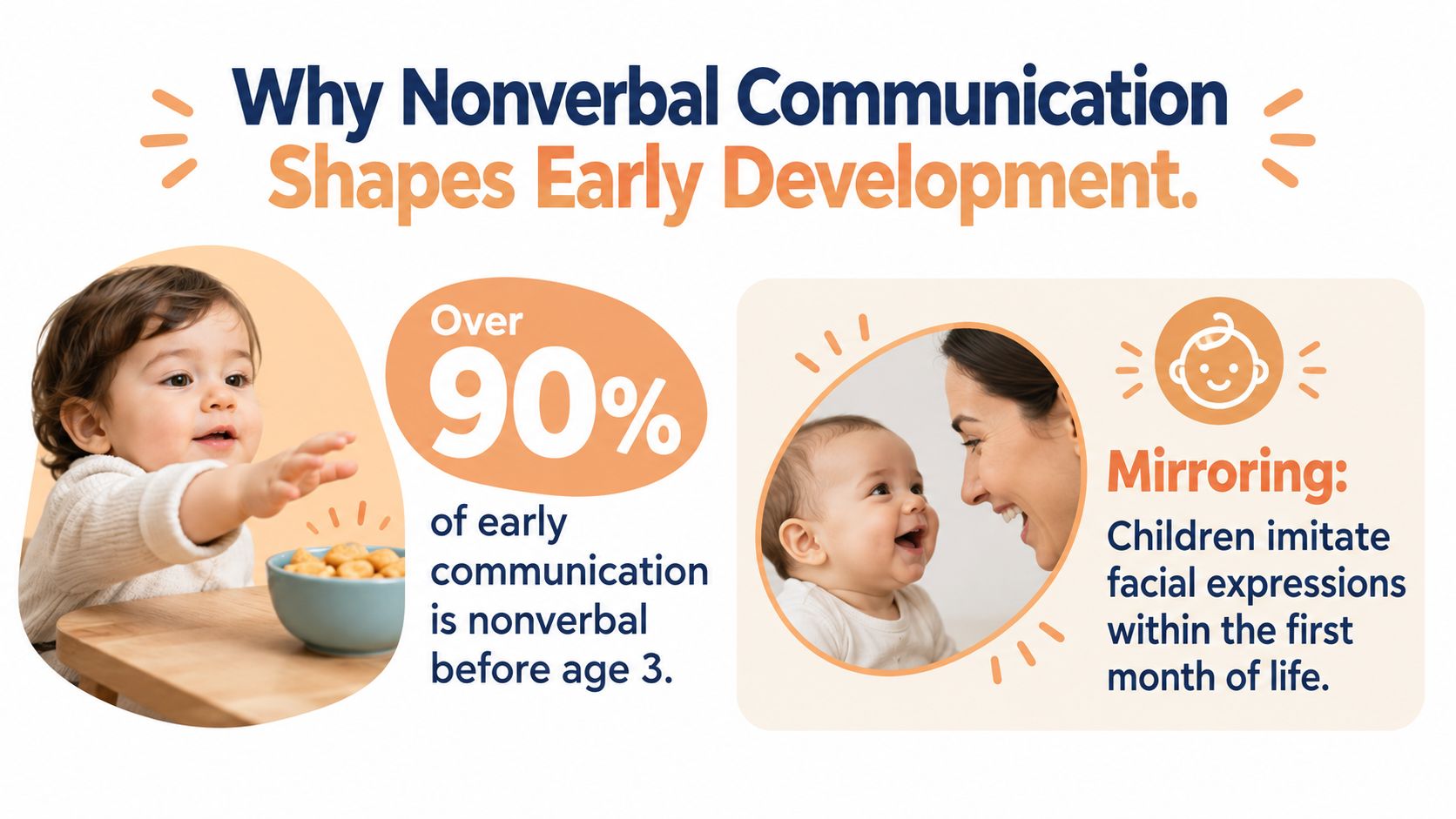
Why Nonverbal Communication Shapes Early Development
At breakfast, a toddler may push a bowl away to say “finished.” During play, a preschooler may bring you a toy, look toward the shelf, and wait for your help. At bedtime, a child may lean into your shoulder after a busy day. These actions carry meaning even when spoken language is still emerging.
Children learn from the way adults move, pause, smile, reach, and respond. A calm face can make a new activity feel safer. A parent who bends down, opens their hands, and waits at the child's level may communicate, “I'm available.” These signals help children understand emotions, predict what may happen next, and build trust through repeated everyday experiences.
Connection begins before conversation
Nonverbal communication gives children a way to participate before they can explain their thoughts. A point toward a cup, a hand placed on a parent's arm, or a change in posture can start a shared interaction. When a caregiver notices and responds, the child learns that their actions can influence the world and bring another person into the moment.
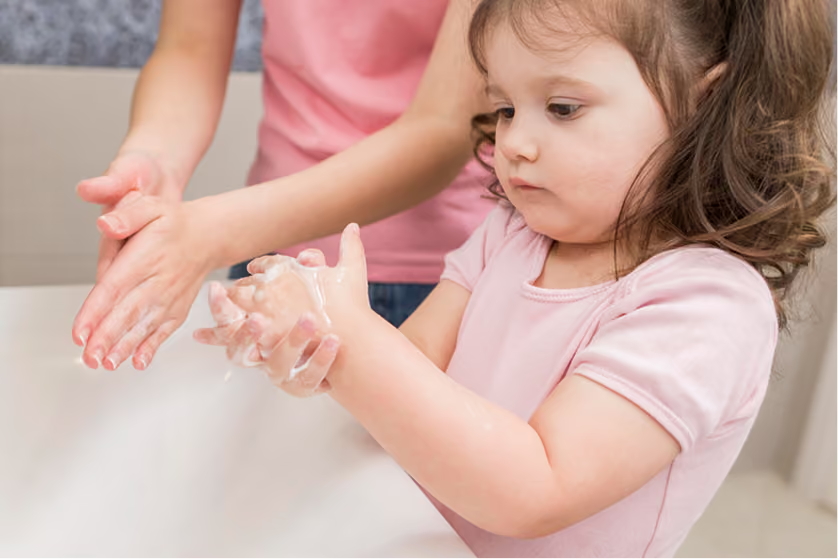
That learning doesn't require a formal lesson. You can model it while washing hands, packing a bag, or choosing a snack. Use a relaxed expression, point to the next item, and pause so your child has room to respond. If your child looks, reaches, vocalizes, or moves closer, treat that as meaningful information.
Your response teaches as much as your words
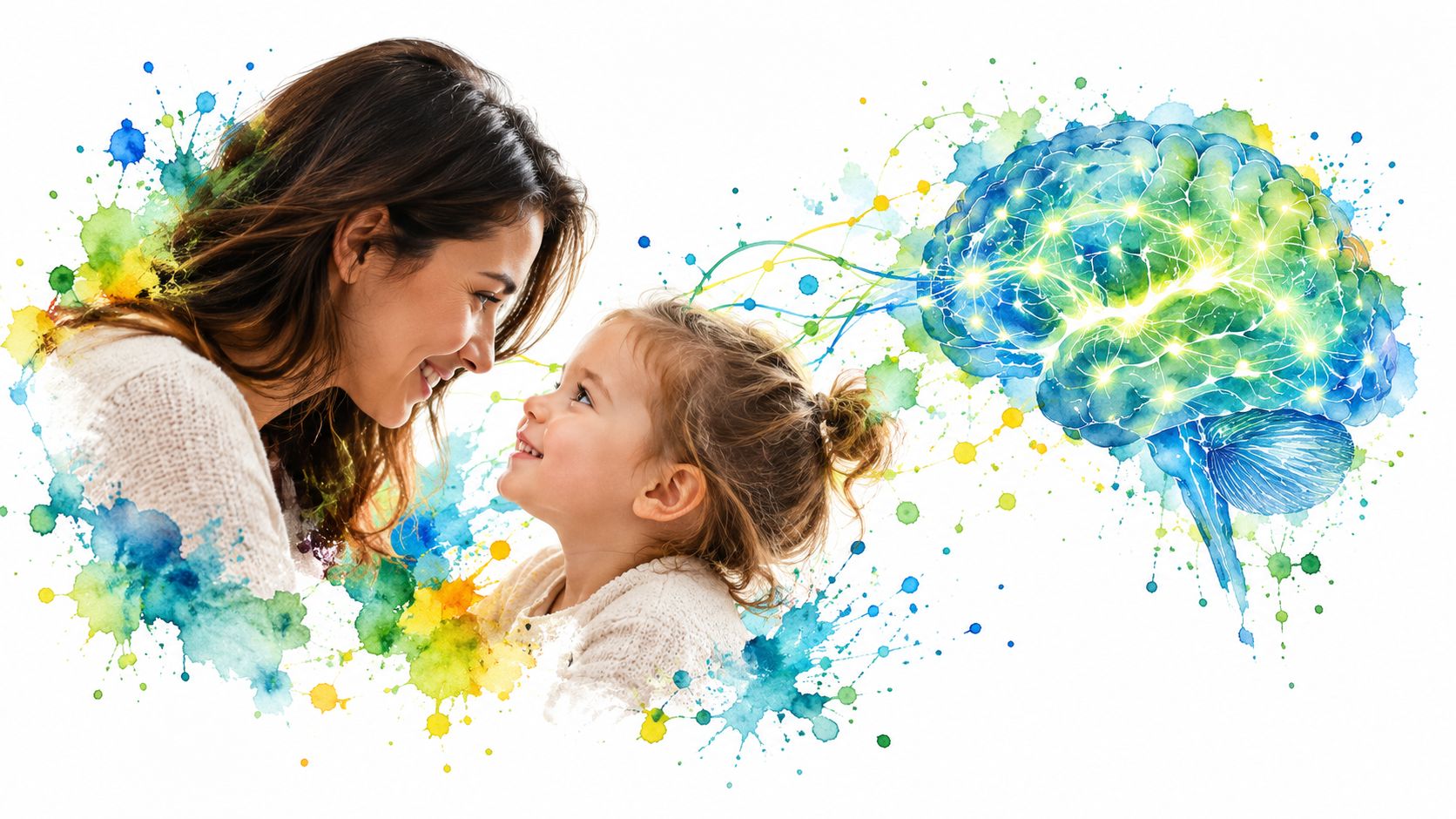
A child who points to bubbles may not need a long explanation. Your delighted expression, shared gaze, and immediate attention show that you understood the attempt. Over time, these responsive exchanges can support requesting, turn-taking, imitation, and emotional learning.
Try to think of body language as an invitation rather than a test. Your child doesn't need to copy every facial expression or maintain eye contact to prove they're engaged. Children communicate in different ways, and a supportive adult watches for the child's whole pattern, including movement, sound, facial expression, and changes in activity.
Understanding the Science Behind Body Language
Body language has a longer research history than many parents realize. Modern scholarly study is often traced to Charles Darwin's 1872 book The Expression of the Emotions in Man and Animals, which is widely treated as a foundational milestone for studying facial expressions and nonverbal behavior. Ray Birdwhistell later helped formalize kinesics, the study of body movement in communication, in 1952, and a popularization wave followed after Body Language was published in 1978, as summarized in this historical overview of body-language research.
That history matters because it places body language in the field of serious observation and study. Researchers have cataloged nearly a million nonverbal signals, according to the same overview, but that impressive range also explains why no single gesture can tell you everything about a child's feelings or intentions.
Why tone and movement change meaning
A spoken phrase doesn't carry meaning through words alone. Your tone, pace, facial expression, posture, and gestures can make the same sentence feel encouraging, rushed, playful, or serious. Classic findings associated with Albert Mehrabian are commonly summarized as 7% verbal, 38% vocal, and 55% nonverbal when words, tone, and body language are combined, although those figures apply to particular kinds of mixed emotional messages rather than every conversation. The summary of Mehrabian's communication findings also presents wider estimates that place nonverbal communication at 60% to 93% of emotional meaning.
For parents, the practical lesson is simple. If you say, “Come here,” while standing far away with a tense face, your child may receive a different message than if you crouch nearby, soften your voice, and gesture toward a comfortable space. Children who have limited spoken language may rely even more on these observable details.
Use evidence without turning cues into rules
Research can help explain why body language matters, but it shouldn't encourage rigid decoding. A child's raised shoulders might reflect excitement, uncertainty, fatigue, sensory discomfort, or a cold room. The meaning becomes clearer when you consider what happened before, what the child is doing now, and what usually helps.
Eye contact offers another useful example. A 2026 automated analysis found average directed social gaze lasted about 2.3 to 2.7 seconds, and classical research suggests that shorter gaze can appear erratic while much longer gaze may feel like staring, as described in this research on gaze timing in conversation. In family life, that doesn't mean you should time your child's gaze. It means brief, repeated glances can be a comfortable way to show attention, while forcing prolonged eye contact may create stress.
Practical rule: Use research to guide your observation, not to replace your knowledge of your child.
Reading Common Signals in Everyday Interactions
Parents often ask, “What does this gesture mean?” The most accurate answer usually depends on the entire situation. A child who turns away when you offer a new food may be rejecting the food, avoiding a strong smell, protecting their eyes from a bright kitchen, or asking for a pause. The movement gives you a clue, not a complete explanation.
Look for clusters of cues and changes from your child's usual pattern. Notice facial expression, body position, sounds, distance, activity level, and what happened immediately beforehand. A child who smiles, reaches, and moves closer during a favorite game is showing a different pattern from a child who stiffens, covers their ears, and backs away when the room becomes loud.
Signals that may offer useful clues
- Eye contact or shared gaze: A child may glance toward you to share interest, request help, check your reaction, or coordinate a turn. Looking away may also help them process information or manage stimulation, so it shouldn't automatically be treated as avoidance.
- Pointing and reaching: A point toward crackers may communicate a request. A point toward a passing truck may share interest. Respond to the direction and the context rather than assuming every point means the same thing.
- Leaning closer: Moving toward you can signal interest, comfort, or a desire to join. During a noisy activity, it may also show that your child is seeking physical reassurance.
- Crossed arms or a closed posture: This can reflect discomfort, temperature, fatigue, uncertainty, or a preferred resting position. Ask what else is happening before interpreting it as refusal.
- Fidgeting and movement: Wiggling, rocking, tapping, or pacing may help a child regulate their body while listening or waiting. The important question is whether the movement supports participation or signals that the environment needs adjustment.
- Facial expression: A smile often suggests enjoyment, but some children show pleasure through movement, vocal sounds, or sustained interest rather than a conventional smile.
Context matters more than a decoding chart
Recent psychology work challenges the popular idea that body language forms a stable, universal code. The claim that “the body never lies” is also a myth. Nonverbal communication changes with the relationship, setting, culture, sensory experience, and personal history, and even untrained judgments about lying reach only about 54% accuracy, according to this psychology record on body-language interpretation.
That finding protects families from overconfidence. You don't need to decide that a child is angry because they cross their arms or dishonest because they look away. Instead, describe what you see and test a gentle response: “You moved back. Do you want space?” Then wait, offer a choice, or reduce the demand.
A video-therapy study also found that eye contact and gestures improved impression formation, with gestures producing the larger effect, as reported in this study of nonverbal behavior in video therapy. For caregivers, that supports a practical priority: make your posture, hand movements, and nods clear and welcoming, then use eye contact as one possible way to confirm engagement.
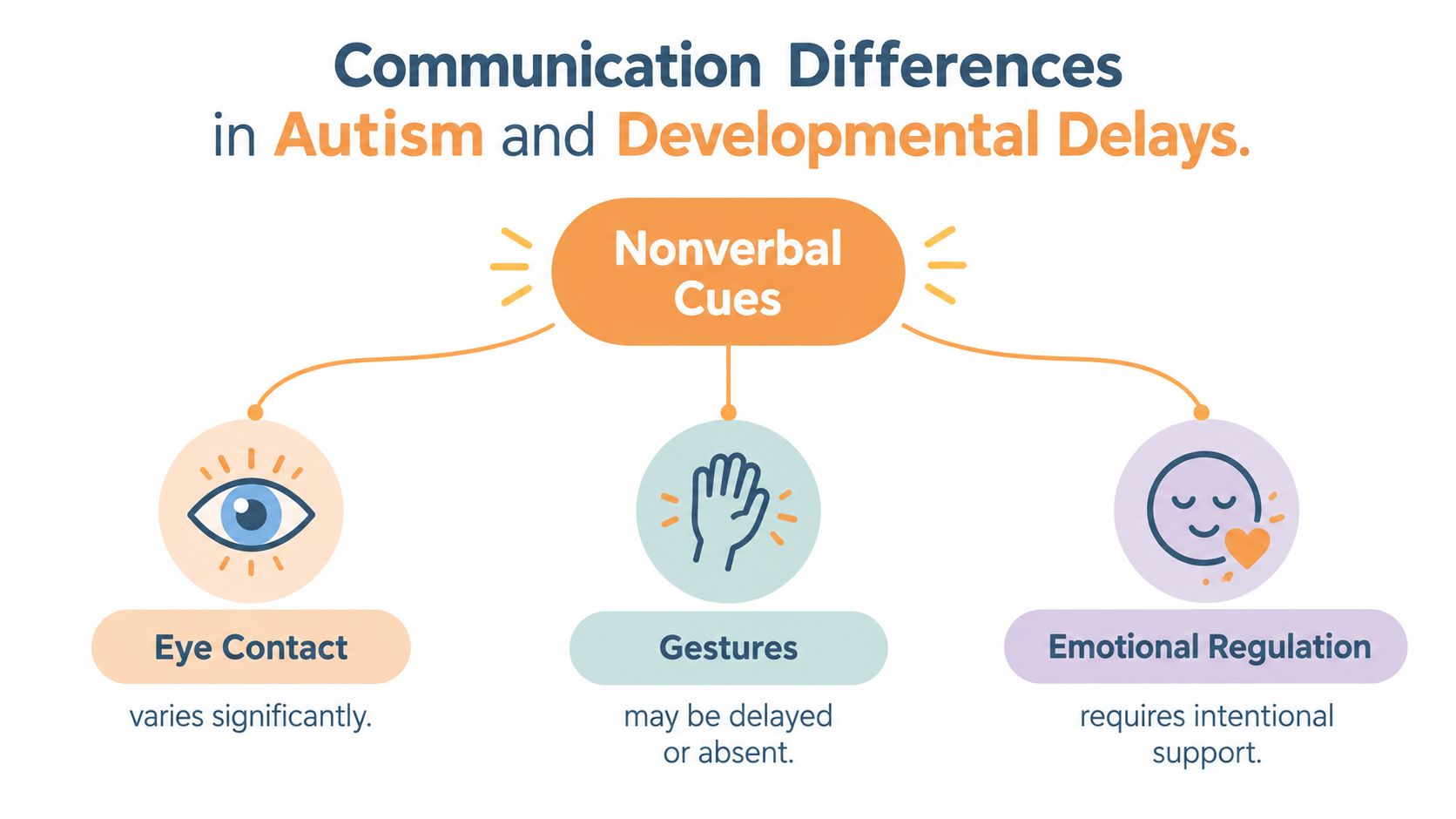
Communication Differences in Autism and Developmental Delays
Communication may look different for an autistic child or a child with a developmental delay. A child might understand more than they can say, use movement instead of speech, or communicate a clear preference without looking directly at another person. National health guidance identifies eye contact, hand gestures, facial expressions, and body language as parts of communication development for autistic children, not merely matters of politeness or compliance. The National Institute on Deafness and Other Communication Disorders guidance on autism communication describes these differences in the context of communication development.
A different communication style isn't a lack of connection. Some children communicate through spoken words, while others use signs, pictures, body movements, sounds, or an augmentative and alternative communication device, often called AAC. Your role is to learn which signals are reliable for your child and make those signals effective.
Break a broad goal into observable parts
“Improve body language” is too broad to guide a family. A more useful goal might be, “During snack, my child will indicate a choice by pointing, touching a picture, handing me an item, or using their device.” Another might be, “During a turn-taking game, my child will look toward the toy or partner before the next turn.”
One pediatric autism resource describes coordinated eye contact as a parent and child looking toward each other's eyes at the same time for longer than 1 second, making it an observable behavior rather than a vague personality trait. That definition appears in this resource on coordinated eye contact. It still shouldn't become a demand that overrides comfort or communication access.
A review of young autistic children found measurable differences in behaviors such as eye contact, alternating gaze between a person and a toy, and appeal behaviors that combine an action with eye contact, as described in this review of nonverbal communication in young autistic children. These examples show how clinicians and caregivers can teach specific, functional skills without treating a child's entire way of relating as a problem.
Support the child and the caregiver together
Parents of preschool children with ASD may benefit from training that helps reduce misunderstandings during interaction. One 2025 study reported deficient nonverbal communication abilities among participating parents and concluded that parent training could support clearer interaction, as described in this study of parents of preschool children with ASD. The finding shouldn't be read as blame. Families are often expected to understand unfamiliar communication patterns without enough coaching or time to practice.
Home-based rehearsal and video modeling can make guidance more concrete. A parent might record a short play routine, review when the child reaches or turns away, and discuss how to respond without pressure. A clinician can help the family identify whether a movement signals enjoyment, escape, sensory overload, a request for assistance, or something else.
For families exploring communication support, communication approaches for semi-verbal autistic children can offer another starting point for thinking about speech, gestures, pictures, and devices together. A care team should adapt any strategy to the child's preferences, strengths, sensory needs, and current communication system.
Practical Strategies for Building Communication at Home
The most useful practice happens inside routines your family already knows. Mealtime, bath time, getting dressed, and play offer predictable chances to pause, model a gesture, and respond to an attempt. You don't need to turn every interaction into a lesson.
Start with one routine and one communication goal. During snack, you might focus on choosing between two foods. During play, you might practice requesting another turn. During transitions, you might pair a spoken phrase with the same gesture each time.
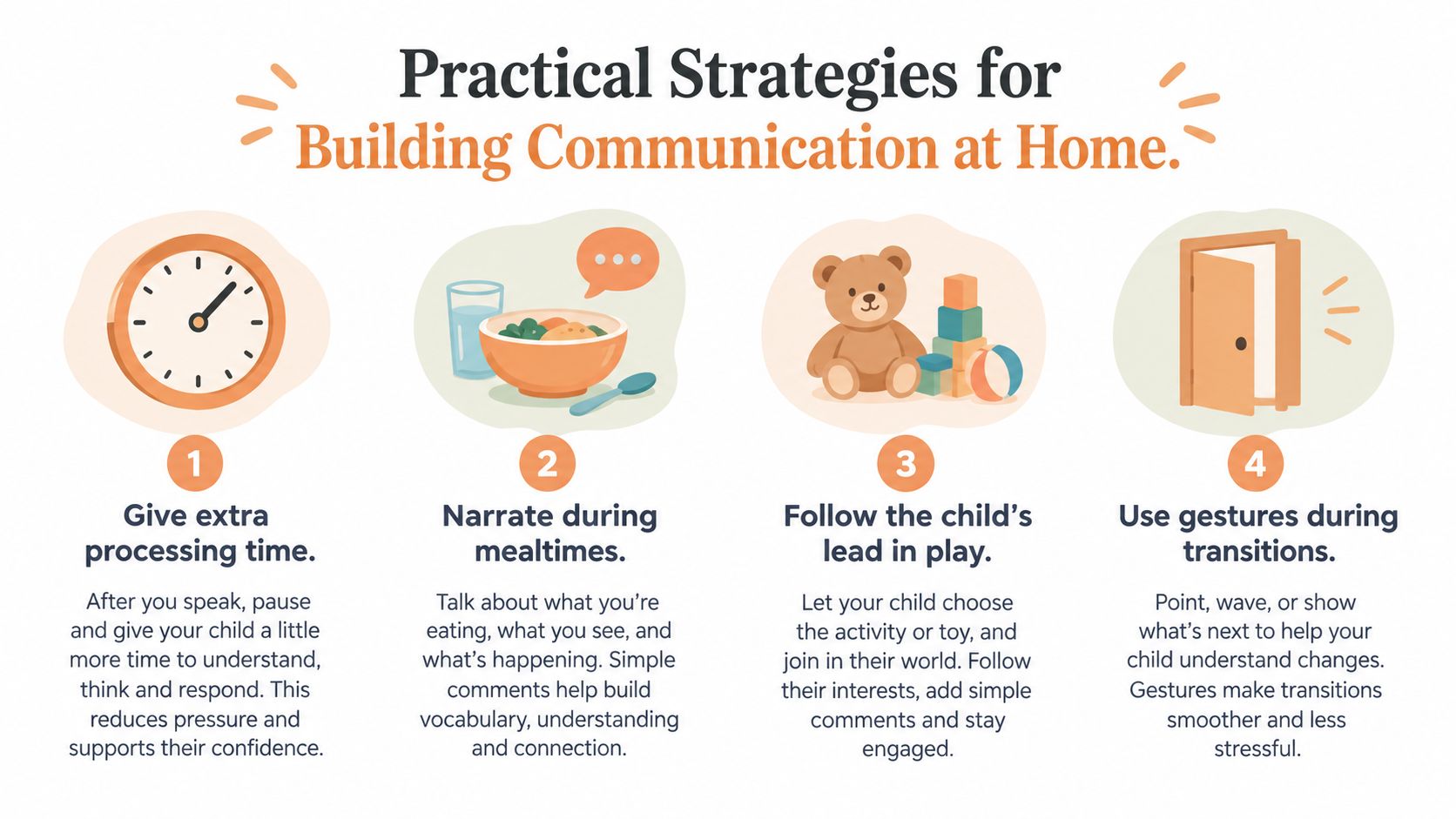
Give your child time to respond
After you ask a question or give a prompt, pause for 6 to 10 seconds before repeating it. This processing recommendation comes from autism communication guidance on allowing response time. The pause may feel long, especially when you're trying to keep a routine moving, but repeating a direction too quickly can crowd out the child's opportunity to understand and respond.
Try this at breakfast: hold up two choices, say “apple or cereal,” show each item, and wait. Your child might point, touch, look toward one option, vocalize, or use AAC. Respond to the communication attempt, then name the choice naturally: “You chose cereal.”
Model without requiring imitation
Use the gesture you want your child to understand. Point to the shoes while saying “shoes,” wave when someone leaves, and tap the chair when it's time to sit. Keep your movements clear and relaxed, but don't insist that your child copy your eyes, hands, or facial expression before receiving what they've communicated.
At playtime, follow your child's lead. If they line up cars, join the activity by placing one nearby and using a simple gesture for “go.” If they hand you a puzzle piece, accept it and show “help” with your hands or communication system. Responding to the child's interest often creates more engagement than directing every step.
Treat every reliable communication form as meaningful
Sounds, gestures, picture systems, speech, and AAC devices can all help a child express needs and choices. If your child pushes an item toward you, don't dismiss the action because they didn't say the word. Accept the message, model a word or symbol if appropriate, and keep the interaction positive.
Transitions are another good practice opportunity. Point toward the door, show a coat, and use the same short phrase before leaving. If your child brings the coat, looks at the door, or takes your hand, acknowledge that sequence as communication.
During routines, respond first to the message your child is already sending. Then model one small next step.
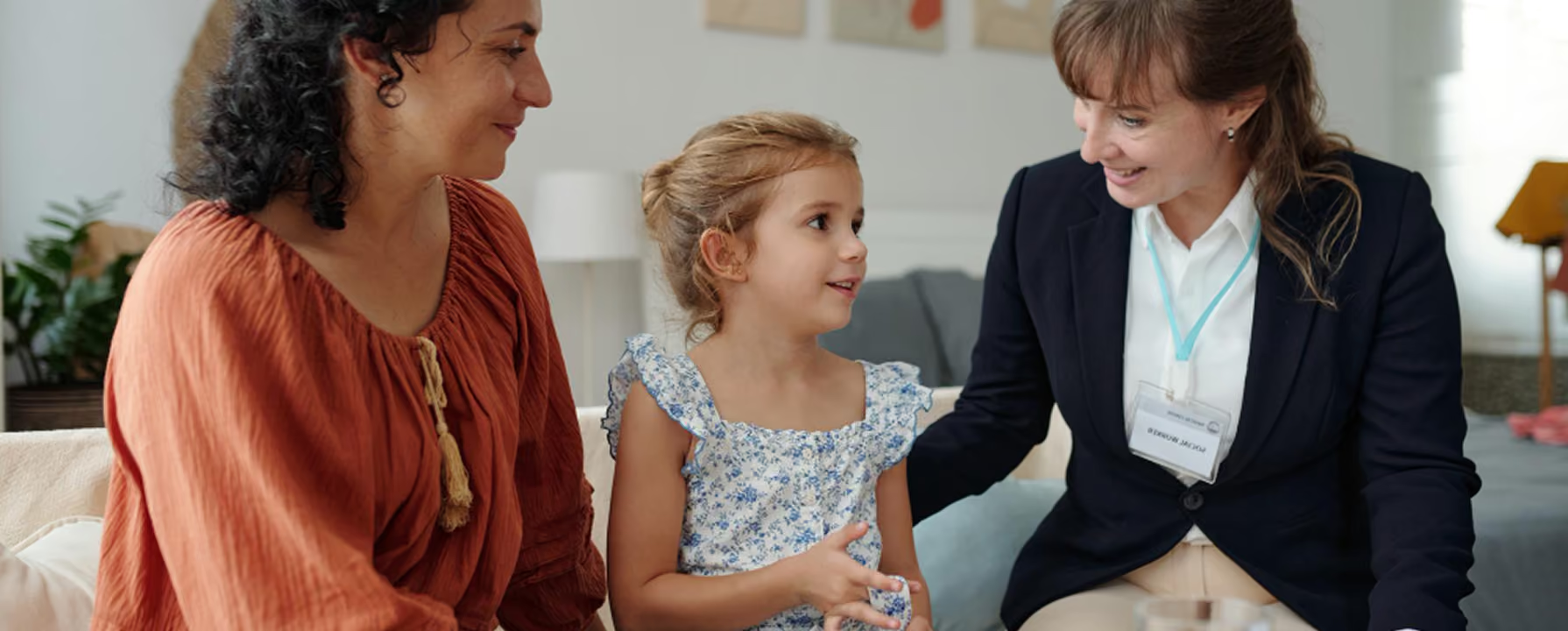
A parent coach can help you select goals that fit your household rather than adding an exhausting list of exercises. Friendly ABA Premier offers home-based ABA therapy, social skills development, school support, and parent coaching, with individualized treatment planning, scheduled progress check-ins, and a dedicated care coordinator for family communication. Those supports can help caregivers practice consistently while sharing observations with the clinical team.
The following video can provide another visual example of communication practice in everyday moments.
For more routine-based ideas, see this guide to building communication skills in everyday moments. Choose one idea, try it during a familiar activity, and note what your child did before and after you changed your response.
When to Seek Additional Support for Communication Goals
Every child develops communication in an individual pattern. Some children use words early but struggle with gestures or conversation. Others communicate through pointing, leading an adult by the hand, sounds, movement, pictures, or AAC while spoken language develops more slowly. These forms shouldn't be ranked as better or worse. The key question is whether your child has dependable ways to express needs, share interests, understand others, and participate in daily life.
A consultation may be useful when communication attempts are frequently misunderstood, daily routines lead to repeated frustration, or your child has difficulty showing choices and requesting help. You might also seek guidance if your child's communication looks very different at home and school, if caregivers aren't sure how to respond to body language, or if a previously reliable communication method changes.
Compare support needs rather than labels
You can ask:
- What works now? Identify gestures, sounds, words, pictures, devices, or routines your child already uses successfully.
- Where does communication break down? Look at specific situations, such as group activities, meals, dressing, playground time, or transitions.
- What response would help? A child may need more processing time, fewer words, a visual choice, a quieter space, or a consistent gesture.
- Who should collaborate? Depending on the concern, your pediatrician, speech-language pathologist, occupational therapist, teacher, and ABA team may each offer useful insight.
ABA therapy and parent coaching can provide structured practice, but support should remain individualized and functional. A clinician may observe a routine, define a practical goal, and help you measure progress by participation and independence rather than by compliance with a particular style of eye contact or posture.
You can also ask a prospective provider how they involve caregivers. Look for clear explanations, regular communication, individualized plans, and a willingness to revise strategies when a child's needs or preferences change. A dedicated care coordinator can make it easier to share questions across home, school, and therapy rather than carrying every detail alone.
For families beginning to explore options, support for better communication can help organize questions for a consultation. Seeking guidance isn't an admission that you've failed. It's a practical way to understand your child's communication and create more successful interactions.
Moving Forward with Confidence and Connection
Communication growth often appears in small moments. Your child may reach toward a favorite cup, bring you a toy, glance toward you during a song, or use a picture to ask for a break. These moments deserve attention because they show your child is finding a way to connect, participate, and influence what happens next.
Progress may not look perfectly consistent. A child may use a gesture at home but not at school, communicate clearly when rested but struggle after a busy day, or prefer AAC for one need and speech for another. Those differences offer information about the environment and the support that makes communication easier.
Keep the partnership practical
Watch, respond, and adjust. Use your child's interests to create opportunities, keep your language manageable, and pause long enough for a response. If a strategy increases distress or reduces participation, bring that observation to the care team instead of pushing through it.
Parents don't need to become experts in every gesture or facial expression. They need a responsive framework, a chance to practice, and professionals who listen to what happens between sessions. Individualized treatment, parent coaching, school collaboration, and proactive communication can help everyone use a more consistent approach while still respecting the child's unique style.
Connection doesn't require perfect communication. It grows when a child's message is noticed and answered.
Let yourself celebrate the small wins. A child choosing between two snacks, waiting for a turn, accepting a gesture, or showing you what they need can represent meaningful progress even when the moment looks ordinary to someone else. Your steady attention gives those moments room to grow.
If you'd like guidance shaped around your child's routines, Friendly ABA Premier provides personalized ABA support, parent coaching, home-based services, social skills development, and school support across Connecticut, Georgia, Maryland, Massachusetts, North Carolina, South Carolina, Virginia, and Washington. Visit Friendly ABA Premier to talk with the team about communication goals, care coordination, and a supportive next step for your family.
Our Latest Insights









Experience ABA Therapy with a More Personalized Level of Support
Discover how FriendlyABA Premier combines evidence-based ABA therapy with dedicated coordination, proactive communication, and individualized family support.