


Medicaid and ABA Therapy: Your Family Guide
Learn how Medicaid and ABA therapy work together. Discover eligibility steps, prior authorization tips, and how to secure the right support for your child.


Opening a Medicaid letter while trying to keep up with meals, school notes, and your child's routines can feel like a lot at once. Many parents are told that ABA is covered, then discover the harder question is whether a provider is available, the paperwork is complete, and the approved hours can start on time.
That gap between coverage and care is where families usually get stuck. The good news is that once you understand how Medicaid and ABA therapy fit together, the process becomes much easier to manage, one step at a time.
Table of Contents
- When approval doesn't mean a start date
- What to do when the waitlist stretches
- What families can ask for next
Understanding Your Child's Medicaid Benefits
A Medicaid approval letter can look reassuring on paper, but the actual meaning comes from what the benefit is required to cover for your child. For children enrolled in Medicaid from birth through age 20, the federal Early and Periodic Screening, Diagnostic, and Treatment (EPSDT) benefit requires coverage of medically necessary services that correct or improve physical or mental conditions. That matters because the decision should focus on your child's needs, not only the label on a therapy plan Medicaid EPSDT autism toolkit.
What EPSDT means in plain language
EPSDT is the part of Medicaid that gives states a duty to cover services that help a child function better in daily life when those services are medically necessary. For autism care, that can include support for communication, behavior, daily living, or participation at home and school. The point is simple, the request has to connect to a real need your child has in everyday life.
A strong treatment request usually says more than the therapy name. It explains why the service is needed, what it should help with, and how progress will show up in ordinary routines such as getting dressed, joining play, or following class directions. If you want a wider picture of insurance terminology, this guide to what underinsured insurance can cover can help frame the difference between a benefit existing and a benefit being usable.
Practical rule: Medicaid coverage is not only about whether a service exists in the plan, it's about whether the child's needs are documented clearly enough for the service to be approved and maintained.
Why the service label matters less than the need
CMS explains that ABA itself is not the only therapy Medicaid must recognize for autism-related care. States can use different benefit categories as long as medically necessary services are available to eligible children. CMS also notes that caregiver training and behavioral coaching can fit under existing benefit categories when they meet the service definition and are delivered by qualified providers CMS autism services ABA toolkit.
That is why families often get further when they ask, “How is this service classified in my state?” instead of assuming the word ABA alone decides everything. The same service may be listed under a different category, but the key question is whether the request matches how Medicaid in your state defines and authorizes care. A treatment plan should make that match clear, so the request is easier to review and harder to misunderstand.
Bridging the Gap Between Coverage and Actual Access
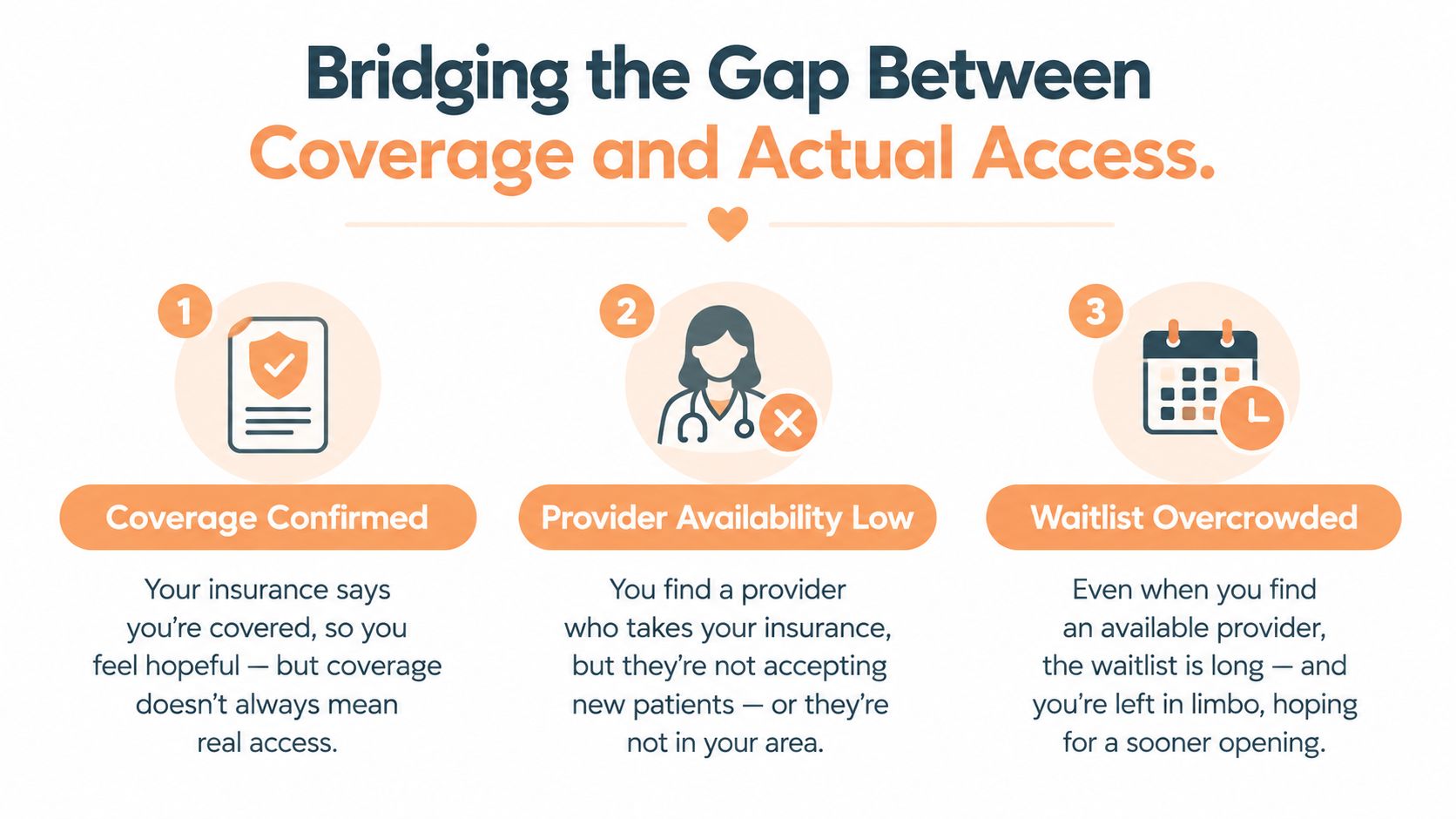
A Medicaid approval can feel like the finish line, then reality shows up in the form of a waitlist, a missed callback, or a provider who can't take new families. That's frustrating, and it's common. Families are often told that Medicaid covers ABA, but coverage does not guarantee an available provider, timely authorization, or uninterrupted treatment because reimbursement and utilization rules can affect whether clinicians are able to accept new patients PBS report on Medicaid and autism program access.
When approval doesn't mean a start date
The first thing to separate is a benefit issue from a capacity issue. If the service is covered but no provider has space, that's a network or staffing problem, not always a denial of the benefit itself. If authorization is delayed, that's a separate problem too, and families should keep notes on every call, email, and date.
A useful habit is to document your waitlist status in writing. Ask for confirmation of the date you were added, the service requested, and whether the provider can estimate when openings may occur. If your child's needs are urgent and the delay is affecting care, request an expedited review from the plan and ask what documents they want to see.
Keep this distinction clear: a true benefit exclusion means the service isn't covered under that rule or plan, while a capacity issue means the service may be covered, but no one nearby can deliver it yet.
What to do when the waitlist stretches
Start by asking the provider's office whether another location, in-home option, or tele-supervised model could fit your child's plan. If the family is stuck between coverage and access, it also helps to ask the Medicaid plan what steps are available for an out-of-network exception, a service interruption request, or a continuity-of-care review. These requests are easier when you already have a paper trail.
Families sometimes feel pressure to wait in silence. Don't. Ask for the decision in writing, save the names of staff members you speak with, and keep a simple log of how the delay is affecting routines. That record can support a stronger appeal later if access problems continue.
For families comparing providers, the central question isn't only whether Medicaid is accepted, it's whether the practice has a reliable process for keeping therapy moving when the system gets slow. For a deeper look at treatment planning and approval documents, see ABA treatment plan examples.
What families can ask for next
A few questions usually help move the process forward:
- Is the service covered under this child's Medicaid category? Ask how the service is classified, not just whether it is called ABA.
- Is there a waitlist or an opening? Get the answer in writing if possible.
- What is needed to start the authorization? Some plans want more than one document.
- What happens if therapy is interrupted? Ask how continuity is handled when staffing changes.
The goal is steady progress, not perfect paperwork. A clear trail makes it easier to show that your child needs care and that the delay is about access, not lack of need.
Navigating Prior Authorization and Treatment Plans
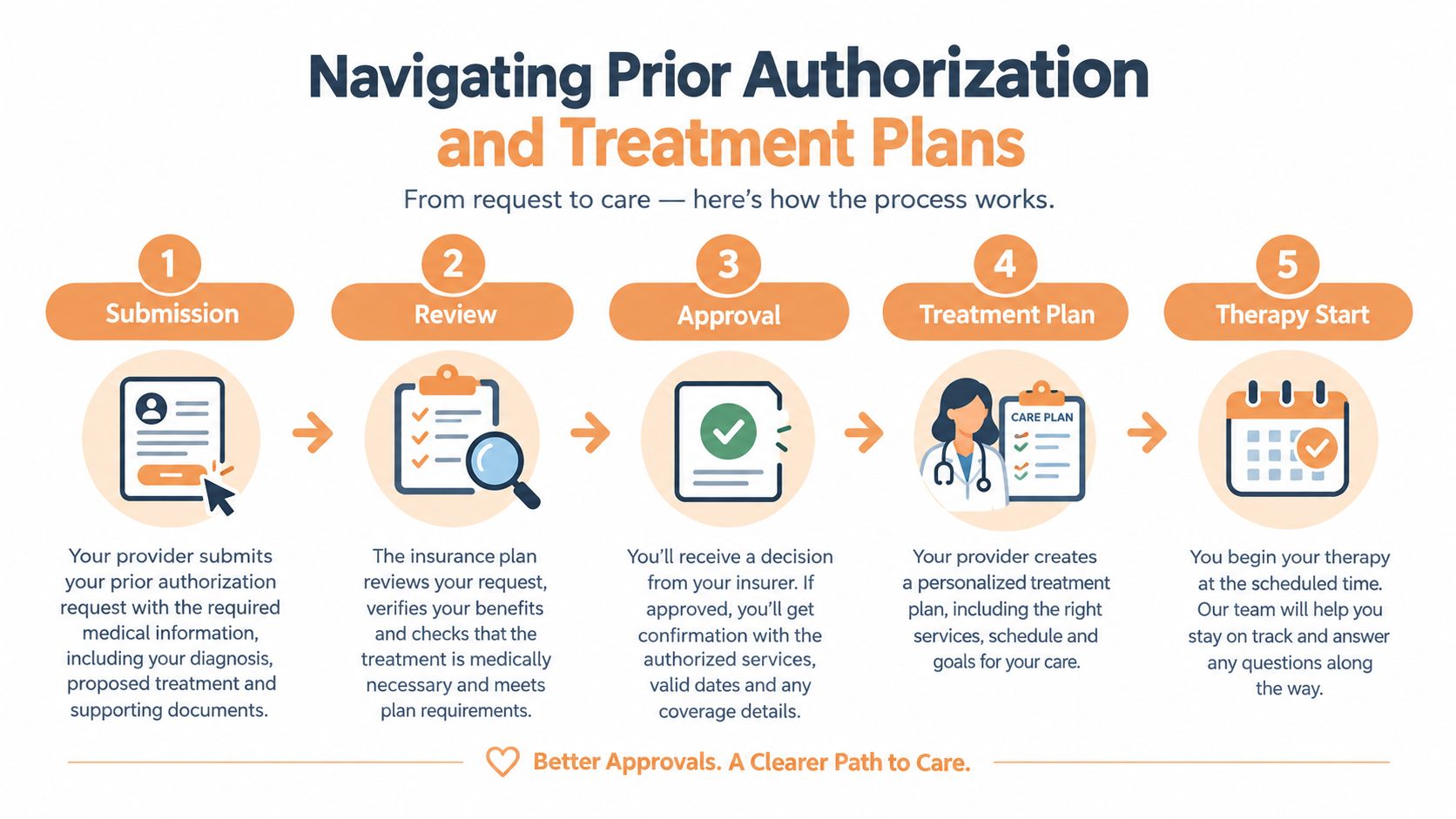
A family can do everything right and still get stuck waiting for approval. Prior authorization often means the plan wants to review the request before therapy begins, and in Medicaid ABA that review usually happens in stages. Louisiana's Medicaid policy shows that structure clearly: therapy must be medically necessary, prior authorized by the managed care organization, and delivered under the child's behavior treatment plan. The policy also separates the request for the functional assessment from the request for therapy services themselves Louisiana Medicaid ABA policy.
How the paperwork usually moves
The first step is usually the assessment request. That gives the team a way to document current needs and shape the treatment plan around them. The next step is the request for therapy hours or ongoing services, and those services should match the goals already written in the plan.
A strong plan does more than list services. It connects the work to daily life, such as better mealtime communication, fewer struggles during transitions, or more support during school routines. Reviewers usually understand the request better when they can see how the services fit the child's day and why the hours requested match the need already documented.
Useful mindset: approval often goes more smoothly when the plan shows why the service belongs to this child, right now, in this setting.
What to keep in the file
Families do not need to write the clinical plan themselves, but it helps to know what should stay on record. Keep copies of the diagnosis report, referral paperwork, insurer letters, and any treatment summaries. If a therapist or diagnosing professional asks for examples of daily challenges, give specific ones, such as trouble shifting from screen time to dinner or difficulty staying engaged during classroom routines.
The stronger the link between the treatment plan and your child's real day, the easier it is to explain medical necessity. That does not mean exaggerating. It means showing how the support requested connects to the routines that matter most at home, at school, and during therapy.
If you want to see how treatment documents can be organized, this ABA treatment plan examples resource can help you understand the moving parts more clearly. A clear file also makes it easier to ask informed questions and avoid delays caused by missing documents.
Overcoming Geographic Barriers to Consistent Care
Where a child lives can shape what therapy looks like every week. A 2025 analysis of Medicaid claims found that children living in rural areas received 10.86 fewer ABA hours per month than children in non-rural areas, a difference that shows how geography can affect access even when Medicaid is in place NPR on rural ABA access.
Rural care often needs a backup plan
For some families, the nearest provider may be far away, or there may be no nearby clinician taking new patients. Travel time, staffing gaps, and limited supervision options can all affect how many hours a child receives. That makes planning part of care, not just an admin task.
Families in these situations often need to compare options side by side. Clinic-based care can offer structure, but it may be hard to reach regularly. Home-based support can reduce travel strain and may fit daily routines more naturally. School-based support can help with classroom participation, though it depends on how the school and Medicaid-funded services coordinate.
Questions that help families choose a path
When provider options are thin, these questions can make decisions clearer:
- How far will the therapist travel? Ask about regular travel time and whether that can change if staffing changes.
- Can parent coaching fill short gaps? Coaching may help preserve momentum when sessions are temporarily harder to schedule.
- How does school support fit with home support? Ask how goals will be coordinated so the child isn't getting mixed messages.
- What happens if a staff change reduces hours? A provider should be able to explain the transition plan.
A flexible plan is often better than a perfect one that collapses when one clinician leaves or a long drive becomes impossible.
Rural families often do best when they ask for individualized documentation explaining why a certain service model is the safest practical fit. If travel, supervision, or scheduling limits make the standard setup unrealistic, that should be discussed early. The point is to protect continuity, not force a family into a plan that can't be sustained.
How a Dedicated Care Coordinator Changes the Experience
A lot of parents end up acting like part-time case managers. They track authorizations, check missed visits, answer school emails, and try to keep everyone on the same page. That load gets heavier when a child's care depends on steady communication.

What coordination looks like in real life
A dedicated care coordinator turns scattered tasks into one organized process. One person can remind the family when reauthorization paperwork is due, check whether the treatment plan needs updates, and confirm that a school note reached the right person. That also means parents are not repeating the same story to several offices.
When a care plan needs to stay individualized, that kind of support matters. Friendly ABA Premier offers a dedicated care coordinator, regular progress check-ins, individualized treatment planning, and proactive communication alongside home-based ABA therapy, social skills development, school support, and parent coaching. For families trying to keep Medicaid-funded care moving, that combination can reduce the amount of administrative juggling they have to do.
To see how coordinated care works in practice, read this guide to care coordination and case management.
A day-to-day example
A parent may be balancing therapy with breakfast, school pickup, and a work meeting. If a visit gets canceled, someone still has to reschedule, update the plan, and keep the child's goals moving. A coordinator helps absorb some of that friction so the family is not starting over every time the calendar changes.
The biggest difference is continuity. When the coordinator knows the plan, the family's priorities, and the child's support needs, the next conversation starts with context instead of a fresh explanation.
Later, when it is time to review progress or submit new paperwork, the same person can help keep communication steady across therapists, caregivers, and school contacts. The goal is not to add another layer. It is to make the care feel steadier and easier to manage.
Taking Your Next Steps Toward Meaningful Support
By the time you've sorted through coverage rules, provider access, and prior authorization, it's normal to feel tired. You don't need to solve everything today. You only need a clear next step.
Start with the basics you can control. Gather your child's diagnostic report, any referral notes, and any letters from Medicaid or the managed care plan. Then write down your top three daily goals, such as easier transitions, more usable communication, or help with school routines, because those examples make it easier for a provider to build a treatment request that fits your child's real life.
A simple checklist for today
- Collect the records: Put diagnosis paperwork, insurance cards, and prior letters in one folder.
- Confirm the benefit type: Ask your Medicaid plan how ABA or related supports are classified for your child.
- Ask about timing: Find out whether a provider has space now, not just whether they accept Medicaid.
- Note the barriers: Write down travel concerns, waitlist dates, and any treatment interruptions.
- Define the goal: Keep the focus on what your child needs in daily routines, school, or family life.
If you're already in the middle of a waitlist or authorization delay, keep your messages short and specific. Ask who is responsible for the next step, what document is still needed, and when you should follow up. That kind of calm persistence often helps more than trying to solve everything in one call.
Steady progress starts with one organized folder, one clear question, and one provider who knows how to keep the process moving.
You do not have to manage Medicaid and ABA therapy alone. With the right support, the system becomes easier to understand, and your child's care can feel more coordinated from the very beginning.
Friendly ABA Premier helps families understand Medicaid and ABA therapy through individualized treatment planning, dedicated care coordination, and proactive communication across home, school, and parent coaching support. If you're comparing providers and want a conversation about what coverage, access, and continuity could look like for your child, visit Friendly ABA Premier to learn more and schedule a consultation.
Our Latest Insights

































































Experience ABA Therapy with a More Personalized Level of Support
Discover how FriendlyABA Premier combines evidence-based ABA therapy with dedicated coordination, proactive communication, and individualized family support.