

ABA Therapy Goals: 8 Examples Parents Can Track in 2026
Explore 8 common ABA therapy goals with sample measurable targets, progress tracking tips, and ways to personalize them with your care team.

At the dinner table, your child reaches toward the cup, looks away, and becomes upset before anyone understands what they need. Later, during bedtime, putting on pajamas turns into a long struggle because the next step feels unclear. These moments can be tiring, but they also show where a useful skill could make daily life easier.
ABA therapy goals are clear, shared targets built around ordinary routines. They might focus on communication, social connection, independence, school participation, or a safer way to express discomfort. A strong goal isn't chosen just because a behavior looks different from other children's behavior. It should help your child communicate, participate, feel more independent, or experience greater comfort and quality of life.
The examples below show how these goals can look in real life. Each one includes a measurable statement, a simple way to notice progress at home, and a question to bring to your care coordinator. Your child's plan should always be individualized, developmentally appropriate, and shaped with your family and child whenever meaningful participation is possible, as recommended by the American Academy of Pediatrics guidance on autism supports.
Table of Contents
- Ask whether the goal helps your child
- Choose intensity based on progress and fit
- Include parents as active partners
1. Requesting Wants and Needs
A child who can ask for juice, a favorite toy, help, or a break has a practical way to influence what happens next. In ABA, requesting is sometimes called manding, but the everyday idea is simple: your child communicates a want or need, and another person understands the message.
At snack time, you might hold up a cup and pause. Your child could point, use a word such as “juice,” hand over a picture, or activate a communication device. You then provide the requested item, perhaps beginning with a small amount so the child learns that communicating works.
A measurable statement might read: “During snack, the child will independently request a preferred food or drink in 80% of opportunities across three consecutive sessions and with two communication partners.” The exact criterion should come from the care team, based on your child's current abilities and communication system.
Practical rule: Count every meaningful communication form, including gestures, pictures, signs, speech, and devices. The purpose is effective communication, not one required response format.
A small practice routine
Pause briefly before handing over something your child wants. Keep the pause comfortable, and respond to an attempt rather than waiting for a perfect word. If your child likes bubbles, place the bubble container where they can see it and accept a picture card, point, sign, or vocal request before blowing a few bubbles.
At home, record the number of opportunities and the type of help your child needed. You might write, “Requested crackers independently twice, pointed once after a gesture, and did not request during the final opportunity.” For more ideas on building this skill into ordinary routines, see mand training in ABA.
Question for your care coordinator: Which three to five high-interest items should we use this week, and how should we respond when my child communicates with a gesture, picture, device, or word?
2. Following Simple Instructions and Multi-Step Directions
“Come here,” “Give me the ball,” and “Put your shoes by the door” are small directions with a large role in family life. Following instructions supports safety, learning, and independence, but children may need time and careful teaching before a spoken direction becomes easy to understand.
A therapist might begin with one familiar step and add visual or physical support when needed. Later, the child can work toward a sequence such as, “Get your shoes and bring them to the door.” The adult can gradually reduce gestures or other prompts as the child becomes more successful.
A useful measurable statement could be: “Given a familiar one-step direction, the child will begin the requested action within an agreed response interval in 80% of opportunities across three sessions.” For a multi-step routine, the team might measure how many steps the child completes independently.
Make directions easier to follow
Use short, consistent language. At bedtime, say, “Pick up pajamas,” pause, and then say, “Put them on the bed.” At the grocery store, start with “Bring me the apple” before asking your child to find the apple and place it in the cart.
A simple home record can show whether the direction was completed independently, after a gesture, after repetition, or with more direct help. That information helps the team see whether the difficulty involves language, attention, the environment, or the complexity of the task.
- Use familiar wording: Keep common directions consistent across adults.
- Allow processing time: A pause can be more helpful than repeating the instruction several times.
- Notice effort: “You got your shoes” gives clear, immediate encouragement.
Question for your care coordinator: Which prompts should we use first, and how will we know when to fade them so my child isn't dependent on adult help?
3. Turn-Taking and Shared Play
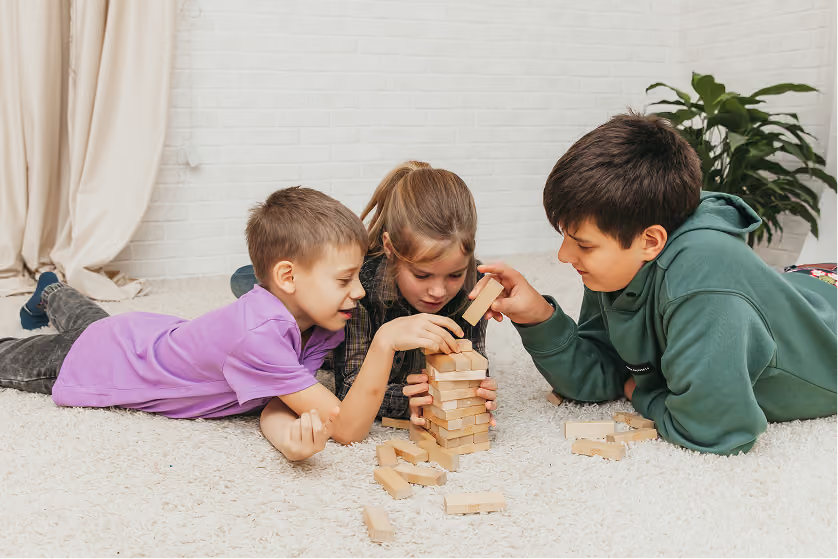
Shared play can begin with something wonderfully simple, such as rolling a ball back and forth. Turn-taking teaches a child to wait, notice another person's action, and rejoin an activity. Those skills can support play with siblings, participation in groups, and early peer relationships.
A measurable statement might be: “During a preferred game, the child will complete three back-and-forth turns with an adult using no more than a visual or verbal prompt.” The number of turns and prompt level should match your child's starting point, not an arbitrary expectation.
During board game night, hold the dice and say, “Your turn.” After your child rolls, let the family celebrate together. At the playground, a visual “my turn” or “wait” card can make the sequence clearer while your child waits for the slide.
Start with connection, not performance
Choose an activity your child already enjoys. If three rolls are manageable, begin there. A visual timer, turn card, or simple “first my turn, then your turn” routine can make waiting less uncertain. Slowly lengthen the exchange when your child is comfortable.
At home, note how many exchanges occurred, whether your child waited, and what support helped. Also record whether the child appeared engaged. A turn-taking goal should create more shared enjoyment, not require a child to perform a social behavior while distressed.
For additional ideas that fit playtime, explore these structured play activities.
Question for your care coordinator: What game matches my child's interests, and how can we teach waiting without making shared play feel like a demand?

4. Tolerating Transitions Between Activities
A transition is any move from one activity, place, or expectation to another. Leaving the park, stopping a favorite video, moving from play to dinner, and getting into the car can all feel difficult when the next step arrives without warning.
A transition goal shouldn't mean forcing a child to remain calm at any cost. A better goal may focus on understanding what comes next, communicating for more time or help, and moving with the support that makes the change manageable. A measurable statement might be: “When shown a visual transition cue, the child will move from a preferred activity to the next routine with an agreed level of support across repeated opportunities.”
Make the next step visible
A “first, then” card can show “Bath first, then bubbles.” Before leaving the park, you might say, “Two more slides, then car,” and show a visual timer. At home, picture cards for bath, dinner, and bed can create a predictable sequence.
Give a warning a few minutes before the change, then repeat it in the same words. Your care team can help decide whether your child responds best to a timer, a picture, a countdown, a transition object, or a request for a short break.
At home, record the activity, the warning provided, the support used, and what happened next. Don't measure success only by whether your child looked calm. Note whether they understood the sequence, used a communication response, or completed the transition with less adult assistance.
Question for your care coordinator: What can my child say, show, or use when a transition feels too sudden or overwhelming?

5. Daily Living and Self-Care Independence
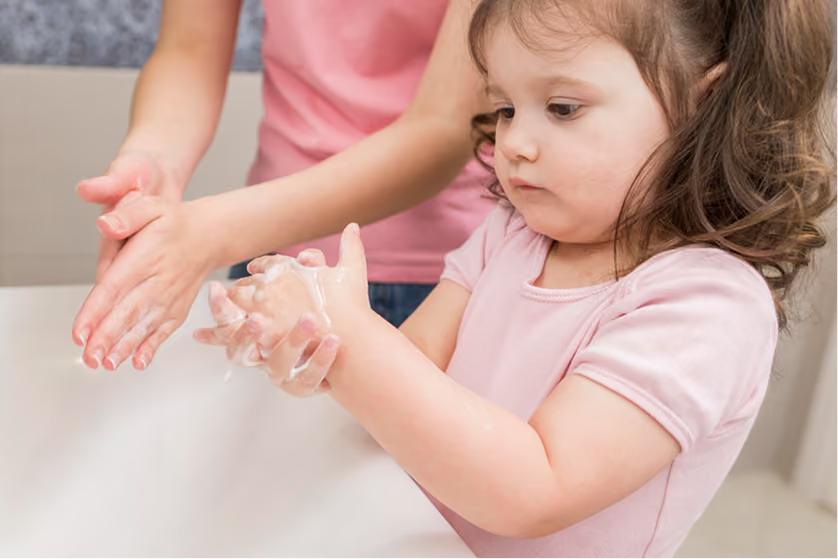
Daily routines become easier when a child can complete more of the steps independently. Handwashing, dressing, brushing teeth, and putting belongings away all involve several actions that adults often perform automatically.
A therapist may use task analysis, which means breaking a routine into teachable parts. Brushing teeth could include picking up the brush, adding toothpaste, brushing the top teeth, brushing the bottom teeth, rinsing, and putting the brush away. A measurable statement might be: “The child will complete the agreed handwashing steps with no more than one prompt during the morning routine.”
Let independence grow one step at a time
Choose one routine rather than changing everything at once. If your child can already turn on the water, let them own that step. Offer help only where it's needed, and avoid taking over just because the routine is moving slowly.
A picture chart beside the sink can show the sequence. For dressing, your child might find the tag, place their head through a pullover shirt, and pull it down with guidance only for the final step. At home, track which steps were independent, which needed a prompt, and which were completed by an adult.
A good independence goal measures what your child can do, not how quickly they can do it.
Ask your care coordinator to break a routine into steps that fit your family's actual morning or bedtime schedule. A plan that works in a therapy session but cannot fit your home routine needs adjustment.
Here is a short demonstration you can watch before discussing handwashing practice with your care team:
Question for your care coordinator: Which step should we teach first, and what prompt should every adult use so my child receives consistent support?

6. Expanding Mealtime Participation and Food Variety
Mealtime goals can include sitting at the table, using a spoon, tolerating food nearby, communicating preferences, and gradually becoming more comfortable with new foods. They should be approached gently. A child may make progress by touching or smelling a new food before tasting it.
A measurable statement might be: “During a family meal, the child will remain at the table for the agreed routine and communicate ‘all done,’ ‘help,’ or a food preference using their established communication system.” Another goal might track independent spoon scoops of a preferred food. Your care team should choose targets that respect your child's sensory needs, health, and current eating patterns.
At dinner, place a small piece of new fruit beside a preferred food without requiring a bite. Sitting near it, touching it, or allowing it to remain on the plate may be meaningful steps. For utensil practice, a child might scoop familiar yogurt while an adult offers encouragement for each successful attempt.
Keep meals predictable and pressure low
Serve food in a familiar place and follow a predictable routine where possible. Avoid turning every meal into a test. If eating concerns involve safety, limited intake, allergies, swallowing, growth, or significant stress, bring them to your pediatrician and care team.
At home, record participation in neutral language. You might note, “Sat at the table, kept the new food on the plate, and used a spoon for four scoops.” This gives the team useful information without treating refusal as failure.
Question for your care coordinator: What is the smallest comfortable mealtime step, and when should we involve our pediatrician or another feeding professional?
7. Functional Communication to Replace Challenging Behavior
Crying, throwing, hitting, or grabbing may communicate a need when a child doesn't yet have a reliable alternative. A helpful ABA plan asks what the child may be trying to express or change, then teaches a faster, clearer response.
A child who throws a toy when tired might learn to hand over a “break” card. A child who grabs a sibling's toy might learn “my turn,” “help,” or “more.” The adult responds to the replacement communication so the child experiences it as useful, not merely as another demand.
A measurable statement could be: “When the child needs to pause an activity, the child will use a break card, word, sign, or device response before escalation in the agreed proportion of opportunities.” The team should define the opportunity, the response, the prompt level, and how the adult will respond.
Make the replacement response easy
Track when and where the behavior happens. Hunger, transitions, noise, fatigue, difficult tasks, limited access to communication, and sensory discomfort may all matter. A brief record can include what happened before, what your child did, and what happened afterward.
- Make it quick: A break request should take less effort than throwing an item.
- Respond consistently: Adults should honor the request according to the plan.
- Practice when calm: Teach the response during easy moments, not only during a crisis.
Parent coaching can help you rehearse the exact response. Ask your care coordinator to observe a routine, practice with you, and explain how to keep the plan consistent without making your child feel punished for communicating distress.
Question for your care coordinator: What need might this behavior be communicating, and what replacement response can my child use immediately?
8. Classroom Participation and Peer Interaction
School goals should connect directly to the routines that matter to your child. They may include following a teacher's direction, using a visual schedule, joining circle time, asking for help, raising a hand, moving between activities, or approaching a peer.
A measurable statement might be: “During a classroom activity, the child will participate for the agreed period and use an established help, break, or turn-taking response with no more than the planned support.” The goal should reflect the child's access and participation, not an expectation to hide harmless autistic traits.
A desk schedule can show when circle time begins and ends. During recess, a child might practice saying or selecting “Can I play?” before joining a group game. A teacher, therapist, or peer can support the interaction, then gradually reduce assistance when the child is ready.
Keep the adults aligned
Ask the teacher which routine feels hardest. Share a one-page summary of communication tools, transition supports, successful prompts, and calming options used at home. The team can then choose one shared strategy instead of asking your child to follow different systems in every setting.
At home, you can practice school routines through play. Set up a short pretend circle time, practice asking for help with a puzzle, or rehearse putting materials away. Track participation and communication, not just sitting still.
Regular check-ins matter because classroom demands change. Guidance on ABA support in schools can help families think about coordination between therapy and education.
Question for your care coordinator: Which school routine should we prioritize, and who will communicate with the teacher so the goal is practiced consistently?
8-Point ABA Goals Comparison
| Goal | Complexity 🔄 | Resources | Expected Outcomes 📊⭐ | Ideal Use Cases | Key Advantages ⭐⚡ & Tips 💡 |
|---|---|---|---|---|---|
| Requesting Wants and Needs (Mands) | Low–Moderate, routine-based, needs consistency | High caregiver involvement, preferred items, simple AAC/signs | 📊 Fewer frustrated behaviors; ⭐ High functional communication gains | Early communication, mealtimes, play, nonverbal learners | ⭐ Directly reduces frustration; ⚡ Quick wins with motivators; 💡 Pause to create request opportunities |
| Following Simple Instructions & Multi‑Step Directions | Moderate, stepwise fading of prompts | Visual supports, modeling, repeated practice with caregivers/teachers | 📊 Improved safety and classroom readiness; ⭐ Moderate–High | Dressing, routines, classroom tasks, errands | ⭐ Builds independence; ⚡ Effective when cues are consistent; 💡 Use short, consistent language |
| Turn‑Taking and Shared Play | Low–Moderate, social practice and repetition | Preferred toys/games, peers or family partners, visual cues/timers | 📊 Better peer interaction and group play; ⭐ Good social outcomes | Playground, family game time, small‑group play | ⭐ Strengthens friendships; ⚡ Low-pressure practice; 💡 Start with short turns and extend gradually |
| Tolerating Transitions Between Activities | Moderate, needs predictable routines and supports | Visual schedules, timers, "first‑then" boards, caregiver coordination | 📊 Reduced daily conflict and anxiety; ⭐ Improves routine flow | Home routines, school transitions, outings | ⭐ Calms daily routines; ⚡ Most effective with consistency; 💡 Give 2–5 minute warnings and use visual timers |
| Daily Living & Self‑Care Independence | Moderate–High, task analysis and prompt fading | Visual step charts, repeated in-context practice, caregiver time | 📊 Increased independence and time‑savings; ⭐ High long‑term impact | Handwashing, dressing, toothbrushing, morning/evening routines | ⭐ Visible everyday gains; ⚡ Reduces caregiver effort over time; 💡 Focus on one routine at a time |
| Expanding Mealtime Participation & Food Variety | Moderate–High, gradual exposure, sensitive pacing | Preferred foods, new food samples, possible feeding specialist input | 📊 Improved tolerance and variety (variable pace); ⭐ Moderate impact | Family meals, nutrition goals, sensory feeding challenges | ⭐ Makes meals more relaxed; 💡 Keep exposure pressure‑free; ⚡ Progress can be slow and non‑linear |
| Functional Communication to Replace Challenging Behavior | High, requires FBA and consistent cross‑setting response | Functional behavior assessment, AAC/signs/cards, caregiver & staff coaching | 📊 Reduced challenging behavior by addressing function; ⭐ Very high when implemented with fidelity | Behaviors maintained by escape, attention, tangible needs | ⭐ Addresses root cause; ⚡ Can yield rapid behavior reduction if consistent; 💡 Teach a quick, effective replacement communication |
| Classroom Participation & Peer Interaction | Moderate–High, coordination with school teams needed | Teacher collaboration, classroom‑friendly visuals, shared strategies | 📊 Greater inclusion and classroom engagement; ⭐ High educational/social impact | Circle time, recess, desk routines, group work | ⭐ Supports school success and peer ties; ⚡ Effective with regular teacher collaboration; 💡 Share a one‑page strategy summary with school staff |
Turning Goals Into Everyday Progress
A useful ABA goal should make sense in your child's actual life. “Improve communication” is too broad to guide a family through snack, play, or bedtime. “Request help with a word, picture, sign, or device during a difficult task” gives everyone something they can recognize, support, and review.
The technical side matters too. A defensible goal describes an observable behavior, the way it will be measured, a mastery criterion, and a review schedule. Practice guidance recommends individualized measures that fit the child, the setting, the behavior, and the resources available, rather than relying only on broad impressions or standardized assessments. The CASP ABA practice guidelines describe this kind of careful measurement and ongoing review.
Ask whether the goal helps your child
A goal deserves a closer look if it focuses mainly on appearing typical rather than communicating, participating, feeling safe, or gaining autonomy. Research on autistic and non-autistic perspectives found different priorities around normalization, adaptive skills, supportive environments, and societal reform, as summarized in this 2025 review of autism intervention outcomes.
That doesn't mean daily living skills or social participation are unimportant. It means the reason for the goal should be clear. A goal to request a break, join a sibling's game, tolerate a necessary safety routine, or communicate a food preference has a direct functional purpose. A goal to suppress harmless self-regulation just because it looks unusual deserves careful discussion.
The National Autism Center's parent guide also emphasizes everyday social participation and giving children a voice in treatment planning whenever they can meaningfully participate. You can read the National Autism Center parent guide with your care team and use it to start that conversation.
Choose intensity based on progress and fit
More therapy hours aren't automatically better for every child or family. A 2025 National Academies review reported that 10 to 20 hours per week may produce positive outcomes for many autistic individuals, while also describing evidence across varied intervention practices rather than establishing one universal schedule. In a separate dose-optimization study, children improved independently of service volume, and several standardized outcomes showed no statistically significant differences between children receiving at least 40 hours and those receiving fewer than 40 hours per month. These findings are discussed in the National Academies review.
Your care team should review fatigue, school participation, family capacity, quality of life, therapist consistency, caregiver feasibility, and meaningful progress. Ask what change the schedule is expected to support, when the goals will be reviewed, and what signs would suggest that the plan needs to be reduced, redesigned, or extended.
Include parents as active partners
Parent coaching is not just an attendance task. In a randomized trial of virtual ABA-skills training, parents who received the intervention showed large, statistically significant improvements in correctly implementing targeted skills, while wait-list controls showed little or no appreciable improvement. A separate e-learning study reported average parent knowledge scores rising from 63% before training to 90% afterward, a 27-percentage-point gain, with both intervention groups averaging 34% higher post-test scores. The parent training research supports measuring demonstrated implementation, not whether a caregiver attended.
Start with one goal that fits a routine you already have. During one week, note what your child already does well, identify one small change to try, and bring your observations to the care coordinator. The team can help you adjust the prompt, reinforcement, communication method, or routine without turning home life into a spreadsheet.
Friendly ABA Premier uses individualized treatment planning, regular progress reviews, milestone tracking, and dedicated care coordination to connect therapy goals with family priorities. Whether your focus is requesting at snack, handwashing before dinner, peer play at school, or asking for a break, a collaborative plan should keep the skill meaningful across home, school, and community settings.
You don't need to choose every goal at once. Talk with your care team about the routine that feels most important today, ask how progress will be measured, and make sure your child's comfort, communication, autonomy, and quality of life remain part of the conversation.
Friendly ABA Premier offers home-based ABA therapy, social skills development, school support, and parent coaching across Connecticut, Georgia, Maryland, Massachusetts, North Carolina, South Carolina, Virginia, and Washington. If you want individualized goals, a dedicated care coordinator, and regular progress check-ins, visit Friendly ABA Premier to talk with the team about your family's next step.
Our Latest Insights
























Experience ABA Therapy with a More Personalized Level of Support
Discover how FriendlyABA Premier combines evidence-based ABA therapy with dedicated coordination, proactive communication, and individualized family support.